

IDENTITY IN ONÉSIMO’S L(USA)LAND
The best way to pay a well-deserved tribute to Onésimo Teotónio de Almeida is to acknowledge his work, praise his oeuvre, and thank him for his legacy.
That’s why, rather than evoking this brilliant personality’s extraordinary CV here, we ask for the readers’ understanding and the author’s permission to use his own words.
We propose to revisit and summarize his remarkable essay, “Portuguese Communities in the United States: Identity, Assimilation, Acculturation.”
This essay is part of his book, O Peso do Hífen —Ensaios sobre an experiência luso-Americana ( The Weight of the Hyphen—Essays on the Portuguese-American Experience), which was published in 2010 by Imprensa de Ciências Sociais.
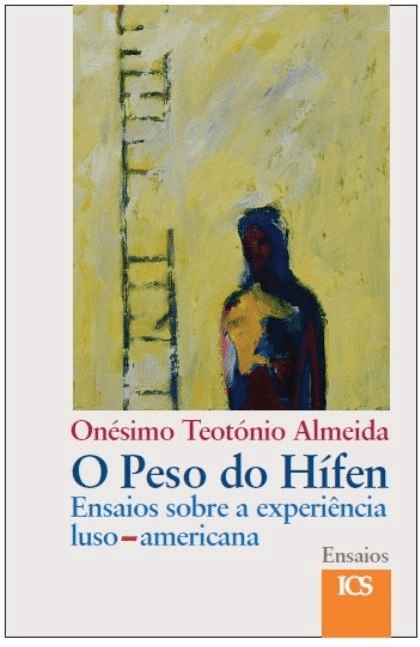
It deals with the problems of identity and assimilation or acculturation – which in this case means “Americanization” – of communities in the United States.
The author oscillates “between extreme assimilationism and equally extreme preservationism.
The former warns that “within a quarter of a century there will no longer be Portuguese communities in the United States, but American communities of Portuguese descent”.
The second argues that “in modern America it will be impossible to erase the marks of the Portuguese presence in the regions where it began to take root two centuries ago.”
And it’s worth knowing how it all began…
Onésimo Almeida distinguishes four periods in the history of integrating Portuguese communities in the United States – Portuguese who are mostly transatlantic Azoreans.
The first period, before 1965:
“Portuguese emigrants up to that point – and there were as many as 150,000 in the first three decades of the 20th century – were practically completely dissolved in the immense American melting pot, with not even their surname remaining.”
The second period, from 1965 to the end of the 80s:
“This is the period of the largest Portuguese emigration ever (180,000), which finds the United States in an atmosphere of profound transformation due to the presence of multiple ethnic groups.”
“The Portuguese communities went through a period of exuberant vitality, with the flourishing of media, mostly financed by small ethnic businesses concentrated in cities like Fall River, New Bedford and East Providence.”

The third period, from 1985 to the present day:
“Little by little, the Portuguese communities are getting older, the older immigrants are giving way to grandchildren.”
“Factors linked to Washington policy have led to a considerable increase in the number of people acquiring American citizenship.”
“In universities, there has been a considerable increase in students graduating with Portuguese names.”
“A kind of stability is generated within the communities, where the ethnic pride gains confidence and develops a certain ease in the American environment, which accepts it more easily.”
“The Portuguese today feel at home in the United States, although much more comfortably in L(USA)land than in the American sea that surrounds the tenth island.”
The fourth period corresponds to the following decades.
Onésimo predicts that “L(USA)land will continue to assert itself more and more in two directions:
“On the one hand, a continuous and progressive Americanization, determined by the inevitable biological laws of the replacement of its current members by children and grandchildren who will be Americans, at best, Luso-Americans.” – Hence The Weight of the Hyphen.
“On the other hand, the ease of communications will continue to make it possible to intensify contacts between the Azores and the Portuguese-American communities in areas of common interest.”
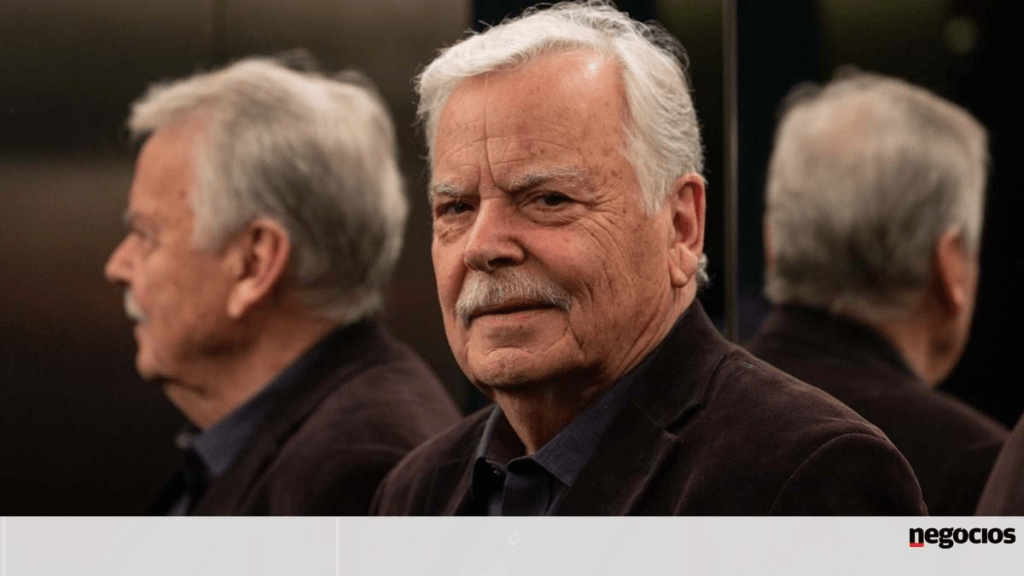
And now, Onésimo Almeida speaks (even more) directly:
“At the beginning of my Portuguese-American experience, in the 1970s, I was very impressed by the self-segregation of the Portuguese community, caused above all by the fact that a large majority of emigrants were from a very recent wave and were unfamiliar with both the language and the culture of the host country.”
“The term “L(USA)land” thus came to me in an islander cultural context.”
“L(USA)landia was therefore this Portuguese island, surrounded on all sides by America.”
“Populated in particular by Azoreans, it was – and still largely is – the tenth island of the Azores archipelago, as well as the westernmost.”
“Such enclaves in America are in fact many islands, most of which are located in New England and California, and include a fairly large one in New Jersey.”
“I will refer to all these lands as an archipelago, which, unfortunately, was made up of islands too far apart and also without much contact.”
“The Azoreans in California are much further away from those in New England than the Azores are from Boston.”
“In fact, the Portuguese in Canada have closer contact with their compatriots in New England.”
In this context, Onésimo addresses the problem of acculturation, which we’ll see in the next chronicle.
_____
José Andrade is the Regional Director for Communities of the Government of the Autonomous Region of the Azores
This article comes from his book Transatlântico – As Migrações nos Açores by José Andrade (2023)
Translated by Diniz Borges
 Filamentos (artes e letras)