

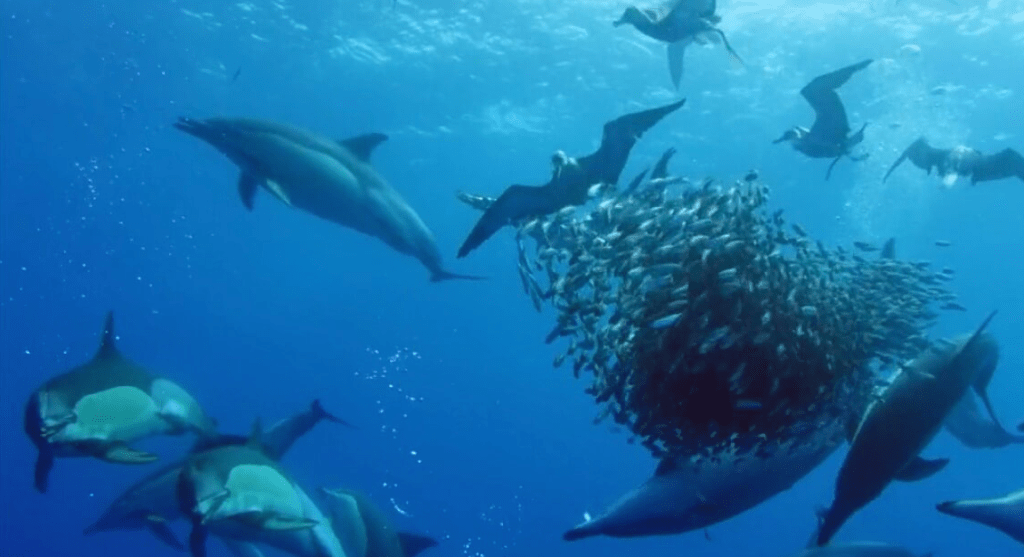
On November 20th, the series “Our Oceans,” a new Netflix production, was launched. It’s a documentary series narrated by Barack Obama, comprised of five episodes (one episode for each ocean), and is full of stories of wildlife behavior. One of these stories takes place in the Azores, and the images are taken by underwater cameraman Nuno Sá. “The story in the Azores is basically about whale sharks recruiting tuna so they can feed on schools of small fish,” says the underwater cameraman.

Correio dos Açores – Your footage is featured in one of the episodes of a new Netflix series called “Our Oceans.” Tell us about the project.
Nuno Sá – This Netflix series consists of five episodes, and basically, each episode is about one of the oceans on our planet. In the episode about the Atlantic Ocean, one of the stories is about the whale sharks on the island of Santa Maria. Netflix began by making a series called “Our Planet” – a series about natural life – and has now created this series about the oceans, which is in the format of the BBC tradition series (by David Attenborough), in which there are no human beings: just images of exceptional animal behavior and basically capturing viewers through wildlife behavior – in this case in our oceans.
The story, which takes place in the Azores, is about whale sharks recruiting tuna so they can feed on schools of small fish. This is a story that I’ve known for many years, and I have a robust connection with it because I was the first person to photograph whale sharks in the Azores in 2008. It was my first article in National Geographic Portugal magazine. That gave me the courage to become a full-time underwater photographer because I lived on the island of São Miguel and worked for a whale-watching and diving company. Through my first contact with whale sharks, I dedicated myself full-time to underwater photography. Years later, I became an underwater cameraman.
I travel worldwide, filming stories for the BBC, National Geographic, Disney, and now Netflix. I filmed other stories for this series in the Azores, but for many years, I had been looking for an opportunity to convince one of these big productions to tell this story of the whale sharks in the Azores. I finally got Netflix interested and proposed this story to the service producer of this production. They accepted, so we had two months of going out every day on a boat off Santa Maria until we made the images that make up this story.
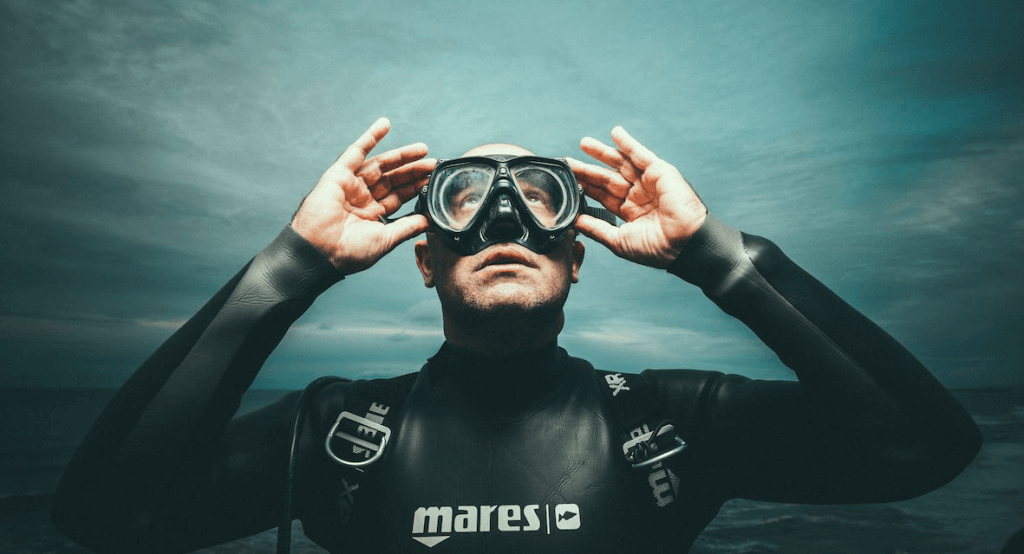
You often work on the island of Santa Maria, and this production is no exception. How did you get support from the local community during filming?
I’ve visited the island of Santa Maria almost every year since I first came into contact with whale sharks. There are two areas where whale sharks occur in the Azores: off the island of Pico and on the island of Santa Maria, but the island of Santa Maria is where they occur more frequently. I usually go there every year when whale sharks appear. Sometimes, I go with scientists from the University of the Azores (Okeanos), where Jorge Fontes goes in search of satellite transmitters to try to find out where they go and where they come from, or to try to film them and try to better understand this relationship between tuna and whale sharks.
From the start, we’ve always had a lot of help from the fishing community on the island of Santa Maria. They helped us in the past to make a documentary called “The Island of the Giants,” Now, when we had to go out every day because of the Netflix series, we contacted all the pole-and-line fishing boats operating in Santa Maria. We received information from them every day: where the whale sharks would be, if they would be with tuna, if what we wanted was happening, which was whale sharks feeding on large balls of bait so this help from the fishing community was incredible, and daily, we had information every day. It was thanks to them that I was able to make this sequence.
When did filming take place?
At the end of summer 2021.
What makes you so fascinated by the Azorean Sea?
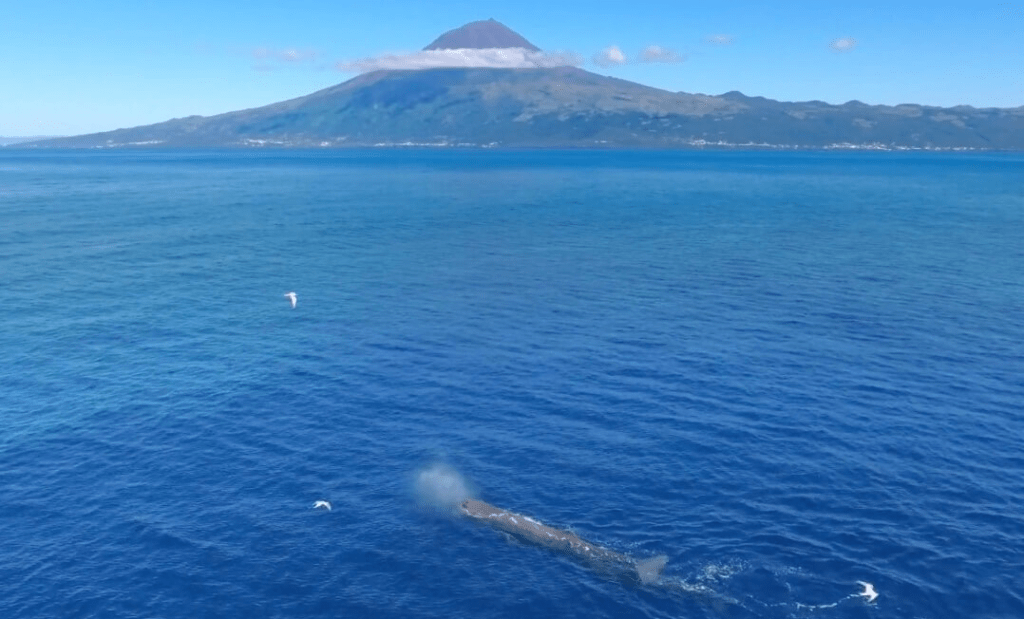
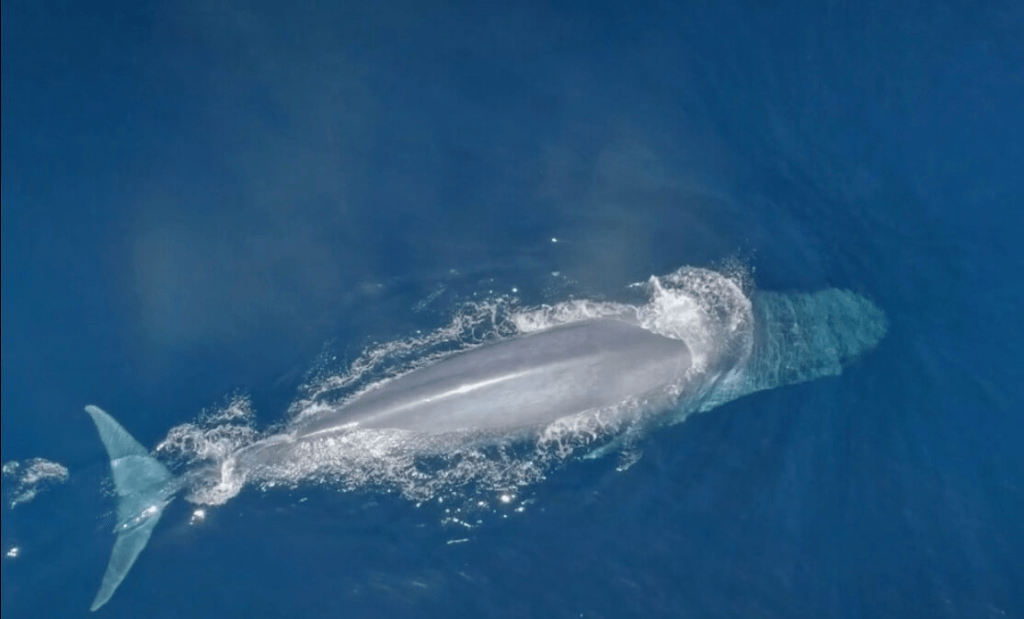
What’s unique about the Azores is that they are a biodiversity hotspot in the middle of a vast expanse of sea where there isn’t much productivity or marine life. Still, suddenly, in the Azores, a considerable amount of accumulated species emerges from the bottom of the seabed, especially from great Atlantic voyagers who stop off in the Azores. The Azores are an extremely unpredictable place to record or photograph because, as these animals migrate so much, we can prepare to film, for example, sperm whales. Still, we film other things like orcas, blue whales, sharks, mantas, manta rays, etc. I think this whale shark story is a perfect example of that.
We’re talking about the biggest fish in the world, we’re talking about the only population in the whole of Europe with the biggest fish in the world, and which was unknown two decades ago. If we want a land analogy, it would be the equivalent of finding elephants on Pico da Vara. Some stories have yet to be told, and they often have a global dimension because we are talking about a unique behavior of the largest fish in the world, something that has been seen two or three times around the globe: tuna cooperating with whale sharks to feed. On the island of Santa Maria, you see this every day and several times a day, and we’ve had days when we’ve seen more than twenty whale sharks in a single day. I’ve always thought that this story really is of global importance because we’re talking about the unique behavior of an iconic fish that fascinates people but of which we know very little, and, curiously, the few whale shark aggregation sites that exist worldwide are of juvenile individuals. However, in the Azores, the opposite is true: all the whale sharks we find in the Azores are extremely large; because the Azores traditionally didn’t have such warm waters that would allow whale sharks to reach the Azores, only the larger animals were able to withstand this temperature range and consequently get the Azores, because it was a very long journey and in conditions that were not optimal in terms of temperature.
Somewhere on this vast journey that the whale shark makes to the Azores, large shoals of tuna come together, participate in this migration, and appear off the coast of the island of Santa Maria. Curiously, there are few whale sharks on the island of São Miguel because the island of Santa Maria is further south and has slightly warmer waters and, as the whale sharks are already at the limit of the temperature variation they can withstand, the first island they reach is Santa Maria, and that’s where they stay, not venturing further north, where the water is a degree or two colder.
You’ve carried out this activity in the region’s sea for years. What changes have you seen in marine biodiversity?
I’ve been diving in the Azores for about twenty years. I can’t say there’s been much difference in the abundance of marine life. What we are seeing more and more, without a doubt, is a more tremendous difference between the life that exists in the marine protected areas of the Azores – of which there are more and more – and the marine life outside the marine protected areas. Creating all the marine protected areas in the Azores dates back to my time, except perhaps the one on the islet of Formigas. The first dives I made in Santa Maria and the first contacts I had with whale sharks, the Baixa do Ambrósio – where there is one of the best places in the world to dive with manta rays – was not a marine protected area. Four other marine protected areas around Santa Maria did not exist then, nor did the marine protected areas of the Pico-Faial channel (which today are visited by thousands and thousands of divers).
If you dive in a marine protected area, you will see large groupers and several schools of fish, but when you dive outside the marine protected area, you will see very few fish. This is an obvious sign that our oceans and the Azores Sea used to be similar to what exists inside marine protected areas today, i.e., a healthy ecosystem. The difference between what the majority of the Azorean Sea is and what such a glimpse of the past is when we dive into a marine protected area, which gives us a sign that the Azorean Sea is out of balance because of overfishing. We need to think about larger maritime protected areas that allow us to have areas where fish can reproduce, grow, and then leave the borders of the protected maritime regions and be fished there.
What is your assessment of your work this year, and what are your ambitions for the near future?
This has been the most crucial year for me personally. Two essential series came out for me: a Disney series called “Ocean Explorers”, in which I spent five months on the ship “Ocean X”, filming all over the world, and it’s a series produced by James Cameron (one of Hollywood’s great directors). Working for James Cameron was a privilege I never thought I’d achieve. This ship ended up coming to the Azores, where we filmed two of the episodes. For me, it’s always much more important to help spread the word about my country’s marine life than it is to dive all over the world.
The Netflix series, narrated by Barack Obama, has a great impact, and I think it will run around the world for many years. These were the most important projects I’ve ever done in terms of trying to project Portuguese marine life across borders.
As for the future, I now have a new project about Portuguese marine life in the pipeline. Because I do so much work for these international productions, it would make sense to do a national production about the most surprising stories that happen in our waters. It will be made in partnership with the Lisbon Oceanarium, the Oceano Azul Foundation, and RTP.
José Henriques Andrade is journalist for Correio dos Açores-Natalino Viveiros, director
Translated by Diniz Borges
 Filamentos (artes e letras)