

FROM TERCEIRA TO CALIFORNIA
According to information gathered by Professor Rui de Sousa Martins, from the University of the Azores, in his capacity as president of the Association for the Defence and Research of Heritage, Terceira’s cultural calendar is ritually organized by ceremonies and festivals, of an occasional or cyclical nature, which transform, transfigure, reinvent, intensify and enliven the island’s daily life, breaking with its routines.
The annual festivals that identify the island of Terceira include the Danças de Entrudo, known for their artistic practices; the Festas do Divino Espírito Santo, known for their traditional religiosity; the Bullfights on the rope centered on the widespread fighting of wild cattle; and the Sanjoaninas de Angra or the Festas da Praia, which represent the island’s stage in an urban context.
The Danças de Entrudo from Terceira are considered the largest festival of popular theater in the Portuguese-speaking world. They result from local (re)creations of older dances and exogenous influences, a process that began in the late 19th and early 20th centuries.
These theatrical dances, which are performed on Saturday, Sunday, Monday, and Tuesday of Entrudo, have four types: the Dança de Espada (or day dance), the Dança de Pandeiro (or night dance), the Bailinhos and the Comédias.
The Danças de Espada are the oldest and most significant type of dance, led by a master (puxador) who skillfully wields a sword as a choreographic accessory and uses a whistle to order the phases of the show. These dances represent historical, religious, and dramatic themes.

The Danças de Pandeiro are shorter and more recent than the Danças de Espada. They have a humorous character and are directed by a master who uses a pandeiro as a musical and choreographic accessory, also using a whistle to order the show.
The Bailinhos, of growing importance, are light-hearted dances that must have derived from the Danças de Pandeiro, and are invariably jocular. When the master of the Bailinho exists, he displays a decorated wand to lead the dance.
Comedies are theatrical performances in which the first part is declaimed (dramatic or comic), and the second comprises dances and songs.
The Entrudo Dances of Terceira Island are original forms of theatrical representation and artistic communication of a popular nature that combine spoken text, usually in verse (plot), with instrumental music and singing, choreography, collective and individual dramatic actions, and colorful costumes and props.

They also combine the performers (men and women, dancers, actors, masters) with the expressions of the body and the performing musicians (brass, strings, accordion).
They also combine the exhibition spaces (indoors or outdoors) with the spectators (recipients and supporters), almost the entire population of the island, not forgetting the consumption of ritual foods (coscorões, filhós, cavacas).
On the other hand, the Danças de Entrudo are dynamically territorialized in the parishes of the two municipalities, Angra do Heroísmo and Praia da Vitória, singularizing them, identifying them, and articulating them in relations of exhibition, exchange, and competition.
This characterization by ethnographer Rui de Sousa Martins demonstrates the cultural and social importance of the Terceira Carnival.
But Terceira’s Carnival has crossed the Atlantic and established itself in America.
Terceira’s carnival is the most popular among Azorean communities in the United States and Canada.
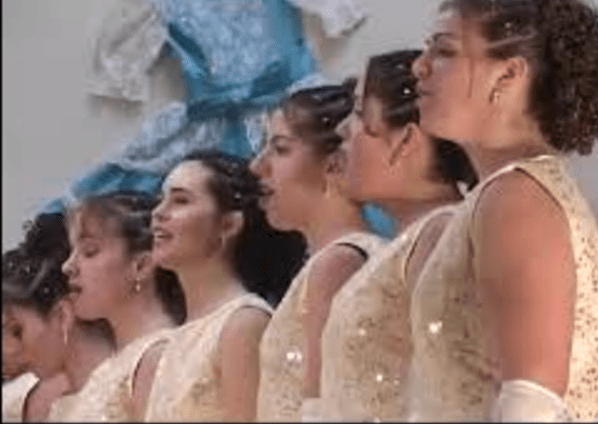
Here, as in Terceira, it contributes to cultural identity, the sharing of generations, and the exchange of communities. However, unlike in Terceira, it has to overcome the obstacle of language and, above all, the challenge of distance.
Thanks to Victor Santos’s resilience, we find him especially on the east coast of the United States, in the state of Rhode Island, in the city of Pawtucket, at the Amigos da Terceira Community Center.
On the West Coast, Diniz Borges wrote that the Terceira Carnival in California is linked to emigration due to the Capelinhos volcano and the family reunification law.
He says that Tulare’s first Carnival dance dates back to the late 1960s and that today, these events are common in other cities such as Modesto, Turlock, Tulare, San José, Artesia, and Chino.
Congratulations to everyone who helps maintain the tradition of Terceira’s carnival every year and everywhere, from the Azores to California.

_____
José Andrade is the Regional Director for Communities of the Government of the Autonomous Region of the Azores
This article is from his book Transatlântico – As Migrações nos Açores (2023)
Translated by Diniz Borges
 Filamentos (artes e letras)