
Europe has produced remarkable civilizations that have shaped the course of history. Among the many ways to measure Europe’s global impact, one of the most significant is the influence of its languages worldwide. Europe has given rise to three global languages that have spread far beyond its borders: English, Spanish, and Portuguese. These languages crossed seas and oceans and helped to shape great nations such as the United States and Australia, Argentina and Mexico, Brazil, and Mozambique.
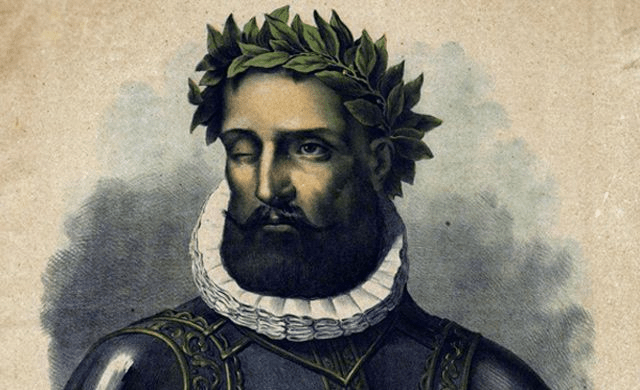
England had Shakespeare, Spain had Cervantes, and Portugal had Luís Vaz de Camões. This article will focus on Camões and his legacy, particularly as 2024 marks 500 years since his birth. Although King Dinis I of Portugal is regarded as the ‘father of the Portuguese language’—officially established in the late 13th century—Camões is celebrated as its greatest master.
Over the past five centuries, Camões has come to embody the very essence of the Portuguese soul. It is challenging to find an author who more profoundly understands what it means to be Portuguese. One of the central themes in Camões’ work is his belief that certain events are predestined to happen regardless of human effort—a concept we might call fatalism, or the acceptance of an inescapable fate. Centuries later, this notion would be called fado (destiny). More than just a musical style, fado encapsulates a fundamental aspect of the Portuguese worldview, a predisposition toward accepting life’s inevitable challenges.
Camões represents glory and suffering, as he understood victory is impossible without pain. His life perfectly symbolized this dichotomy: born into a noble family, he went to war, lived in poverty, and was later exiled. This contrast between triumph and hardship reflects the Portuguese people’s enduring spirit, as expressed in both his life and his literary works.
Born in 1524, Camões lived during the most glorious period in Portugal’s history. While Portugal achieved incredible feats through its voyages of discovery, Camões demonstrated that the Portuguese language was powerful enough to accomplish equally outstanding literary achievements. Camões lived during the Renaissance, and although he can be considered an author of this artistic period, it is essential to note that he went far beyond the traditional canons of the movement. The Renaissance marked a reencounter of Europeans with the classical cultures of Rome and Athens. For the elites of the time, nothing could surpass the achievements of the Greeks and Romans, who seemed to have attained near perfection in art, law, and philosophy.
Since the 10th century, Europe has been defined as the point of encounter with three great traditions: Jerusalem, Athens, and Rome. Moreover, Europe is the result of combining these cultural and spiritual legacies. From Jerusalem, we inherited Christianity, which provided the foundations of our spirituality and morality, shaping our ethics and institutions. From Athens, we received the philosophical tradition, the intellect, and the values of rationality, democracy, and the pursuit of truth in science and the arts. We inherited law, political organization, administrative systems, and military culture from Rome.
Throughout history, Europe has often needed to look back at the foundations of its civilization, and the last significant moment of reflection occurred after the Second World War. However, in the 16th century, Europe was at an extraordinary point where attention to the ancient world was crucial. Camões did not reject the history behind him nor the pillars of European culture, but he went further. He did not believe that the Greeks and Romans had achieved the pinnacle of human accomplishment because he witnessed something equally impressive in his own time—something uniquely Portuguese. He was the son of a generation that had discovered Brazil and saw the fleet of Fernão de Magalhães across the globe for the first time in history, and Vasco da Gama charted the sea route to India. Above all, Camões witnessed achievements that surpassed the imagination of previous generations. His desire was to celebrate these feats in his work, which became the foundation of his epic. Camões symbolizes a Europe that honors its past while looking to the future—he represents a Europe of innovation and discovery, full of glory but with the suffering of those who tried to reach the impossible. That’s one of the main reasons why we have to look to him in the 21st century and why we should consider this year the 500th anniversary of his life.

Camões was immortalized through his work, Os Lusíadas. It tells the story of Vasco da Gama’s pioneering voyage to India, which opened the sea route between Europe and Asia. Blending history, mythology, and poetic imagination, Camões recounts the trials and triumphs of Portuguese sailors as they navigate uncharted waters, facing divine interventions, supernatural forces, and the challenges of discovery. The epic celebrates both Vasco da Gama’s heroism and the Portuguese’s broader spirit, portraying Portugal’s glory on the world stage.
If the Greeks had Homer’s Odyssey and the Romans had Virgil’s Aeneid, the Portuguese have The Lusiads by Camões. While Homer sought to celebrate the heroism of the Greeks and Virgil aimed to surpass Homer by glorifying Rome, Camões aspired to go beyond them both. His goal was to exalt the grandeur of the Portuguese. To achieve this, he couldn’t place the Portuguese adventure on the same level as the Classical epics; he had to elevate it, for the Portuguese had accomplished what no one had ever imagined possible. Camões did not embrace modesty in recounting the history of his people. He boldly declared that not even the ancient gods could stand in the way of the Portuguese destiny. In the end, for Camões, there were Athens, Rome, Jerusalem, and Lisbon. That was his statement to the world.
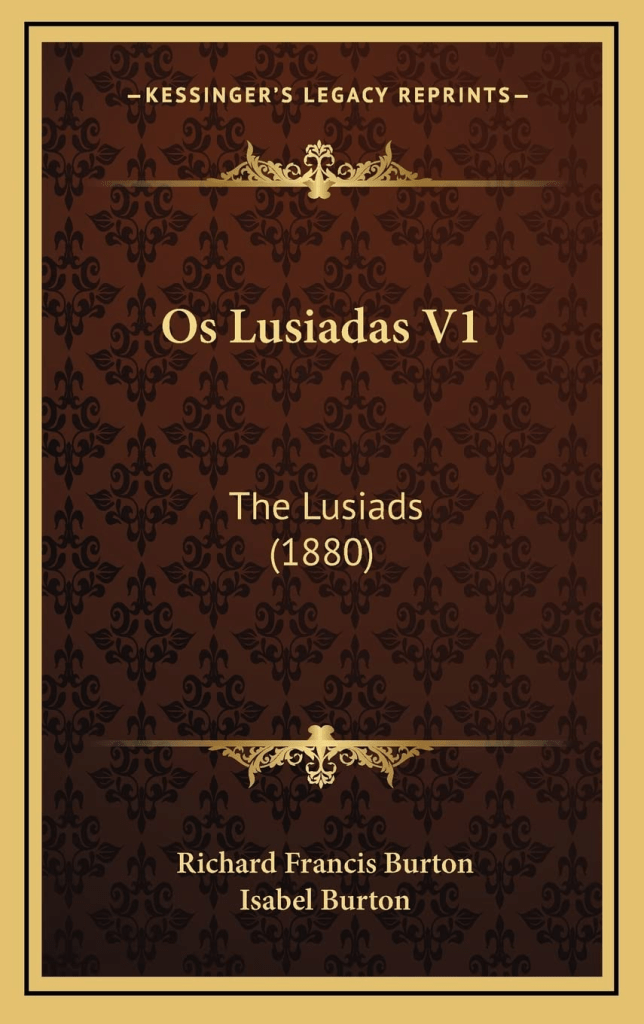
Tragically, he would die in 1580, the same year Portugal lost its independence to Spain. This marked the only period in Portuguese history when the country was not sovereign. Portugal had emerged as a Christian kingdom following victories over Castile and the Moors in the 11th century, and it had played a crucial role in the Christian Reconquest. However, by the end of the 16th century, with the demise of the Avis Dynasty, this legacy seemed at risk. It was the close of the Golden Age of Portuguese history.
Portugal eventually regained its independence in 1640 and continued its journey forward. Luís de Camões became a central figure in Portuguese identity. Five hundred years later, he stands as a symbol of perseverance and innovation. His life and work are integral to Portuguese heritage and resonate as a fundamental emblem of the European spirit.
José Matias is a political columnist and a teacher. He regularly writes for Jornal Sol in Portugal and teaches classical music and global politics. His research focuses on European affairs and soft power.
This article is from EuropeanConservative.com

 Filamentos (artes e letras)