

INTERVIEW BY DIÁRIO INSULAR NEWSPAPER WITH SANDRA CRISTINA SOUSA, DIRECTOR OF THE DOCUMENTARY “ENTRE DANÇAS”
This Sunday, at the Angra, do Heroísmo Cultural and Congress Center, you are presenting the documentary “Entre Danças.” What is your approach to Carnival on Terceira Island?

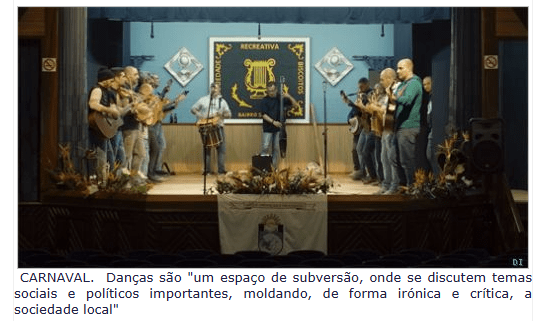
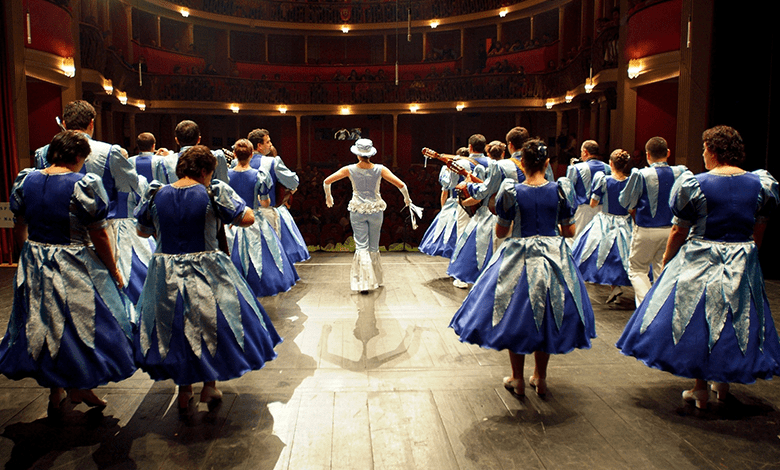
The documentary “Entre Danças” takes a deep journey into the origins and evolution of Carnaval on Terceira Island, exploring how this tradition has taken root and changed over the centuries. We try to understand how Terceira’s Carnaval was born and how the dances and balls, which began as street events, evolved into the current format, occupying the stages of recreational societies and becoming an essential part of community life. For this approach, we had the fundamental collaboration of Dr. Carlos Enes, historian, and Dr. Assunção Melo, art historian, who contributed valuable contributions to understanding this Carnaval’s origin and cultural significance. What makes this Carnival so unique, and something I tried to capture in the film, is the spirit of sacrifice and dedication of the people who take to the stage, often rehearsing for months. Not being a resident of Terceira, it was only when I experienced this that I understood the depth of feeling surrounding Terceira’s Carnival. Despite the famous phrase “no one takes it badly at Carnival,” the dances are a space for subversion, where important social and political issues are discussed, ironically and critically shaping local society. This formative and critical spirit makes the Carnival of Terceira absolutely unique.
How did this project come about? What made you interested in this subject?
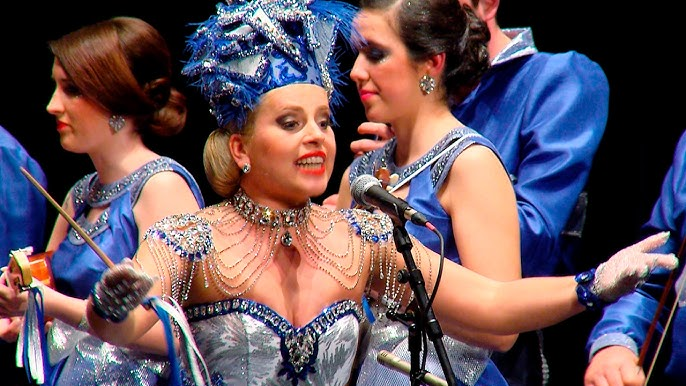
This project resulted from a commission from the Angra do Heroísmo City Council earlier this year, intending to create film content to present to a UNESCO commission. The purpose was to explore the possibility of nominating the Carnival of Terceira for World Heritage status, which immediately caught my interest. The opportunity to document something deeply rooted in Azorean culture and simultaneously so unique was an irresistible challenge. My connection with the subject arose because of the opportunity and because I was curious to understand what makes Terceira Carnaval unique. I realized during the research and filming process that this Carnival is not just a party. It’s a collective expression that involves the whole island, with dances that reflect a sharp and ironic social critique since the 19th century, always with a background of fun. I was fascinated by how the communities mobilize, the care taken with the costumes, the songs, and the role of the authors, who write plots that balance humor and reflection. This cultural and social richness led me to take a deep interest in this project and try to capture, in the documentary, this fusion between tradition and contemporary criticism.
Are Carnival dances and balls still very much characterized by social criticism today? Are they more than just a moment of fun for the population?
Yes, without a doubt. Although festive in nature, the Terceira Carnaval is a cultural event that has always brought a dimension of social, political, and even economic criticism. The themes presented in the dances and balls evolve over time, following the concerns and tensions of society. Over the years, there has been an increasing responsibility on the part of the authors and participants, who seek to entertain the public and incite reflection. The documentary “Entre Danças” focuses precisely on this cultural richness and the duality of Carnival: a space for fun but also a vehicle for criticism. Since the 19th century, sword dances, tambourine dances, and bailinhos have reflected the most profound issues of society, whether it be the censorship of the Estado Novo, class prejudices, or other fractious problems such as AIDS, drugs, and social differences, as Dr. Carlos Enes mentions in the film. Today, Carnival continues to be a place where there are practically no taboos. Even complex subjects are tackled on stage, using language often full of humor, making it easier for audiences to accept. However, these comedy moments almost always contain a serious message that leads to reflection after the show. The production of the documentary reinforces the importance of the authors, who often have the role of balancing humor with criticism. The creative work and the months of rehearsals involve not only technical preparation but also the search for themes that can engage with current reality. There is a continuous effort on the part of the authors to adapt the themes to changes in society, keeping the tradition alive and relevant. The younger generations, who have been participating increasingly, help to bring new perspectives while preserving the essence of Terceira Carnival. Thus, the dances and balls are undoubtedly more than fun moments; they are a cultural platform for criticism and expression, where the community reflects and challenges itself to think about its own dynamics and values.

Is this tradition in danger of losing its genuineness over the years? Is this work also intended to preserve the memory of the Carnaval tradition on Terceira Island?
As with any tradition, Terceira Carnaval risks being shaped by the winds of modernization and globalization. The younger generations bring new influences, which can alter certain aspects of the tradition. However, the essence of Carnival, with its social criticism and ability to address deep themes through humor and satire, has endured over time. The documentary “Entre Danças” aims to preserve this cultural memory by recording the dances in their current form. We explore the evolution of dances from when they took place in open spaces, as mentioned in the film, to the current format, where they occupy stages in recreational societies. The transition to more formal stages and the involvement of new authors and musicians show that the tradition constantly changes, but its critical and festive spirit remains. By involving the younger generations, we can ensure that this tradition is kept alive and respected. They bring innovation and learn to preserve what is most authentic. The documentary thus serves as a way of ensuring that Terceira Carnival continues to have its relevance and symbolic value for the community while preserving its genuineness.

Is this event still not publicly known outside of Terceira? Do you believe it has tourist potential?
Although Terceira Carnaval is deeply rooted in local culture, it is still a little-known event outside the island. However, I believe it has immense tourist potential. The uniqueness of the dances and bailinhos, with their mix of social criticism, political irony and community celebration, offers an authentic cultural experience that attracts visitors interested in experiencing something unique. The documentary “Entre Danças” highlights Carnaval’s ability to mobilize the entire community, from the youngest to the oldest, in a celebration that lasts several days. Beyond simple entertainment, this cultural immersion has enormous appeal for those seeking more profound and genuine experiences. As we showed in the film, political and social issues are discussed on the stages of Terceira, always with a satirical and humorous approach, which can attract tourists. In addition, the intricacy of the costumes, often handmade, and the collective effort of the community to organize and present these dances are a natural spectacle that can captivate any visitor. With proper promotion, respecting tradition, and involvement in the community, Terceira Carnival has all the conditions to become a significant tourist attraction.
in Diário Insular-José Lourenço-director
Translated by Diniz Borges
We thank the Luso-American Education Foundation for their support.

 Filamentos (artes e letras)