

AN ARCHIPELAGO OF 11 ISLANDS
Madeira is the second-most recent of the 17 Houses of the Azores that are active in Portugal, Brazil, the United States of America, Canada, Uruguay, and Bermuda.
But it’s not the least important. On the contrary, it is especially important to raise the flag of the Azores in our sister archipelago.
We have shared geography and culture for more than five centuries. We had to have a concrete expression of this mutual complicity, as we do now.
In 1986, the House of Madeira in the Azores was founded in Ponta Delgada.
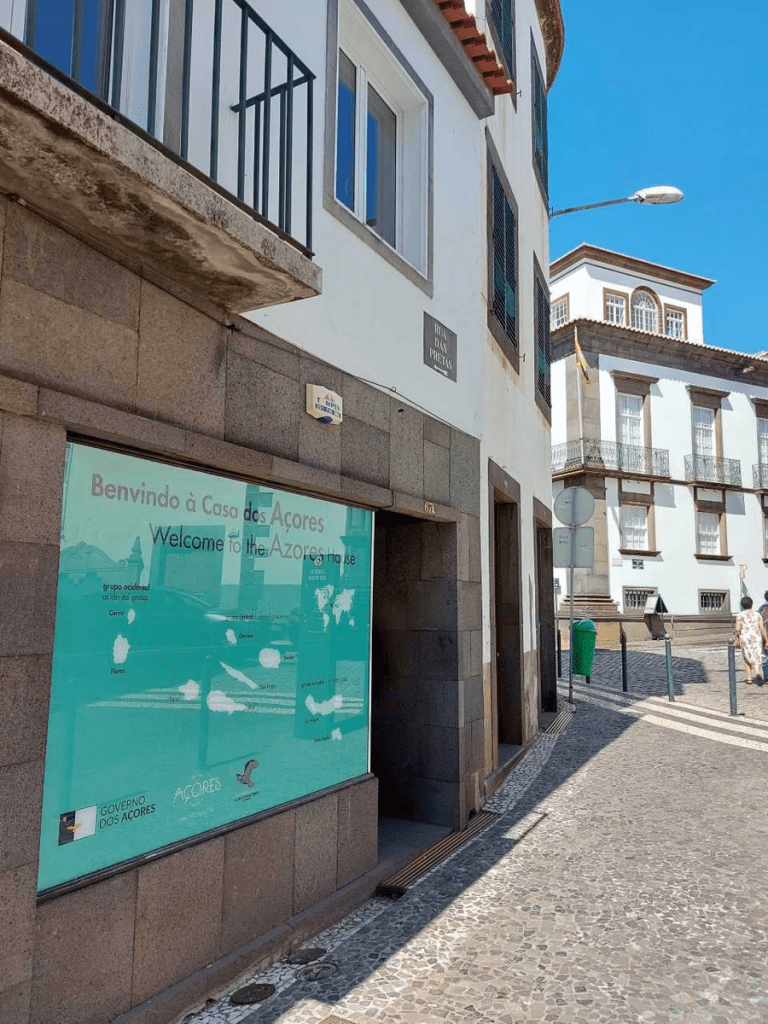
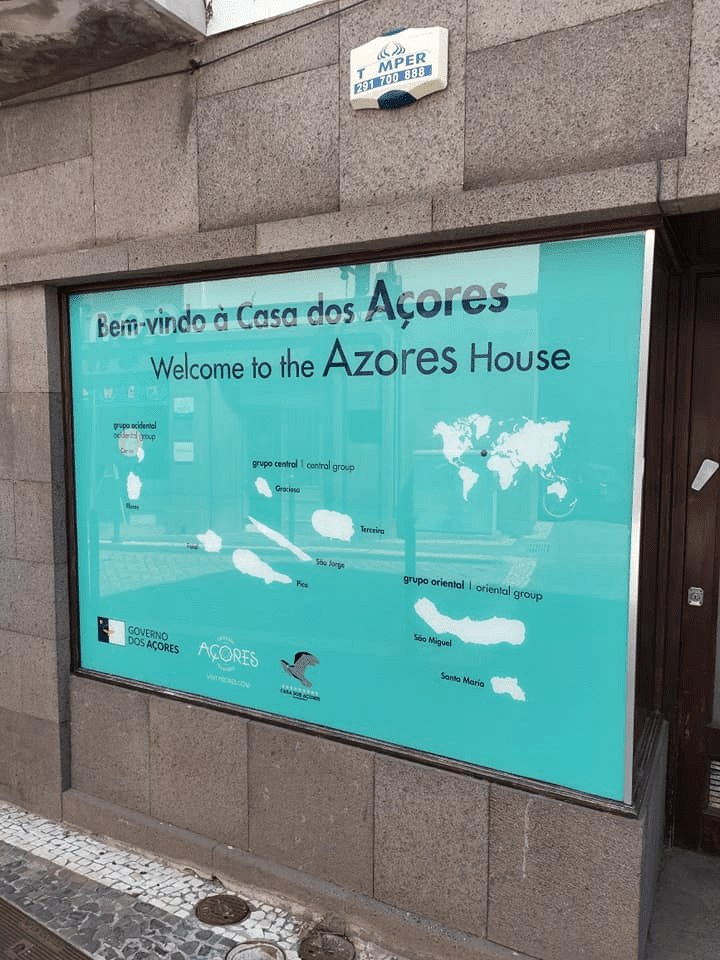
Thirty-three years later, on December 27, 2019, we finally reciprocated this symbolic gesture of island representation by creating the House of the Azores in Madeira in Funchal.

We have thus consolidated a bilateral process of successive attempts to bring the two autonomous regions closer together.
At the end of the 20th century, Maria Mendonça, a journalist from Madeira, founded the Azorean Center in Madeira through her newspaper Ecos do Funchal.
At the beginning of the 21st century, the Madeiran poet João Carlos Abreu, through his association with Criamar, built two cultural bridges with the Azores: the Atlantic Youth Meeting CriaPoesia and the International Poetry Meeting, which also extended to the Canary Islands and Cape Verde.
Our island relationship has now been given the institutional shape it deserves on both sides, with the Casa dos Açores (House of the Azores) in Madeira.
But this is not the end. It’s a starting point for us to navigate our common waters more and better.
Because of our past and for our future, we are and must be a cultural archipelago of 11 islands.
The Autonomous Regions of the Azores and Madeira are a success story regarding political affirmation and regional development on the Atlantic map of Portugal and Europe.
Without neglecting the centuries-old autonomist aspirations of the Azorean and Madeiran peoples, our chronology begins with the democratic revolution on April 25, 1974, and culminates on April 2, 1976, with the constitutional consecration of the two autonomous regions.
Both are based on the founding year of 1976.
On June 27, the first regional legislative elections were held simultaneously in the two autonomous regions.
The first regional governments of the Azores and Madeira took office on September 8 and October 1, respectively.
In Ponta Delgada, João Bosco Mota Amaral presided over the first five governments from 1976 to 1995.
In Funchal, after the first government presided over by Ornelas Camacho, Alberto João Jardim will preside over ten consecutive governments from 1978 to 2015.
From the outset, emigration was taken on as its own competence and a strategic commitment for both regions.
In the Azores, the Gabinete de Emigração e Apoio às Comunidades Açorianas was created. This body promoted four “Congresses of the Azorean Communities” in 1978, 1986, 1991, and 1995 and became the Direção Regional das Comunidades in 1998.
In Madeira, the Emigrant Center was created in 1977, then the Center for Madeiran Communities and Migrations, and now the Congress of Madeiran Communities, with its Permanent Council.
More recently 2016, the Madeira Global Forum was created, and the Madeiran Diaspora Council was established.
All this is alongside the Regional Directorate for Communities and External Cooperation.
Also, in the Azores, an Azorean Diaspora Council was created in 2019, but with members elected by the communities themselves, which will be formally installed on June 10, 2021.
Within the scope of the Madeiran communities, four Madeira Houses were created in 1986 – in the Azores, Coimbra, and the North, while the one in Lisbon is now inactive.
For the Azorean communities, 18 Houses of the Azores were created – in Lisbon, Rio de Janeiro, California, Quebec, the North, São Paulo, Bahia, New England, Ontario, Winnipeg, Santa Catarina, Rio Grande do Sul, Uruguay, Bermuda, Maranhão, Madeira and Espírito Santo – and the one in the Algarve is now inactive.
By the same or similar paths, the Azores and Madeira value and dignify their diaspora with similar conviction and intensity, even though they are in different geographies.
The Azores are more towards Brazil, the United States of America, and Canada.
Madeira is more towards Venezuela, South Africa, and the United Kingdom.
In both cases, more than two million emigrants and their descendants will extend the good name of the Azores and Madeira.
_____
José Andrade is the Regional Director for Communities of the Government of the Autonomous Region of the Azores
This article comes from his book Transatlântico – As Migrações nos Açores (2023)
Translated by Diniz Borges -PBBI, Fresno State
 Filamentos (artes e letras)