

It can be difficult to plan a festival in the Azores at any time of year, given the harsh weather the archipelago experiences, which causes many flight and ferry cancellations. October tends to be a safer bet… until a tropical storm decides to pass through. In this case, Storm Kirk was creating issues for Terry Costa, the Artistic Director of MiratecArts, the cultural organization on Pico Island.
The storm was brewing in the festival’s second week, adding to the challenges that SATA, the regional airline, usually faces (bad weather, which brings frequent cancellations). This potentially meant some musicians may not make it to the islands, about 1,600 km west of mainland Portugal.
They were coming for the 9th edition of Cordas World Music Festival, where all the island is a stage: an antique wine press, the stunning 19th-century Santa Maria Madalena church, the steps of a vintage windmill, or under the canopy of magnificent centuries-old dragon trees.
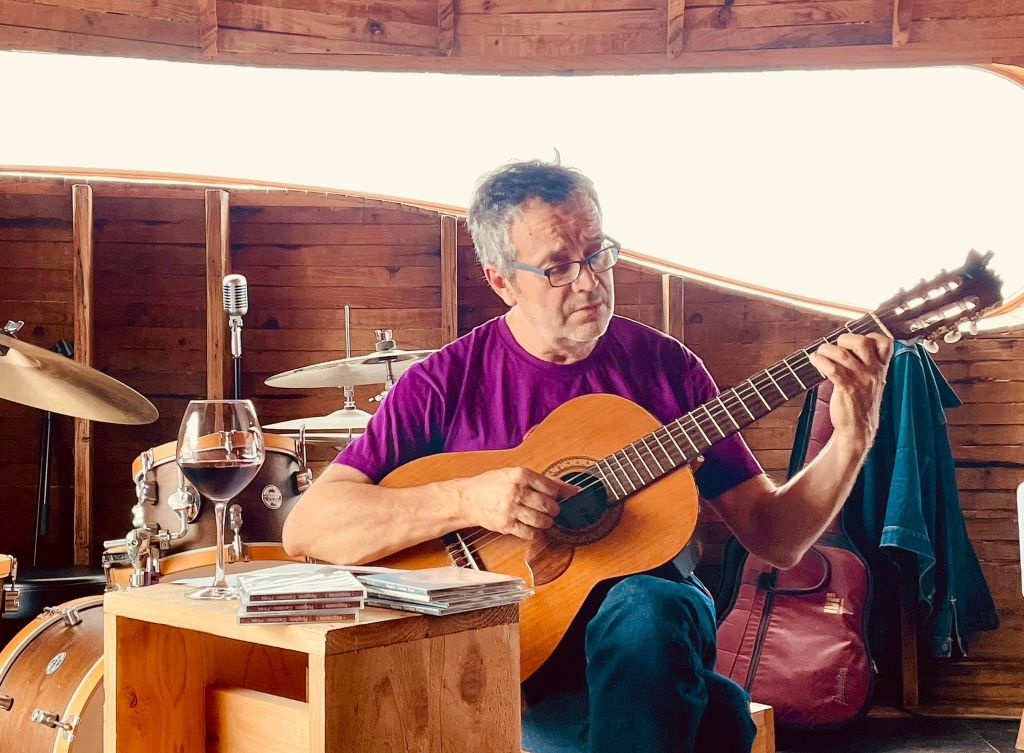
Cordas is strictly dedicated to string instruments, with solo artists, duos, and groups participating from around the world. This year’s edition featured artists from Uruguay, Venezuela, Brazil, France, and Finland, plus several more from mainland Portugal, Madeira Island, and various Azores islands.
Costa was always on watch and ready, awaiting news from SATA about whether the flights were landing on time. Interest in tourism in the Azores has boomed over the past few years, which meant he had to move the festival forward one month from the usual September dates due to a lack of availability in flights and accommodation on Pico island.
Thankfully, despite some flight delays and rerouting, the opening night of Cordas went off without a hitch, with Aníbal Raposo highlighting the program. The renowned composer, poet and singer, native to São Miguel island, played to an engaged audience, many singing along as people around these parts were familiar with his repertoire.

Before his main set in the Madalena Auditorium, Raposo was joined by the Grupo Amigos da Tradição (Friends of Tradition Group), a collective of local musicians who played an intimate set on their various string instruments. It reached a lively point when Raposo and the group got up from their seats and walked through the main entrance of the auditorium, treating guests to a spontaneous chamarrita, the traditional Azorean music usually accompanied by a group dance. Not even the dullest individual could keep their foot from tapping along to a chamarrita, and this crowd was no different.
Batimento Dúo, featuring the charming Ignacio Correa and Andrés Rey from Uruguay, was also part of the eclectic showcase, keeping the audience in stitches with their banter (“we have CDs for sale in the lobby – they also make great coasters and frisbees”) and how they could relate to Azoreans as Uruguay too “is small with lots of cows.” They reminded us that Uruguay also has a Tango, not just that large country next door, with a lovely piece that started almost like a lullaby and emerged into a fierce tango melody.
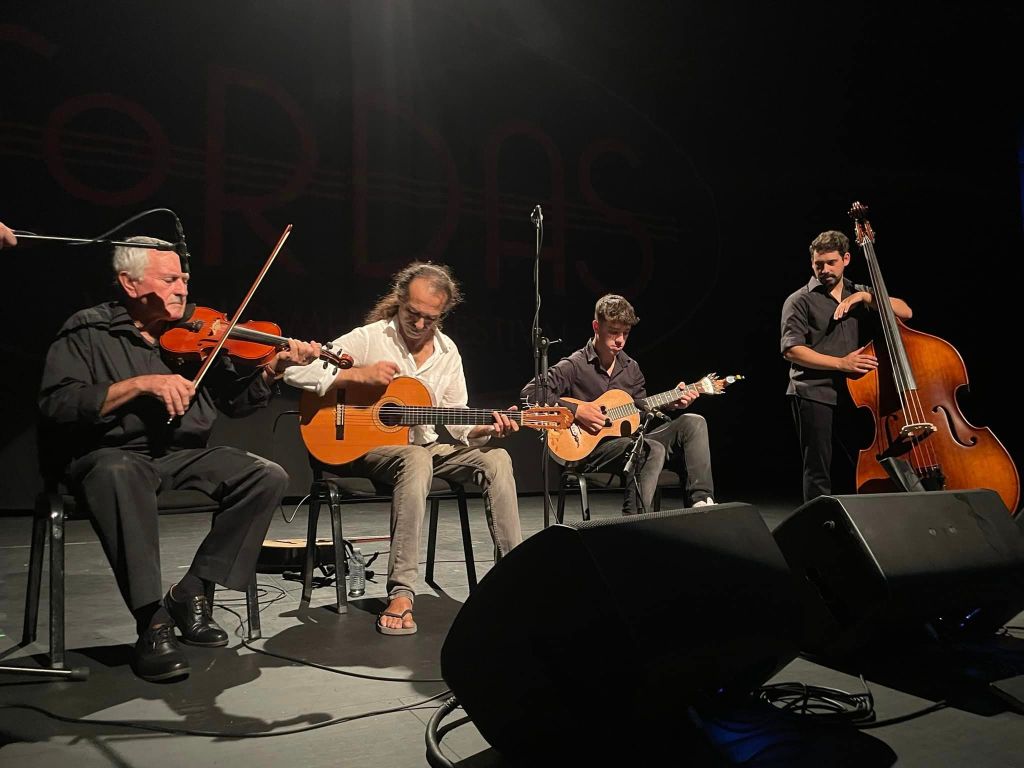
A unique component of the Cordas Festival is that it caters to audiences of all ages, with concerts and events during the day and evening. Invited musicians sometimes play more than one show, sharing their talent with children at local schools. The kids love it, many never having seen a cavaquinho (the Portuguese instrument that inspired the ukelele) or the traditional Portuguese Fado guitar. They get to strum along, eager to touch the instruments.
One of the more heartwarming scenes of the festival is during the morning concerts when seniors from the local care home get a day out for some culture. They are also joined by teens from the nearby high school: when’s the last time you saw a concert with that combination? The seniors eagerly await their turn to enter the auditorium as they get helped off the bus, many in wheelchairs or walkers. This is a big deal, as they wear their finest dress, particularly one lady with her perfectly pressed blue skirt, blazer, and matching hat.

As the seniors were led into the auditorium, the high schoolers waited outside a bit longer, lest they miss out on the latest TikTok video. Once inside, despite the lingering humidity, all were entertained by a set by the Marcos Fernandez Trio, featuring Nuno Mendes on double bass and 15-year-old Viola da Terra player Bernardo Alves Macedo.
Galician guitarist Fernandez comes across as a humble musician with loosely tied-back long hair and flip-flops. His demeanor appears to portray that playing the guitar is effortless, as his fingers whip across the strings and frets. He genuinely seems content to have a guitar in his hands and is quick with a wink and smile to his co-players. This seems to rub off on them, creating a musical bond, particularly for his young student Macedo, whom I’m sure we’ll see more of.

Students and seniors were once again treated to a daytime concert the following week, this time by Evandro Meneses. The young Viola da Terra virtuoso from Terceira island brought the auditorium to a hush with his solo set, playing the beautiful sounds of the Azorean “two hearts” stringed guitar. His performance, which pays tribute to the nine Azores islands, ends with a passionate moment of singing that seems to come out of nowhere. It was one of the most memorable moments of the festival.
When Meneses ended his set, he was met with a lively standing ovation. A small contingent of those applauding were fellow artists on the Cordas bill.
That’s another thing that makes Cordas unique: throughout the 2-week festival, artists come and go. But until it’s time for their personal performance, they hang out, creating impromptu moments, eating as a group, and supporting each other at their shows.

Costa tirelessly brings these artists worldwide to the Azores. The concerts are all free—yes, there is no entry fee. Some locals complain that there is nothing to see or do, especially after the summer season, yet here is a free festival with something different offered every day for two weeks.
“It is certainly not for lack of trying,” Costa says when some nights at the auditorium are not full. “We advertise on billboards and posters around the village, on local radio, and social media.”
Costa is one of the hardest-working people in this business. His main goal is to share art through artists, no matter where they’re from or what they do. He’s a one-man social media manager, set decorator, writer, chauffeur—the list goes on. He does it for the love of art and the Azores, but it comes with its challenges.

“There is a serious lack of funding to do all that we need to do,” Costa explains. “It’s always hard to get the funds. Every year it’s like starting from scratch: it doesn’t matter who is being showcased, how many awards they’ve won. It is difficult to secure funding.”
Funding generally comes from the government, regional and municipal levels, local sponsors, and foundations.
“This kind of festival is great because musicians get together and can share their vision and points of view, and that’s always very positive,” says José Valente, an accomplished violist from Porto.
Valente performed in the exclusive setting of the vintage wine press at the Wine Museum in Madalena. Dressed in a somber black tunic and black trousers, his bright orange socks stood out as he worked the pedals for his looping station. “My mother makes all of my colorful socks,” he says.
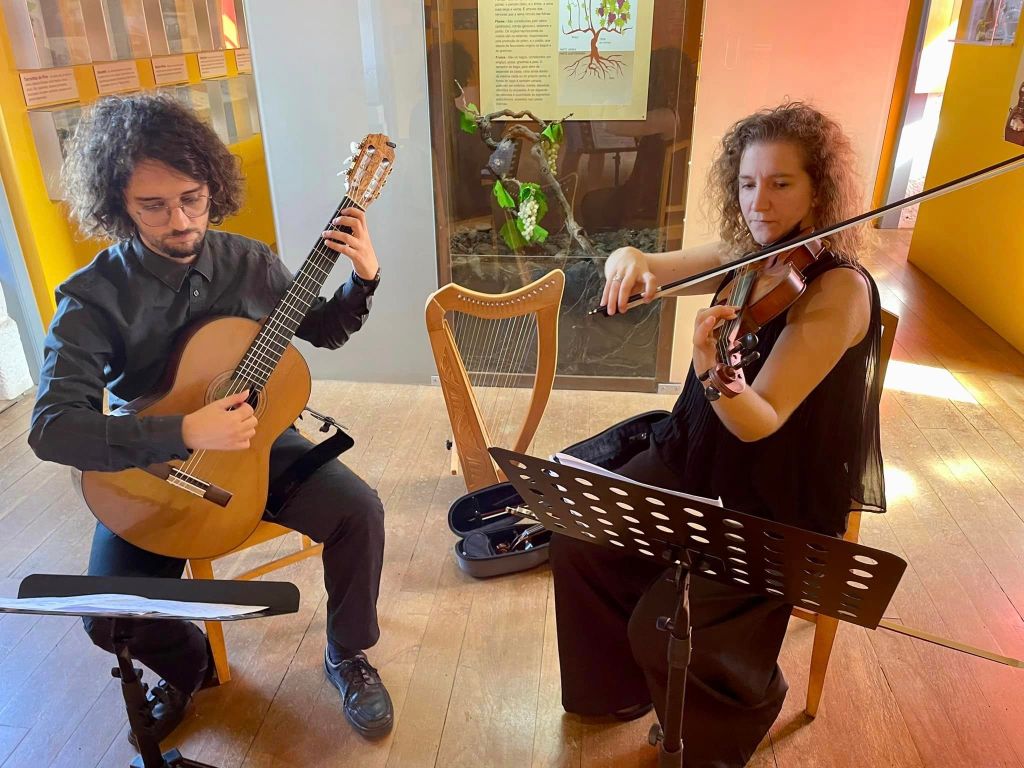
He takes a multidimensional approach to playing the viola, not just using a bow but, at times, a soft mallet or broom gently brushed or hit against his instrument. The backing tracks, which at once create a chilled ambient sound, switch to what sounds like a marching band.
The Wine Museum hosted singer, songwriter, and producer Rita Costa Medeiros. The young artist from São Miguel did her set to an audience of locals and tourists, who happily stumbled upon the concert as they wandered among the Museum’s dragon trees. They all quietly took in her melodic guitar and tender vocals as the wind picked up outside. Students from the local high school were also in attendance, and not even one was on their phone. Her music entranced them so much that they did not glance at their mobiles.
Medeiros also took the stage at the Cella Bar Jam Sessions, a chill evening when various musicians from the festival came together. Maninho from Brazil treated the audience to some Samba and other rhythms, and Chris Erwin, aka K-9 Cat, brought his indie, American acoustic sound. Storm Kirk was on its way, evident by the rousing waves outside the venue, beautifully situated on the sea’s edge in Barca, Madalena. You could see the waves crashing against the shore, with an enchanting view of Faial Island across the canal.
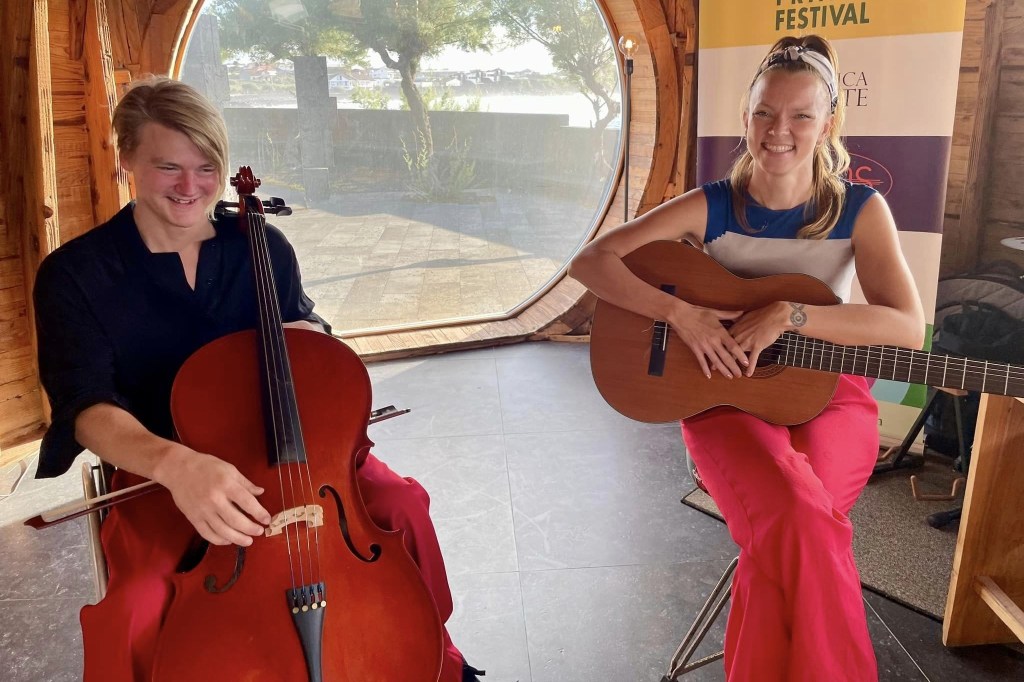
It was the perfect setting for a rendition of Ilhas de Bruma (Islands of Mist), known as the unofficial anthem of the Azores Islands. Medeiros was joined by the dynamic Kukka Harvilahti, also known as Naëmi Sana, on guitar and Ville Vapaamieli on cello, both Finnish artists currently calling Flores island home. They entertained the audience with their set earlier in the evening, singing in English and Finnish, commanding attention in their matching red attire and witty lyrics. Fernandez brought his Galician essence to the mix, and Pico´s emerging artist Miguel Cabral joined in on guitar and vocals.
A surefire tearjerker for any Azorean immigrant missing their family, this impromptu version of Ilhas de Bruma triggered some heartstrings in the audience, as many sang along and gently wiped away tears. Even if you can’t understand Portuguese, the melody is haunting yet pretty. The night’s highlight was watching the musicians from varied backgrounds come together to perform this Azorean classic.

As the waves crashed between the canal, where many immigrants have traveled, and locals do to this day, no matter how far apart we are from each other, these Islands of Mist bring us together—the same way festivals like Cordas do.
The 10th edition of the Cordas World Music Festival will be held on Pico Island from 1 to 12 October 2025.
— Nancy Matos is a Portuguese-Canadian writer and journalist whose parents hail from Pico and Faial, Azores. Born in Vancouver, British Columbia, Nancy has written about the global Luso community for more than twenty years. She now lives in Horta, Faial, where she enjoys a daily view of Pico.

 Filamentos (artes e letras)