

Ponta Delgada City Council is investing three million euros in the Portuguese Capital of Culture in 2026. The measure was approved by a large majority in the Ponta Delgada Municipal Assembly and will project the city and municipality culturally in the country and the world.
“The year 2026 will certainly be a year of celebration, promotion, dissemination and training for Ponta Delgada’s artists and cultural agents,” said Pedro Nascimento Cabral, adding that a record investment will be made in promoting culture.
“The Portuguese Capital of Culture project is underway and will consolidate the path developed by Ponta Delgada’s artists and cultural agents, who represent a cultural reference at national and international level, promoting the municipality to new heights of excellence,” he added.
The title of Portuguese Capital of Culture for 2026 is a legacy of the city’s finalist candidacy for the European Capital of Culture. It will enhance culture in all the parishes of the municipality.
“It’s three million euros that will include many local agents and artists. Three million euros will be invested in the culture of our 24 parishes. Three million euros that will allow us to become Ponta Delgada 2026 – Portuguese Capital of Culture”, he stressed.
“This achievement values our integral commitment to all aspects of Ponta Delgada’s development, recognizing our centuries-old traditions and culture as preponderant in our cosmopolitan condition, whose cultural offer is one of its main attractions. Through culture, we renew our commitment to promoting the city and the county, qualifying them in terms of inclusion, talent and freedom,” says Pedro Nascimento Cabral.
Fado singer Katia Guerreiro, commissioner of the Ponta Delgada 2026—Portuguese Capital of Culture project, presented the guidelines for the cultural development of this project.

Katia Guerreiro wants to “develop a program that allows Ponta Delgada to be projected from culture and contribute to the transformation and change of habits and perception of the future.”
“We have to educate and create new audiences, stimulate the community to participate, encourage cultural creation. We have a well-defined strategy, we want to make culture and education inseparable. We want to promote culture in education and education for culture. The Portuguese Capital of Culture is a unique opportunity,” he said.
“We want culture and art to happen everywhere, with everyone and throughout the 24 parishes, covering diverse areas such as music, literature, theater, dance, inclusive arts, visual arts, architecture, urban art, cinema, ethnography, religiosity, gastronomy,” said Katia Guerreiro.
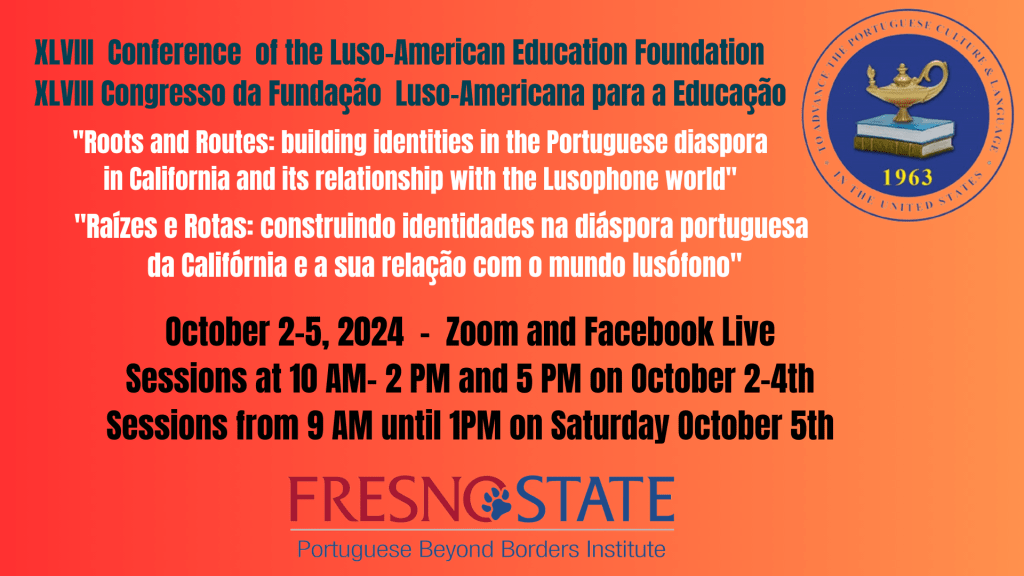
Translated to English as a community outreach program from the Portuguese Beyond Borders Institute (PBBI) and the Modern and Classical Languages and Literatures Department (MCLL) as part of Bruma Publication and ADMA (Azores-Diaspora Media Alliance) at California State University, Fresno, PBBI thanks the Luso-American Education Foundation for sponsoring FILAMENTOS.
 Filamentos (artes e letras)