

What are the highlights of the Angrajazz line-up?
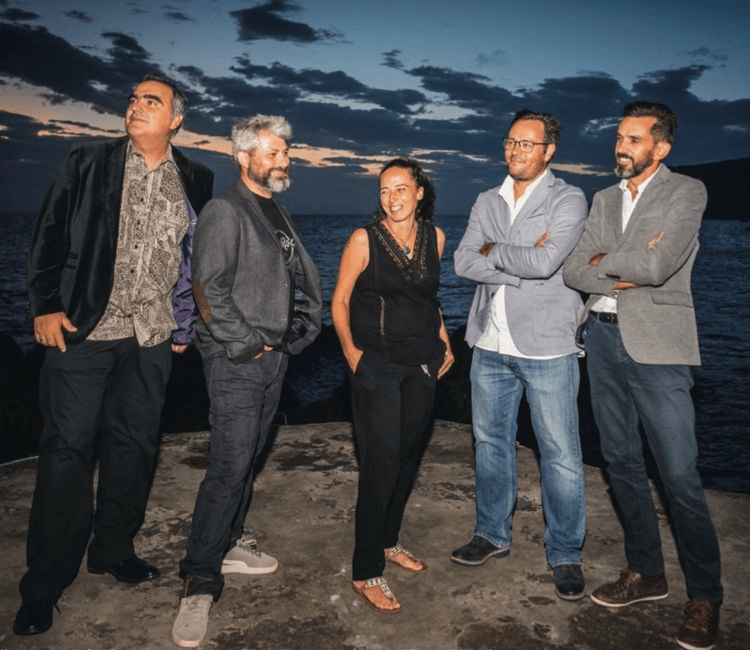
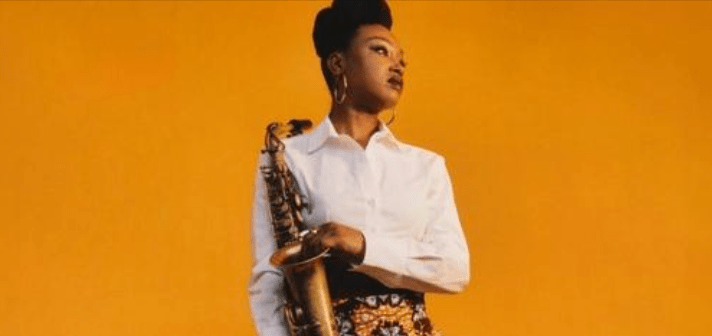
That’s a question we get asked a lot, and we usually answer that the highlights always depend on the tastes of each spectator. Once again, we’ve tried to present a program of national and international musicians with varied backgrounds and different approaches to jazz. In short, we can point to some aspects that we think are very appealing: we will have our Angrajazz Orchestra for the first time with an international guest, the extraordinary Spanish saxophonist Perito Sambeat; a European group based in London and led by the saxophonist of Nigerian origin Camilla George; the concert for two pianos by two of the most outstanding Portuguese jazz pianists – Mário Laginha and João Pedro Esteves da Silva; the American singer Catherine Russell, who has an impressive vocal approach and is considered one of the greatest contemporary interpreters; the award-winning composer/pianist VijayIyer, who performs in the always appealing piano/bass/drums format; the septet Nebula Project, led by accordionist/pianist Ben Rosenblum, who presents a project rooted in the traditional music of different countries and in New York jazz, the result of the diversity of his musical experiences; the Ricardo Toscano Quartet, accompanied by a group of 11 local classical musicians, led by Elena Kharambura (Ensemble AH), and conducted by maestro Pedro Moreira, present the project “Charlie ParkerwithStrings”; and finally the group of young New York jazz talents AngrajazzLegacyQuartet with Italian saxophonist Francesco Cafiso.
What is the process of choosing names for the festival every year?
It’s a lengthy and careful process, the sole responsibility of the festival’s management. Hundreds of records are listened to and classified each year until a pre-selection of two or three dozen hypotheses is reached. The hypotheses are then filtered based on the groups’ costs and availability and finally worked on, intending to arrive at a varied, coherent, and of the highest musical quality program, as mentioned above.
The festival is celebrating its 25th anniversary. What are the significant milestones along the way?
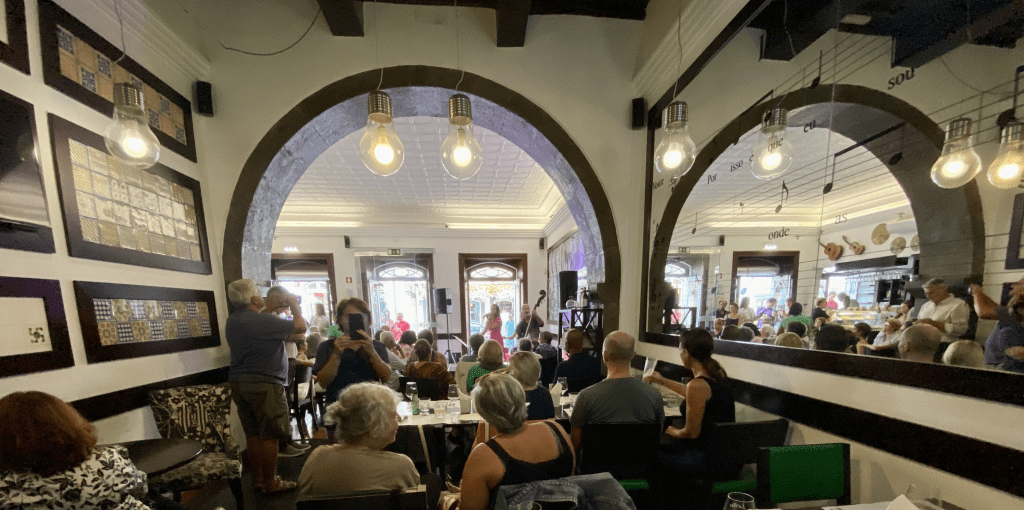
That’s difficult to answer since Angrajazz has been home to some of the best-known jazz musicians of recent decades, nationally and internationally. If I were to list my 10 favorite concerts out of the 161 that make up the Festival’s history, that list would probably differ from yours and the rest of the Angrajazz board. But I can mention, by way of example, that in 2010, a group of great musicians – Henry Texier, Joe Lovano, Steve Swallow, and Aldo Romano – got together under the name TransatlantikQuartet to play four unique concerts in Europe. One of these four concerts took place at Angrajazz and was considered the Best Concert of the Year in Portugal by national critics. In 2012, at the 14th Angrajazz, JasonMoranandTheBandwagon’s concert received the same distinction. In 2013, CécileMcLorinSalvant, considered the best jazz singer of our time, performed at Angrajazz. She only gave her first concert in mainland Portugal at the Centro Cultural de Belém 10 years later! Several world-renowned musicians have performed here but never got to play in mainland Portugal, such as the now-disappeared pianists EsbjornSvensson in 2004 and BarryHarris in 2014. It has also happened that some musicians make their debut in Portugal at Angrajazz, as was the case with the aforementioned CécileMcLorinSalvant, the big bandDarcy James Argue’sSecretSociety, in 2018, and the group Guillermo Klein y Los Guachos, in 2022. In our 25th edition, the same will happen with the Ben Rosenblum Nebula Project.

What will it take to persist for at least another 25 years?
This job can only be done with great pleasure and commitment. We have a board of directors running the Angrajazz Cultural Association pro bono for twenty-five years. In addition to the Angrajazz Festival, International Jazz Day, and Jazz in the Street, the Angrajazz Orchestra has been formed and maintained for 22 years. This can be considered the great “jazz school in the region” and is currently the oldest amateur jazz orchestra in the country. Indeed, times are different, and many things have changed over the past 25 years. It will be essential, however, for this project to continue that we can continue to count on the Angra do Heroísmo City Council, which has supported us since the very beginning, our private sponsors, whose support is essential to the festival, and our loyal audience, for whom this work is done. It is also necessary and urgent that something changes about regional support for culture, granted by the Regional Directorates for Tourism (DRT) and Culture (DRC) – for which we are obviously grateful – about the bureaucratic application processes, the criteria for evaluating them, and the deadlines for responding and making funds available.
What is planned for Jazz na Rua?
Jazz na Rua, which is in its seventh edition this year, was a challenge put to us by the DRC to bring jazz to the city. We promoted nine free concerts at various venues in the town between September 27 and October 5 by 3 local groups and 1 group from the continent. As part of Jazz na Rua, we also held two publicity events for students at two Angra secondary schools and a 4-hour training session for musicians, which will take place on Saturday morning, October 5, at the Angra do Heroísmo Cultural and Congress Center.

How important is it to take jazz to schools?
Taking jazz to schools will undoubtedly prevent a repeat in the future of what happened to us 22 years ago when we created the Angrajazz Orchestra. We announced in this newspaper that we would form a jazz orchestra and that interested musicians should sign up for an audition with conductors/performers Pedro Moreira and Claus Nymark. The turnout was enthusiastic and stimulating, but around a third of the participants had never heard a jazz record! For the Angrajazz Cultural Association, the dissemination of jazz, and consequently the creation of audiences and musicians, has always been one of the main objectives. We program annually, with a high level of didactic concern, always considering our target audience. In this sense, through our website, www.angrajazz.com, and articles published in the local press, we present in advance the specifics of the music that will be found at each concert. We believe this is how audiences are created, making spectators trust and identify with this cultural project, participating in and supporting our events by purchasing tickets. Except for the Jazz na Rua concerts, due to their specific characteristics, we have never used free admission concerts to attract audiences, nor have we integrated famous comedians into our programming for the same purpose…
Cultural agents are experiencing some contestation about government support. Do you feel this in any way?
I certainly do. We know the current DRC’s concern and commitment to resolving this problem, with some results already being felt this year. However, there is much more to be done, mainly if we assume that the main objective of this government support should always be to boost the results of a previously established cultural policy from a notoriously concise budget. Something goes very wrong when we have a supposedly independent regional jury evaluating cultural projects, which bases its decisions on an obsolete evaluation grid, which confuses innovation with quality, which doesn’t value the creation of audiences and their contribution through box office receipts, which doesn’t value the pro bono work of some organizations, which overestimates the geographical distribution of events across several islands and confuses it with cultural impact. And it all gets worse when that same regional jury doesn’t even bother to do a final weighting of the results obtained, leading to bizarre situations such as the Angrajazz Festival, long considered to be on the podium of the country’s jazz festivals and with a unique and high-quality 25th edition, getting a worse rating than an “eco summer festival” with two concerts (a singer and a DJ), or than an annual meeting of university tunas!
What remains the mission of the Angrajazz Association?
The main objectives remain the same – to create a taste for jazz and, consequently, to create audiences and musicians. At the same time, to produce a festival that is a landmark in the cultural life not only of Angra do Heroísmo but of the whole region continues to be on the podium of national jazz festivals. A festival that simultaneously makes the World Heritage City, Terceira Island, and the Azores known internationally contributes to the much sought-after “cultural tourism,” undoubtedly the most appropriate way to preserve our identity, culture, and way of life. In terms of audiences, we should mention that the Angrajazz Cultural Association, as well as being able to say that it has ‘created’ an increasingly ‘aficionado’ and consequently more knowledgeable and demanding audience on the island of Terceira, can be proud to count on a growing number of music lovers who come from outside the island to attend Angrajazz (around 29% of the audience). In terms of creating jazz musicians, the Angrajazz Orchestra Training Project continues to bear fruit, and it is with great satisfaction that we see the qualitative growth of the Orchestra and the emergence of other jazz groups that have been formed from this training project.
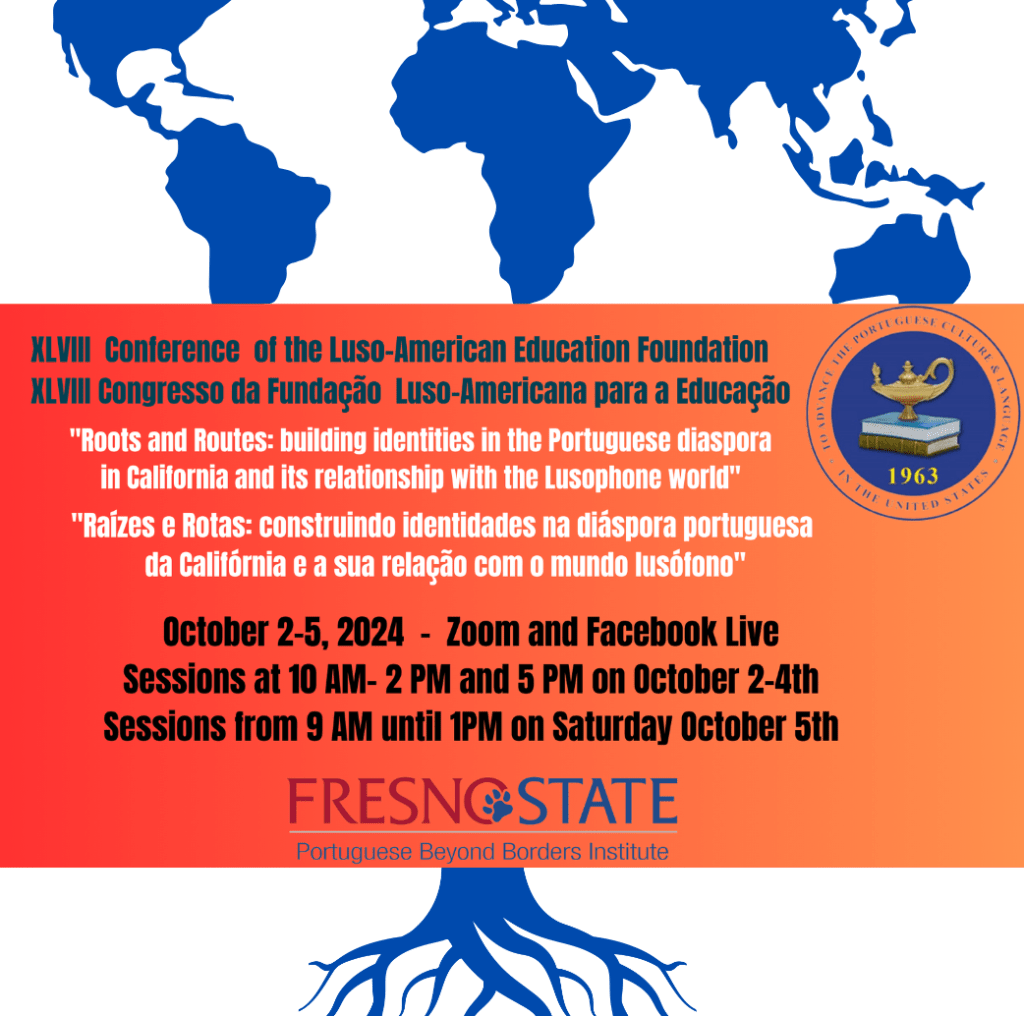
We thank the Luso-American Education Foundation for supporting PBBI-Fresno State, including this platform. We remind everyone that the LAEF will hold its 48th conference on education and culture from October 2 to 5.
 Filamentos (artes e letras)