

ALEGRETE, FOR EXAMPLE
The opening of the celebrations for the 270th anniversary of the Azorean settlement of the state of Rio Grande do Sul took place in January 2022, on the initiative of the House of the Azores at its headquarters in Gravataí, with the committed participation of more than three dozen Azorean-based municipalities in Rio Grande do Sul:
Alegrete, Arroio do Sal, Arroio Grande, Caçapava do Sul, Cachoeira do Sul, Camaquã, Cambará do Sul, Canguçu, Capão da Canoa, Capivari do Sul, Caraá, Caxias do Sul, Dom Pedrito, Encruzilhada do Sul, General Câmara, Gravataí, Ijuí, Jaguarão, Montenegro, Mostardas, Osório, Palmares do Sul, Pelotas, Piratini, Porto Alegre, Rio Grande, Santo António da Patrulha, São José do Norte, São Leopoldo, Taquari, Tavares, Torres, Tramandaí and Viamão.
The municipality of Alegrete was the furthest away.
The president of Alegrete’s Municipal Historical and Cultural Heritage Council, Homero Dornelles, had traveled more than 500 kilometers in seven hours to represent his municipality at a state meeting on Azorean roots.
He wanted to learn about the city’s history and understand the Azoreans’ influence in a territory that was part of the Guarani Jesuit missions.
From 1801, during the Conquest of the Missions, the south of the Ibicuí River, where Alegrete is located, was annexed to Portugal and was populated by Portuguese-Brazilians, many descendants of Azoreans.
These were the Azorean couples who arrived in Vila do Ramo Grande in 1752 and left for the port of Viamão, which is today known as Porto dos Casais and is the state capital of Porto Alegre.
That’s why we say today, with mutual pride, that Porto Alegre is the largest city in the world and was founded by Azoreans.
From there, they spread across different territories of the current state of Rio Grande do Sul.
Many of these Azorean settlers received Sesmarias for services rendered to the King of Portugal so that they could settle in this region, occupy the land on behalf of the Crown, and thus demarcate the borders with Argentina and Uruguay.
In the current territory of Alegrete, 200 sesmarias were granted, and around 80 of the sesmeiros were children or grandchildren of the Azorean couples.
The new settlement, now the city of Alegrete, was founded in 1817 under the divine protection of Our Lady of Aparecida.
The earthly protection fell to the Marquis of Alegrete, the governor and captain-general whom the people recognized and honored with the name of the new parish.
Alegrete went from being a village to a town in 1831 and became a city in 1857.
In the meantime, it gained significant importance in the state’s history.
In 1842, it was the third and last capital of the Republic of Rio Grande do Sul during the so-called Farroupilha Revolution. It hosted the National Constituent Assembly, where a Republican Constitution was promulgated, considered the first in South America.
It has been the birthplace of illustrious Allegretans, such as Oswaldo Aranha, the first president of the UN, or Demétrio Ribeiro, Brazil’s first Minister of Agriculture.
If municipal history is an honor for Alegrete, the Azorean influence is a source of pride for the Azores.
Homero Dornelles’ research into the baptism, marriage, and death books of the Church of Nossa Senhora da Conceição Aparecida in Alegrete reveals the presence of 58 families of Azorean origin.
For example, from the island of São Miguel, the Abreu, Aguiar, Bettencourt, Coelho, Costa, and Corrêa da Câmara families.
From the island of Terceira, Ávila, Brum, Campos, Canto, Castro, Dornelles, Damasceno, Dias, Dias ferreira, Duarte, Dutra, Fagundes, Ferreira da Costa, Mello, Nunes, Nunes Coelho, Paim, Paines, Pires, Rodrigues, Rosa, Rosa lemos, Rosa Nery, Rocha, Severo and Trindade.
From the island of São Jorge, Amaral, Assis Brasil, Flores, Fontoura, Fortes, Moura, Silva, Silveira, Souza and Souza Brasil.
The Bica, Leite, Lemos, Lopes, Lima, Luz, and Macedo families come from the island of Pico.
From the island of Faial, Albernaz, Menezes, Machado da Silveira, Medeiros, Pedroso, Rodrigues de Freitas, Ribeiro, Rodrigues Jaques and Souza Cardoso.
Therefore, no express reference exists to families from the Azorean islands of Santa Maria, Graciosa, Flores, and Corvo.
As a result of this pioneering and growing Azorean influence in the foundation and evolution of Alegrete, today, around 30% of its population – or 22 to 25,000 inhabitants – have their genealogical origins in the Azores islands.
This means that the city of Alegrete alone has more Azorean descendants than the Azoreans living on all five of our smaller islands: Corvo, Flores, Graciosa, Santa Maria, and São Jorge!
This shows how interesting it is for the Azores to pay due attention to the Azorean influence in southern Brazil.
_____
José Andrade is the current Regional Director for Communities in the Government of the Autonomous Region of the Azores.
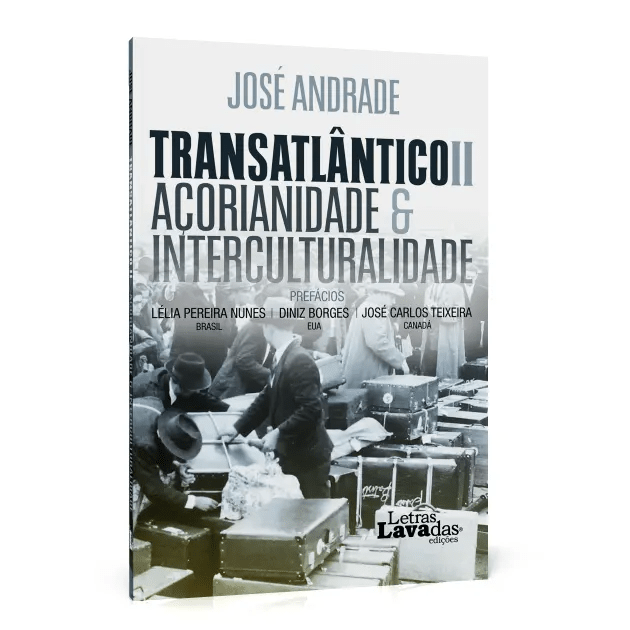
This is an article from his book Transatlântico – As Migrações nos Açores (2023) by Letras Lavadas.
Translation by Diniz Borges, PBBI-California State University, Fresno.
 Filamentos (artes e letras)