
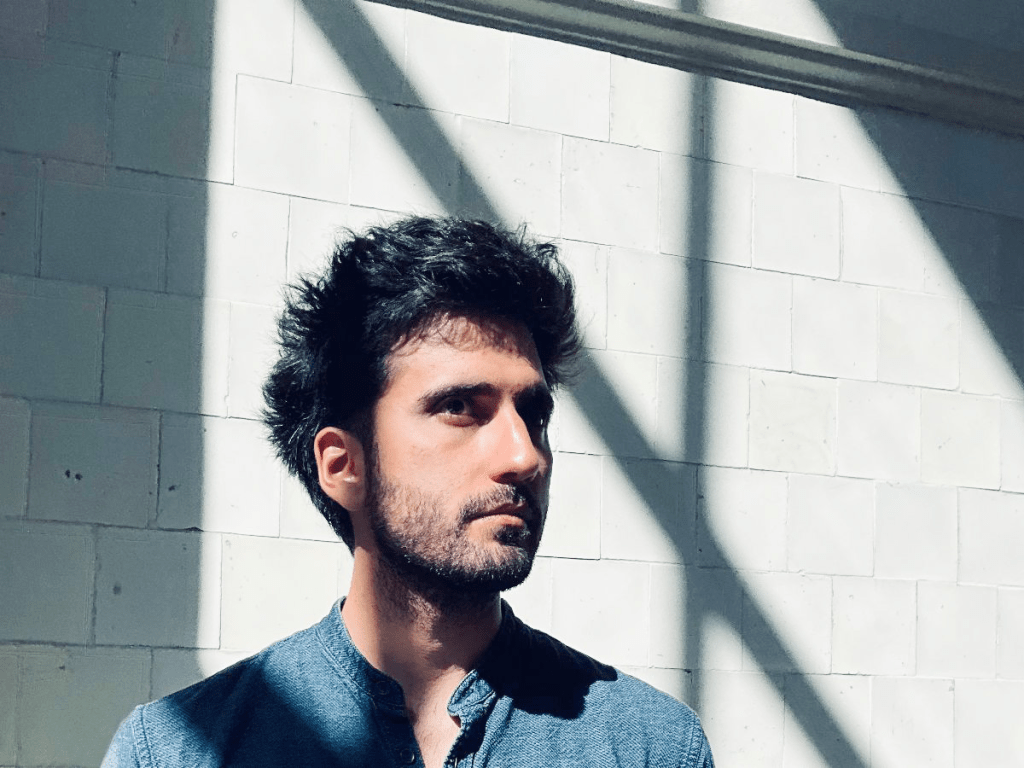
Imaginary Island, by the Argentine composer Huayma Tulian, is the winner of the 3rd edition of the Francisco de Lacerda Foundation Millennium BCP Composer Award and is scheduled to be premiered on Saturday, September 28, as part of the Atlantic Sound Encounters 2024.
Created by the Francisco de Lacerda Association—Music and the World, the Francisco de Lacerda Foundation Millennium BCP Composer Award, worth 7,500 euros, is today the largest national award for orchestral composition and to promote musical creation in Portugal. Its exclusive patron is the Millennium BCP Foundation.
The winning work, Ilha Imaginária, will be premiered on Saturday 28th, by the Orquestra Metropolitana de Lisboa, conducted by Bruno Borralhinho, at the closing concert of the 4th edition of Encontros Sonoros Atlânticos, at the National Library in Lisbon.
Orchestral works submitted to the competition are encouraged to explore a relationship with the life and work of the Azorean composer, musicologist, and conductor Francisco de Lacerda (1869 – 1934) or with the Azores.
Regarding Ilha Imaginária, Huayma Tulian refers to it as “a soundscape” of the Azorean islands, created through the imagination: “I feel the traditional dances and songs that I heard in my childhood, as if they belonged to those islands. I feel familiarity and, at the same time, strangeness (…). Imaginary Island evokes a nostalgic memory of a place I haven’t been to yet”.
Huayma Tulian won the 3rd edition of the Francisco de Lacerda Millennium BCP Foundation Composer Award for his work Ilha Imaginária.
in Correio dos Açores-Natalino Viveiros, director
Who was Francisco Lacerda?

FRANCISCO Inácio da Silveira de Sousa Pereira Forjaz DE LACERDA (1869-1934) was a renowned figure of Portuguese cultural life in his time. One of the most famous Azoreans abroad, a composer and orchestra conductor, he worked mainly in France, Switzerland, Portugal, and, for some periods, in the Azores. Born in the parish of Ribeira Seca, Calheta Township, São Jorge Island, he was the fourth and youngest son of João Caetano Pereira de Sousa e Lacerda (1829-1913) and Maria Utília da Silveira (1829-1917), somewhat socially renowned families from the islands of Pico and Faial. His father, an educated man and amateur musician, initiated him, as a child, in studying the piano, which young Francisco would carry on learning with teacher Pedro de Alcântara from 1886 in Angra do Heroísmo, where he went to high school. His first known compositions date from this period: a mazurka, “Uma Garrafa de Cerveja” (A Bottle of Beer), and a band instrumental piece, “Tristezas da Minha Alma” (Sorrows of My Soul). Once he graduated from high school in Angra in October 1888, Francisco de Lacerda left for Oporto to study medicine, but he soon opted for music. He enrolled in the Lisbon Royal Conservatory, where he studied the solfeggio, the piano, harmony, vocal ensemble, and Italian. A brilliant student, he graduated in 1891 and was awarded first prize and a pecuniary award. That same year, he was invited to replace a provisional piano teacher in the Conservatory and made tenure the following year. In the meantime, he married Isaura Roquete de Campos Soares. In 1895, he applied for a scholarship for young people looking to perfect their artistic studies abroad. Although the board of the Conservatory proposed to the government that Lacerda, for his prestige, should be relieved of this contest and given a monthly stipend, he refused and subjected himself to trials. He was granted the scholarship, and he went to Paris, where he studied with, among others, Émile Pessard (harmony), Louis-Albert Bourgault-Ducoudray (music history), and Charles-Marie Widor (counterpoint and organ). He was considered a pupil of great merit.Later, in 1897, he enrolled in the Schola Cantorum, where he studied with Félix Alexandre Guilmant (organ) and Vincent d’Indy (composition). In Paris, he became acquainted with Eça de Queiroz, with whom he became friends, and met with Viana da Mota to commemorate Almeida Garrett’s centenary. In 1900, he visited his home island, where he collected traditional music. In Paris, he made his first public appearance as an orchestra conductor with great success. Appointed jury member of the Universal Exposition of 1900, he collaborated with Ressano Garcia and António Arroio in organizing Portugal’s participation. Two years later, he was appointed professor at Schola Cantorum. In that time, he composed several works. 1904, he was appointed concert director at the Casino de La Baule (Loire Atlantique). In 1905, he conducted the opening concert for the Association des Concerts Historiques de Nantes, which he had founded and would run until 1908. His “Danse du voile” was published in the Paris Revue Musicale. The French government recognized the prestige he gained in the meantime and distinguished him with the degree of Chevalier of the Légion d’Honneur (1906). In 1908, Lacerda signed an annual contract as artistic head of the Kursaal orchestra in Montreux, renewed until 1912, where he presented works of then little-known composers such as Borodine, Mussorgsky, Fauré, Chausson, and Debussy. In Portugal, King D. Manuel II granted him the degree of Officer in the Order of Santiago (1910). After his father passed in 1913 and done with the 1912-1913 Season of the Great Marseille Classical Concerts, which he conducted, Lacerda returned to São Jorge for health reasons, where he stayed until 1921 in his residence in Urzelina and spent long periods in his family home, in Fajã da Fragueira. During those years, he collected and studied traditional music and devoted himself to composing: he composed “Os Reis” (The Kings) for voice, metals, and drums, and “Minha mãe casai-me cedo” (Mother, marry me off soon), for solo female voices and mixed choir, and also religious chants of a widespread nature. He moved to Lisbon, where he organized the first sessions of “Uma hora de arte” (An Hour of Art) and created “Pró-Arte” (Pro-Art) with the help of Raul Lino, Afonso Lopes Vieira, Eugénio de Castro, among others, and founded and directed the Lisbon Philharmonic. In 1924, Lacerda retook to his career as an orchestra conductor in France and Switzerland and conducted again (and until 1928) the Marseille Great Classical Concerts, with integral auditions of works such as “St. John Passion” and “St. Matthew Passion,” the “Mass in B minor” and Bach’s “Magnificat,” Beethoven’s “Solemn Mass,” Brahms’s “German Requiem,” Wagner’s “Parsifal,” Manuel de Falla’s “La Vida Breve”(Life Is Short or The Brief Life), and Debussy’s “La Demoiselle Élue”. He settled permanently in Lisbon, where he guided Portuguese musical representation at the Seville Ibero-American Exposition and kept working, collecting traditional Algarve music. He passed away on June 17th, 1934, a victim of tuberculosis. The following year, there were several homages to his memory in France, of which we must highlight the execution of his “Trovas” by the Nantes orchestra, conducted by Pedro de Freitas Branco, and by the Marseille Artistic Association.
in Direção Regional da Cultura, Açores

 Filamentos (artes e letras)