

What is this “Culture of Resistance” film series?
It’s a series of screenings of short/medium-length films over five sessions (19SET, 17OUT, 21NOV,12DEZ,16JAN) that the Cine-Clube da Ilha Terceira (CCIT) will be held in partnership with Lar Doce Livro on the premises of this cultural space. These are films made by Korean-Brazilian filmmaker and activist Iara Lee, the driving force behind the Cultures of Resistance Network. This network uses artistic language to promote global solidarity for humanitarian causes. It is a network that defends resistance by appealing to optimism, resilience, and hope, using art as a weapon. In her films, Iara Lee seeks to make known and denounce attitudes and phenomena that occur in some regions of the Earth, some of which go unnoticed in the day-to-day lives of ordinary citizens. The main aim of these films is to raise awareness and help disseminate information about cultures, ways of life, and religions, as well as the massacres to which certain peoples and communities are subjected. Iara Lee’s films focus on issues related to the people of Gaza, Guinea-Bissau, Burkina Faso, Lesotho, and forgotten communities in the Pacific.
How important is this topic today?
The five screenings that will take place will allow the public to attend – and unlike what usually happens at CCIT screenings – a moment of debate and exchange of views on the themes of the films. We think it’s essential to see the movie and not go home and forget what we’ve seen. That’s not enough. Discussing these issues with others who are interested is essential because they deserve reflection and awareness.
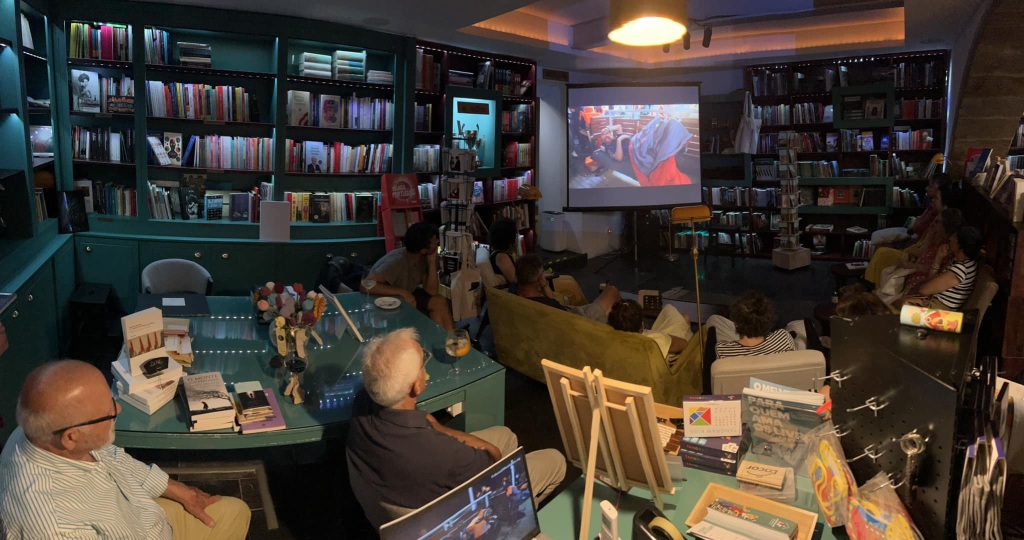
This is a partnership with the bookshop “Lar Doce Livro.” Is it interesting to do something more “out of the ordinary”?
As a rule, film clubs show their films in cinemas because it’s there that you can absorb all the sensations that a movie offers. Screening on a movie screen is an essential condition for any film club. In the case of the Cine-Clube da Ilha Terceira, its films are shown in the cinema room of the Sociedade Filarmónica de Instrução e Recreio dos Artistas, where the CCIT is a “resident” institution, which today has excellent projection conditions as a result of a significant investment made with the support of the Angra do Heroísmo City Council. However, we couldn’t remain indifferent to an invitation from Lar Doce Livro for us to be part of the group of partners that helped make that cultural space more dynamic. So, because we also refuse to accept a fundamentalist view of cinema, we decided to show short and medium-length films, as they are shorter and more suitable for a space of this nature, which doesn’t have a room or cinema seats where you can watch a 90-minute film in comfort. We therefore created a project that we called “Films in Debate”, which has a first series of five screenings under the theme “Culture of Resistance”. Other series may follow.

What projects does the Cine-Clube da Ilha Terceira have for the future?
From now until the end of the year, the CCIT has a good range of films to offer the public. Until December, the “Cinema of My Life” project will continue, showing three films a month, selected from among those not only not found in commercial cinemas but have garnered the best references from critics today. Also, on November 30, the CCIT will celebrate its 47th anniversary by screening the iconic film The Rocky Horror Picture Show by Jim Sharman in a free admission session at 9pm. However, October will be the highlight of CCIT’s activities in the second half of the year with the 9th edition of Cine Atlântico, which this year will feature films over two weekends: on the 11th, 12th and 13th, in partnership with the Cinemateca Portuguesa, five Portuguese films from the 60s and 70s will be shown, copies of which have recently been restored. This exhibition has been titled “The Green Years of Portuguese Cinema.” It will be attended by the director of A Fuga, Luís Filipe Rocha, and the critic and researcher of Portuguese cinema, Luís Miguel Oliveira. The following weekend, on the 18th, 19th, and 20th, essentially with the support granted to CCIT by the (ICA) Instituto do Cinema e Audiovisual of the Government of the Republic, we will have another exhibition also of Portuguese cinema, this time current films, which we have given the title “Cinema and Freedom.” We will be joined by the director of A Sibila, Eduardo Brito, and the director of Banzo, Margarida Cardoso, as well as Manuel Baptista, the head of the Loulé Film Office, and Cine Atlântico’s regular programmer José Vieira Mendes, a filmmaker and film critic.
in Diário Insular, José Lourenço-director. Translated by the Portuguese Beyond Borders Institute and the Modern and Classical Languages and Literature Department from Fresno State.
We thank the Luso-American Education Foundation (LAEF) for supporting PBBI, including this cultural platform, and remind you that the 48th annual LAEF conference will be held online from October 2 to 5, hosted by PBBI.

 Filamentos (artes e letras)