
APRIL GENERATION
BY LUÍS AUGUSTO SEQUEIRA*
The first decade of democracy, in which the military was the guarantor of stability, enabled the Portuguese to choose the European area as their political and economic model LUÍS AUGUSTO SEQUEIRA* Rights reserved ASSOCIAÇÃO 25 DE ABRIL, founded on October 21, 1982, has been a consistent defender of the values of freedom, citizenship and social justice throughout its 40 (now 42 ) years of existence.
The 25th of April 1974, the sole responsibility of the military, surprised the world with its originality: for the first time in Portugal’s history, the Armed Forces took the initiative to overthrow a regime and return power to the citizens as soon as the conditions were created. Thus, once the colonial war was over, the Constitution of the Republic was approved and democratic institutions were stabilized, the military respected the commitment made between them and returned to their barracks. It was this April Generation, made up of a few hundred young officers who joined the Military Academies in the 1960s, who, in a sublime way, gave the Portuguese people back their freedom and their say: the citizens, in free and democratic elections, began to choose their legitimate representatives for the organs of sovereignty, with the Assembly of the Republic becoming the seat of democracy and the Constitution of the Portuguese Republic becoming the law of laws. You only have to read the programme of the then Armed Forces Movement, in which the objectives were centred on the paradigmatic 3 SDGs – decolonize, democratize and develop – and the essential measures, classified into immediate and short-term, to easily conclude the importance and scale of the necessary changes, particularly in the economic and social areas.
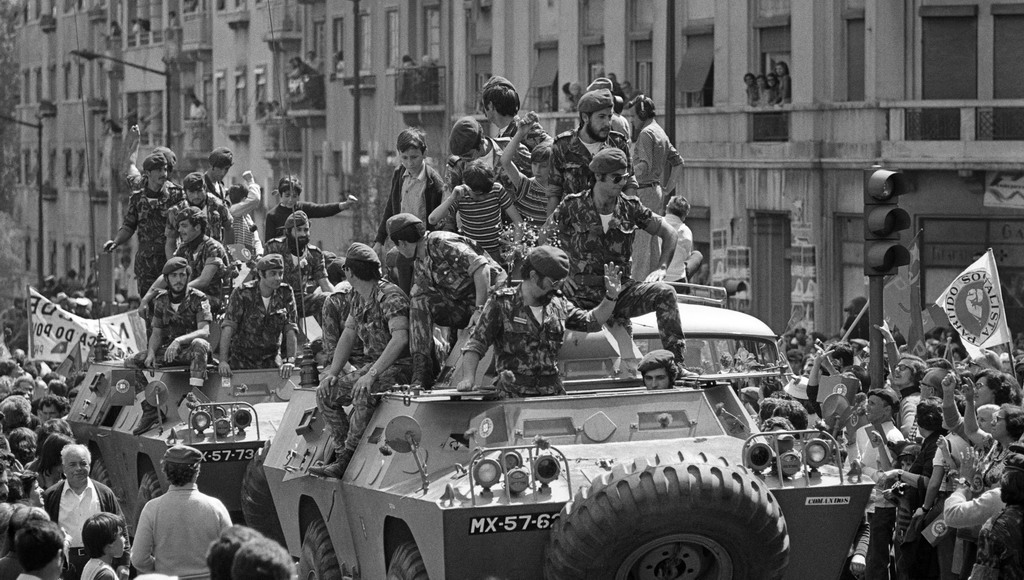
The long-term measures were left to be defined by the future government bodies elected by the citizens. The first decade of democracy, in which the military was the guarantor of stability, enabled the Portuguese to choose the European area as their political and economic model. Portugal became part of the European Union with the expectation that the new path would enable it to achieve the levels of development announced, and it was up to those in power to define a strategy, set priorities and make the necessary political decisions. Once we were back in Europe and had fulfilled the two objectives of the initial programme – decolonization and democratization – the paradigm shifted to development, which we hoped would be sustainable and create wealth for our country. This was the period of major transformations, structural funds and technological progress. The most important aspects were in education and health, areas in which Portugal made remarkable progress and became an international benchmark in some sectors. Before joining the Euro, Portugal was already a modern country and its human development indicators had made marked progress in just over two decades. At the start of the 21st century, Portugal, lulled by the European Union, submitted to its policies and, as an economically weaker country, was financially dominated.
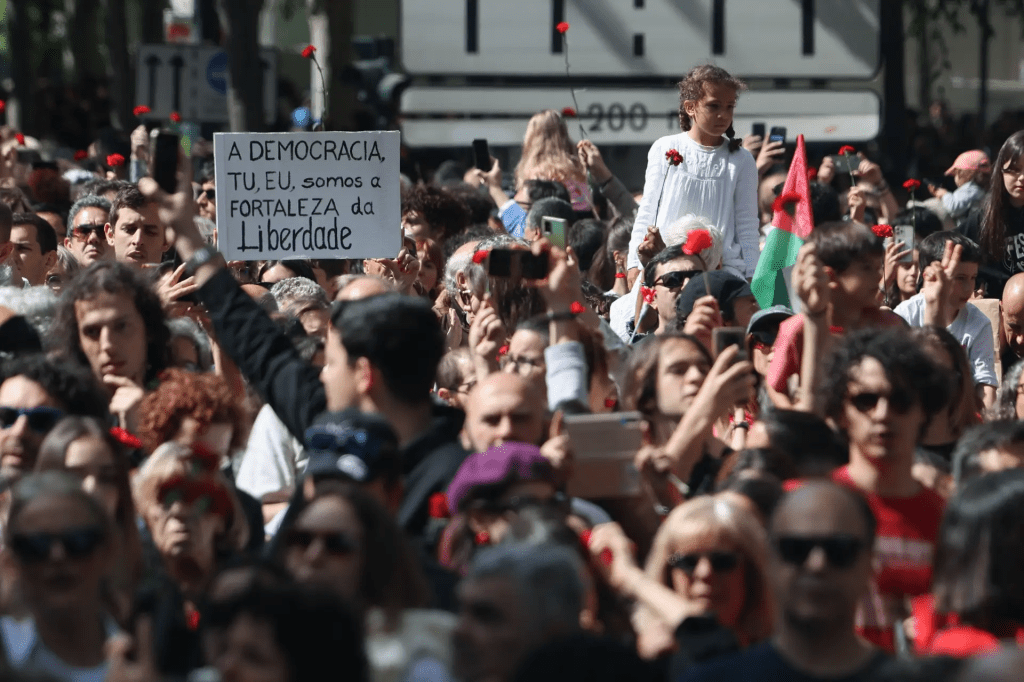
With no strategy, no sustainable economy and no audacity, it is now directed by the European institutions. Politics has come to depend on the economy and the economy on the markets, which, without ethics or morals, aim only at financial speculation. National leaders lose their autonomy, ignore the reality of their country and start obeying the rules of the European institutions. So much effort, so much generosity, so much hope, only to abruptly, and on the pretext of the financial crisis, witness an attempt to return to an undesirable past, with no guarantee of defending a European project in which the welfare state is an integral part. This is not the Europe we want. We want a Europe with a project of peace and justice, a Europe that puts the dignity of the human condition first. We want a country where truth, goodness, culture, justice, solidarity and wisdom are factors of progress and values of democracy.

Remembering the past, building the present, and preparing for the future are mandatory actions in choosing the WAY FORWARD. Conditioned by successive crises, health, economic and social, in a European context of war, it is a priority to define new starting points for building a dignified future for the new generations, in which hope conquers fear, human dignity prevails and the Portuguese can find a better future in their own land. *Major General, founding member and chairman of the supervisory board of the A25A, member of the orders of economists and engineers.
In O Referencial -janeiro-março, 2022
*Major General, founding partner and chairman of the supervisory board of the A25A, member of the orders of economists and engineers
Translated by Diniz Borges

We thank the Luso-American Education Foundation (LAEF) for its support and remind everyone that the LAEF annual conference will be held online from October 2nd to 5th.
 Filamentos (artes e letras)