

Today, we feature a book that we highly recommend for those who want to learn about the Portuguese Revolution of April 25, 1975. It is a must for those who want to learn about the event that forever changed Portugal.
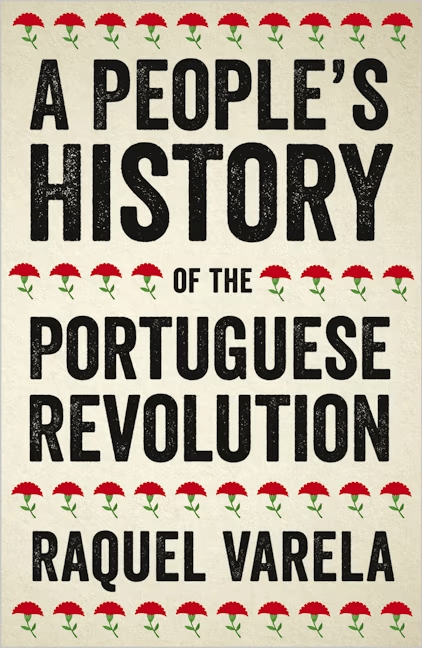
A People’s History of the Portuguese Revolution
Edited by Peter Robinson
Translated by Sean Purdy
This is a rich history of Portugal’s Carnation Revolution, told by its trade unionists, activists, workers, and women.
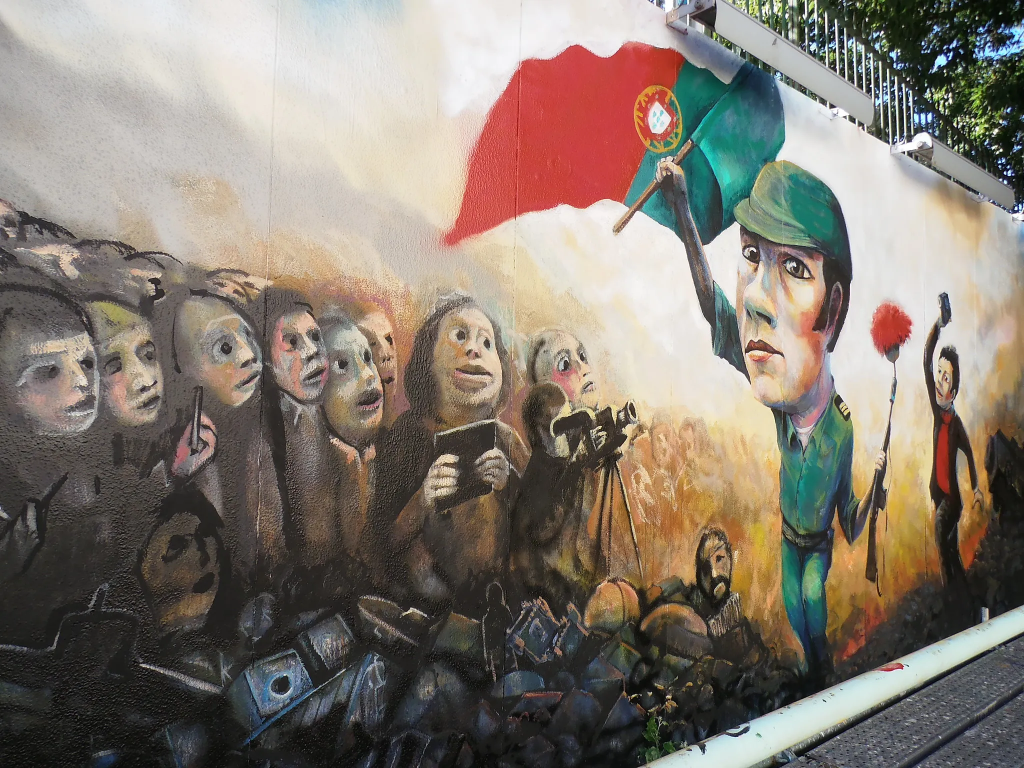
On the 25th of April 1974, a coup destroyed the ranks of Portugal’s fascist Estado Novo government as the Portuguese people flooded the streets of Lisbon, placing red carnations in the barrels of guns and demanding a ‘land for those who work in it’.
This became the Carnation Revolution—an international coalition of working class and social movements that also incited struggles for independence in Portugal’s African colonies, the rebellion of the young military captains in the national armed forces, and the uprising of Portugal’s long-oppressed working classes. Through the organizing power of these diverse movements, a popular-front government was instituted, and Portugal withdrew from its overseas colonies.
Cutting against the grain of mainstream accounts, Raquel Cardeira Varela explores the role of trade unions, artists, and women in the revolution, providing a rich account of the challenges faced and the victories gained through revolutionary means.
The author
Raquel Varela is a labor historian, researcher, and Professor at the New University of Lisbon and an Honorary Fellow at the International Institute for Social History. She is also president of the International Association of Strikes and Social Conflicts and co-editor of its journal. She is the author of A People’s History of the Portuguese Revolution (Pluto, 2018).
Contents
Photographs, Figures, and Tables
Acknowledgments
Editor’s note on the English edition
Abbreviations
1. Introduction
2. The Seeds of Change
3. 25 April 1974: ‘The People are No Longer Afraid’
4. Who Governs?
5. The Anti-Colonial Movements and the Myth of a ‘Bloodless Revolution’
6. Strikes and their Reverberations
7. Self-Management and the Struggle Against Redundancies
8. Women in a Democracy are Not Mere Decoration: Social Reproduction and Private Life in the Revolution
9. Artists and the Revolution
10. Workers’ Commissions and Unions
11. ‘Here is the Nursery’ – Urban Struggles and Residents’ Commissions
12. Workers’ Control, 11 March and Nationalisations
13. The Birth of the Welfare State
14. Scheming for Power
15. The Land for its Workers: Agrarian Reform
16. The ‘Hot Summer’ of 1975 and the Fifth Government’s Frail Governance
17. Spain and other ‘Links in the Chain’
18. The Crisis
19. Democracy and Revolution: The Meaning of the Carnation Revolution
20. In Celebration
Chronology
Notes
Bibliography
Index
About the author
Endorsements
‘Lively, brilliantly documented and filled with the voices of Portugal’s ordinary people, this book recovers the revolution from below that shook Portugal in 1974-5’ – Colin Barker, author of ‘Festival of the Oppressed: solidarity, reform, and revolution in Poland, 1980-81
”An excellent, well-written, and radical introduction to a complex and immensely important history.’ – Marcel van der Linden, International Institute of Social History
Published by Pluto Press in Feb 2019
Paperback ISBN: 9780745338576
eBook ISBN: 9781786803580

We thank the Luso-American Education Foundation for their recent gift to PBBI-Fresno State for our various projects, including this literary and cultural platform, Filamentos.
 Filamentos (artes e letras)