
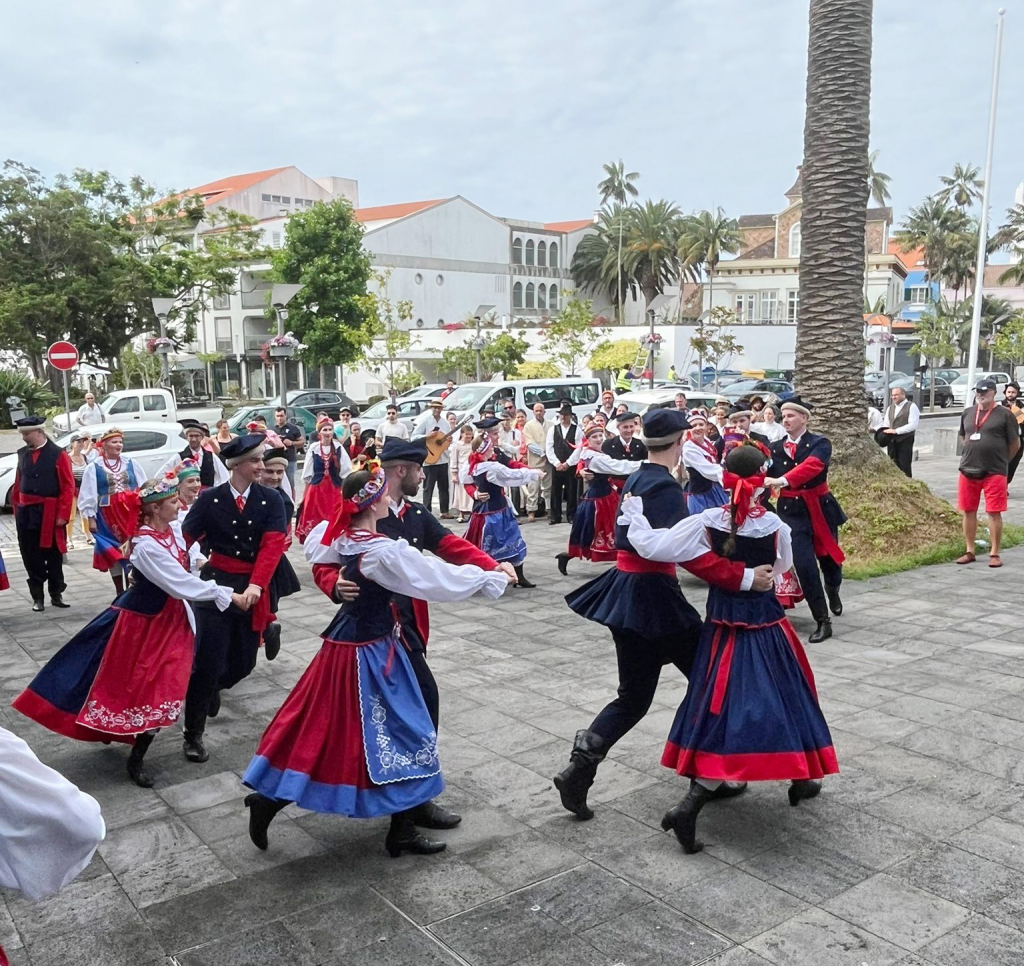
The annual folk festival, put forth by the Grupo Folclórico de Cantares e Balhados da Relva, will have the participation of seven guest groups, as well as the organizing group.
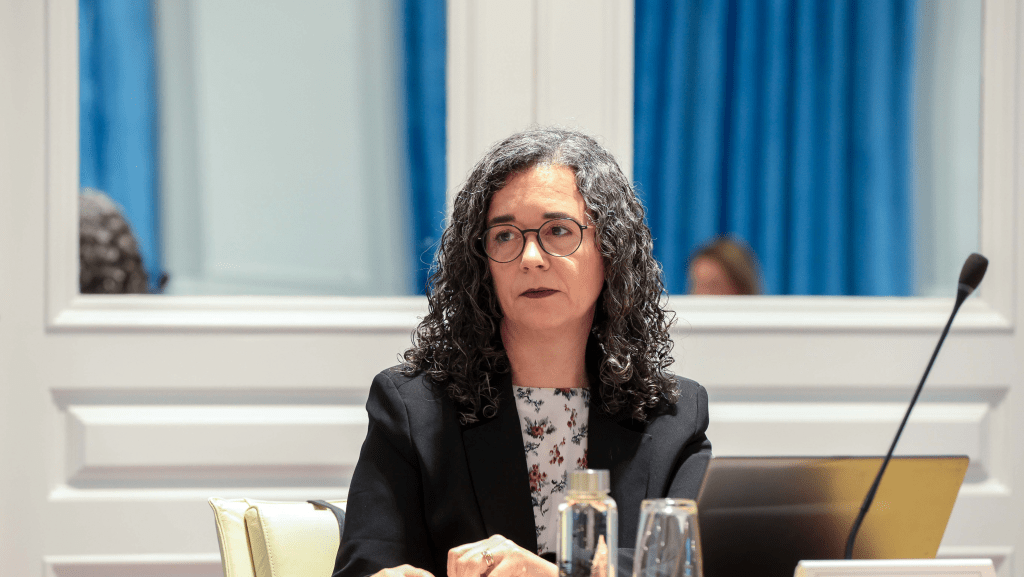
Yesterday, at the Palácio da Conceição, Sofia Ribeiro, Regional Secretary for Education, Culture and Sport, welcomed the groups that are not from São Miguel: Grupo Etnográfico da Beira, from São Jorge, Folk Dance Ensemble Vizovjánek, from Czechia and Zespól Piesni Tanca Ziemia Bydgoska from Poland. Also, these groups and the organizing group, the Casa do Livramento Folkloric Ranch, the São Miguel Folkloric Group from Ponta Delgada, the Santa Cecília Folkloric Ranch from Fajã de Cima, and the Domingos Rebelo Cultural and Recreational Group from Ponta Delgada will perform.
On the occasion, Sofia Ribeiro said that these kinds of initiatives “are extremely important for promoting the Azores, the culture of the Azores and the Azorean identity to other peoples, whether our counterparts, from abroad or even from other islands within our region, like each one has its own idiosyncrasies.”
On the other hand, continued the Regional Secretary for Education, Culture and Sport, “it’s an incentive for the players and dancers themselves for a dynamic that, while it is about sharing, also has another interest in that same way. Culture wants to be open, plural, and participatory. It’s very important, especially for us to welcome and attract new generations to perpetuate these traditions of ours, to have events of this category, of this type because they make the activity more appealing.”

When asked about the lack of young people in association groups, the head of Culture stressed that “there needs to be a generational renewal to perpetuate our traditions. This is not just an issue for folklore groups. We have the same problems in philharmonics and in sports there is also a similar phenomenon. Basically, it’s transversal to the whole movement of associations. Because these are very demanding dynamics that must a lot of commitment and a lot of time from those involved.” She said that “we need to create these initiatives to make them more appealing, so that we can attract the younger generations. There is work that can and should be done with schools. We’ve been trying to encourage our schools and our executive councils to open up. It’s still a process that’s very much in its infancy, it still has a way to go. The very development of artistic teaching with other strands right from the first cycle. The changes we’ve made to the teachers’ timetables in the first cycle open up these other dynamics. We’re now going into the second year with this type of timetable, but this is our path, to open up the school in its teaching spaces more and more to these groups to train our children and then encourage them to enter into these cultural dynamics.” Sofia Ribeiro also said that “culture is enriched whenever we have moments of sharing. Culture is not closed in on itself, it must be shared. It’s in this sharing that there is an added value for the agents, in this case, the players and dancers, but on the other hand with a return for the region as a whole”
On the other hand, she continued, “this shows an identity that is even European. All these events, this annual one put on by the Grupo de Cantares e Balhados da Relva are an example and we have more of them, fortunately, in the Azores. These are events that, by promoting this type of initiative, also promote the Region and, through these events, make it possible for us to highlight the plurality of our cultures in a union. In essence, this is Europeanism. It’s very funny to see that there are identities, albeit with different characteristics like costumes, music, or dances, but there are common characteristics in terms of group dynamics around folklore and popular dances that are very interesting to see.”

in Correio dos Açores
Translated to English as a community outreach program from the Portuguese Beyond Borders Institute (PBBI) and the Modern and Classical Languages and Literatures Department (MCLL) as part of Bruma Publication and ADMA (Azores-Diaspora Media Alliance) at California State University, Fresno, PBBI thanks Luso-Americna Education Foundation for sponsoring FILAMENTOS .
 Filamentos (artes e letras)