
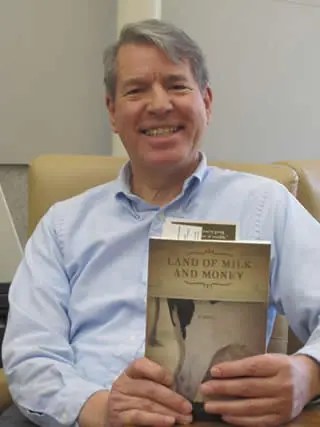
Like the sisal-fiber treehouse in his family’s backyard Ailanthus tree – which in the Preface to his novel Land of Milk and Money (p. xiii) Anthony Barcellos recounted having fashioned in childhood from the family dairy farm’s leftover hay-bale twine that he salvaged and wove – I am opening this tribute with a basic framework of his biography, then filling it in with illustrative vignettes, some even in his own words.

Anthony Barcellos and I met virtually in 2010 after I found a Google Cached listing of Álamo Oliveira’s novel I No Longer Like Chocolates (which I had co-translated) on his anonymous blog’s “What I’m reading” list. When I saw that Katherine Vaz’s latest short story collection was among the three other books featured, it prompted me to prowl the site further to see if, like Vaz and me, the blogger had any Azorean ancestry. I was also intrigued by the blogger’s mention of having authored a family history-inspired roman à clef that was currently under consideration by a publisher. Scarcely an hour after I sent an email to the blog’s email address introducing myself, I received a warm reply that read in part:
“Oliveira’s novel was not a cheery reading experience, the author capturing as he did the regrets and disappointments of a man’s long and bitter life. There are people like that in my own family. It was fascinating, though, to recognize the locale and to nod my head at the snatches of Americanized Portuguese vocabulary. As a translator, you have clearly eclipsed my meager abilities in the language of our mutual heritage, even though it is a language I have heard from birth. Congratulations.”
My mystery blogger identified himself as Anthony Barcellos, a Mathematics professor at American River College [ARC] in Sacramento, who was originally from a dairy farm in Tulare County (where a good deal of I No Longer Like Chocolates is set). I would later learn that he had at times served as department chair, a member of the academic senate, and chair of major college committees at ARC. Besides the draft of his novel, he had written math textbooks, as well as articles on computer technology. Earlier, he had interviewed several renowned mathematicians, and his 1984 “The Fractal Geometry of Mandelbrot” was honored with two prestigious expository writing awards.
In addition to his long, distinguished academic career, and his work in journalism and state government, Tony was in later years a freelance classical music reporter for the Sacramento Bee newspaper. The facts that I was of half-Azorean ancestry with deep roots in California, had been a Music major with a Math minor in college, and that my husband was an academic would prove to be only the first few in a series of coincidences.
***
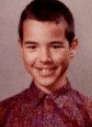
Early on in our correspondence I mentioned my work translating the novel Sorriso Por Dentro da Noite by Azorean scholar and author Adelaide Freitas, who with her husband Vamberto was a friend of Tulare’s Diniz Borges. An astonished Tony replied, “Vamberto and I were 8th graders together at Pleasant View Elementary [in Porterville]. He had a minimum of English at the time and Mr. Snow, the 8th grade teacher, sat him next to me so that I could serve as translator. The world is indeed a small place.”
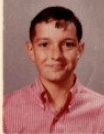
Tony added that after the school year ended he heard no further of Vamberto – until I reported that he had returned to the Azores decades later to teach at its university, and was a prominent literary scholar. I provided Tony with Vamberto’s email address, and he got in touch. No doubt Mr. Snow would be gratified to know that both students grew up to become successful in academia and literature, and that after so many miles and decades they had reconnected.
Some of the Barcelloses had long urged Tony to compile a book of treasured family tales, so in twenty days flat in summer of 2009 he tapped out a first draft, framing it as a novel instead of nonfiction, however. In his 2010 holiday form letter to family and friends, he described it as:
“…a multi-generational story involving an immigrant family from the Azores as they build up a dairy farm in Tulare County. Does that sound familiar? Writers are encouraged to ‘write what you know,’so my novel tells a bunch of family stories in fictionalized form. Family members and friends will recognize some of the incidents, but I was not an omniscient observer who could write a ‘true story’ version. Therefore I made up names and episodes to try to create a coherent and entertaining tale.”
In the synopsis he later wrote for the novel’s website, Tony elaborated:
“Land of Milk and Money is the story of the Francisco family, Portuguese immigrants from the Azores who settle on a dairy farm in California’s Central Valley. Their plans to eventually return to the Old Country fall by the wayside as their success grows and their American lives take root. The legacy of one generation becomes a point of contention as the members of the next generation begin to compete to inherit and control their heritage, which includes herds of cattle and tracts of farm land.
“The death of Teresa Francisco, the family’s matriarch, sets off a string of battles (both personal and legal) between brothers, spouses, in-laws, and cousins. A courtroom confrontation over Teresa’s will is at center stage as the contending factions discover that the old lady had plans of her own for securing her legacy.”
In response to an inquiry from a distant cousin of mine about the characters’ names, Tony explained that he “chose Francisco as the family name in part to avoid more common names. But it was also a way to memorialize my grandfather, the model for Chico, whose first name was Francisco. Also, Peter Francisco is recorded in history as a great Portuguese-American patriot in the time of the Revolutionary War. Really.”
The publisher considering the novel, then titled Dear Dairy – a pun on the expression “Dear Diary” – was Tagus Press. Tony was pleased with the English professor Tagus assigned to edit his manuscript, Richard Larschan of the University of Massachusetts-Dartmouth, and in an email to me, praised their collaboration, which ultimately resulted in Land of Milk and Money. Tony said Dr. Larschan “gave me several suggestions, most of which I accepted. I clearly had leeway on interpreting his recommendations, which he was good enough to supply with reasons – instead of just issuing orders on what I should do. I never felt like I was being bullied or getting arbitrary instructions.”
One chapter Dr. Larschan asked Tony to cut, as it failed to advance the novel’s central plot, was “The Voyage to Brazil.” It is the account of a great-great-grandfather who in the 1860s, took his family from the Azores “to seek his fortune, and proved his mettle during an emergency at sea.” It was later included in Writers of the Portuguese Diaspora in the United States and Canada.
Once the novel’s manuscript was completed, Tony and I began what would become a custom of often reviewing each other’s major writings; I spotted a few typos still lurking in the novel’s page proofs. He, in turn, was always eagle-eyed in pursuit of my errors, for which I was grateful, given my mediocre typing. He would also offer insightful observations about my early drafts.
* * *
Land of Milk and Money was published in 2012. Tagus Press’s Dr. Frank Sousa arranged for Tony to fly to Massachusetts in late March 2013 for presentations of the novel – and since his arrival coincided with the day my husband John and I were returning from the Azores, the three of us planned to meet for dinner that evening. As Tony was wont to say, what could go wrong? Well, he was scheduled to arrive hours before us, so after John and I checked in at the hotel, I asked to call Tony’s room – except he had not checked in yet; the clerk let me leave a message.
Poor Tony! He had gotten up at the uncivilized hour of 3 a.m. – too early even for the dairy farm boy he originally had been – in order to drive to the Sacramento airport to catch the first leg of his journey, a 6 a.m. non-stop to Chicago. However, when the co-pilot did not appear the airline had to locate a back-up, making passengers wait hours until one flew in from Chicago. Once he landed, they finally proceeded, but the airline had to put him on a later flight to Boston. Tony reached the hotel around 9 PM ET, tired and hungry; so were we, albeit due only to jet-lag. We met at the hotel’s less costly eatery for a late supper and a couple hours of conversation, which we could not have imagined then being the only time we would ever meet in person.
The next morning Dr. Sousa picked Tony up for what would be the first of some two dozen presentations over the next year. In his December holiday letter, Tony recounted part of his visit:
“[My] UMass-Lowell appearance would coincide with its inaugural event for the new Saab-Pedroso Center for Portuguese Studies and Culture, and my talk was being packaged as the keynote address. An overflow crowd of nearly two hundred people listened to me recount anecdotes concerning my family’s Azorean immigrant heritage and applauded readings from Land of Milk and Money. (Good thing stage fright is foreign to me.) The audience included two university chancellors, an elected state representative, the Boston-based consul general for Portugal, and three Barcellos cousins I had never met before.”
Tony’s successful book presentations led to a growing demand for him as a speaker at other Luso-American gatherings around northern and central California as well. As a reader at a Kale Soup for the Soul literary event in San Jose in 2014, he met my friend Helen Cunha Kerner, a discerning and voracious bibliophile – and was floored when she admitted to having been so engrossed in Land of Milk and Money that she read it in just two days. After their meeting, she sent us both photos she had snapped of him there. This summer, upon learning that Tony had died, Helen reminded me of the saying, “There is no age for death.”
* * *
One tradition of book-publishing is the back-cover blurb, so Land of Milk and Money features no less than four – by Gerald Haslam (of ⅛ Portuguese ancestry), author of The Great Central Valley; John Lescroart, author of The Hunter; University of San Francisco professor and author of Move Over, Scopes, and The Gunnysack Castle Julian Silva; and Sacramento Bee book reviewer emeritus Max Norris – plus tongue-in-cheek advice from Tony’s sister Mary, referring to his thinly fictionalized family stories: “I’m afraid you’re going to get into a lot of trouble.”
So I was grateful when, years later Tony consented to provide the back-cover blurb for the translation I led of Smiling in the Darkness (originally Sorriso Por Dentro da Noite):
“Many people of Portuguese descent take pride in claiming that the word “saudade” is untranslatable. In reality, we come close with a melding of bittersweet nostalgia, bone-deep longing, and an endless yearning for what one can never have again – or indeed may never have had. Adelaide Freitas dipped her pen in saudade to tell of family separation and bonds that never loosen. In her authentic Azorean voice, she recounts the immigrant experience and centrifugal impulses that force people apart in spite of their desperation to cling to one another. In their sensitive rendering, the translators have captured the nuances of Freitas’s novel Smiling in the Darkness, with special care for those who have her native language in their heritage and heartfelt saudade for its loss.”
Tony had another impact on this novel: when my first co-translator was unable to continue due to health issues, Tony recommended Dr. Reinaldo F. Silva, an American-educated professor at the University of Aveiro in Portugal, whom he had met online through Dr. Silva’s scholarly literary treatises on the authenticity and significance of Land of Milk and Money. Although Tony never met Reinaldo, John and I eventually did at a conference on the island of Santa Maria in the Azores, and we have remained in touch ever since.
Smiling in the Darkness had the random misfortune to be scheduled for publication in 2020, when the onset of the Covid pandemic precluded in-person presentations. Tagus Press instead held a virtual book launch via Zoom featuring, besides Tony, speakers Mário Pereira of Tagus’s Bellis Azorica series (under whose aegis the translation was published) and Azor-American author Katherine Vaz, with Diniz Borges (who had drawn the novel to my attention) as moderator. In his 2020 holiday letter, Tony recalled how “Diniz accurately introduced Katherine Vaz as ‘widely published.’ When it came to my turn, I noted that I was ‘narrowly published.’”
* * *
A reality of 21st-century book publishing is the need for an electronic media presence promoting the work. In early 2006 a computer scientist friend helped me design and launch a website in support of I No Longer Like Chocolates. Likewise, an old friend of Tony’s from their Sacramento PC Users Group years helped launch a “teaser page” on November 24, 2011, for the upcoming Land of Milk and Money website; he had already created possible covers for Tony’s originally proposed Dear Dairy in 2010.
In his 2011 holiday letter, Tony reported that “the book has a dedicated website, created by Eric Butow of the Butow Communications Group, and a Facebook page.” Butow also coined the novel’s unofficial subtitle, “Drama! Scheming! Cows!” Tony later noted that besides maintaining the website, Butow provided “some of the promotional self-congratulatory prose that successful authors are supposed to have on their sites.” He continues updating the site, and later created one for Tony’s next book. Butow recounted the genesis of website’s “whimsical theme”:
We agreed that the bright color scheme invited people to read more about the novel and connect with Tony. It seems to have been a hit, and Tony never asked me to update the design of the site even though the technology behind it is badly outdated after twelve years. I updated the website so it reflects Tony’s death and removes all ability to connect with him via e-mail, but the future of the website is uncertain at this time as there won’t be any author appearances or other major updates until the Portuguese translation is released [in a couple of years].
* * *
Tony took impish delight in Amazon reader comments he deemed absurd. Among his favorites were two Azor-American books, plus a third that I discovered:
* “I picked up [Land of Milk and Money] because I was interested in Portuguese dairy farming in California […] I was hoping to learn more about dairy farming…”
* “[Alfred Lewis’ novel 60 Acres and a Barn, about immigrants from Flores who had already settled around Fresno] was OK but I thought it would reflect more on someone coming to this country and adapting to America.”
* “I enjoyed [I No Longer Like Chocolates] very much, although it bothered me somewhat that the author is a resident of the Azores.”
Of course, the internet occasionally giveth rather than taketh away. It was only while conducting research for this article online that I discovered Tony’s writing cited twice for exemplary word usage by the Merriam-Webster dictionary online, so I have no idea whether he was aware of them.

Vamberto Freitas reviewed Land of Milk and Money for the São Miguel newspaper Açoriano Oriental. Although Tony spoke Portuguese as a preschooler, he had not yet learned to read it, so at his request I quickly translated the review (with my Portuguese professor’s help) for him to read, then post on the novel’s website as “California, or God’s Country”:
“…John Steinbeck, the first to fictionalize the dynamism of California’s mechanized countryside, would not have disdained this narrative by Anthony Barcellos; quite to the contrary, he would likely have regarded it as the sequel, with additional words and formulations, to what he had himself established in literature from those same sources…
“[This is] another great novel of the highly consequential and successful Azorean saga in North America. We ought not wait for the translation of this or other narratives of Portuguese descendants. Behold the great trilogy of Azor-Californian modern life: The Gunnysack Castle by Julian Silva, Saudade by Katherine Vaz – and now, Land of Milk and Money by Anthony Barcellos” (Freitas, V., 2015).
* * *
In summer 2013 I gave a talk titled “Drama! Scheming! Cows!” at a conference in Indianapolis, comparing and contrasting the novels I No Longer Like Chocolates and Land of Milk and Money, as both are set in Tulare county among multigenerational dairying families from Terceira. Among my topics were different ways that Álamo Oliveira and Tony used figures of speech and wordplay. Tony excelled at imagery – be it vivid, snarky, punny, or poignant – so I selected as many of my favorites as could fit on one slide (my emphases are in CAPS]:
* [Mom] Carmina was accustomed to being HER HUSBAND’S REMOTE CONTROL FOR THE REFRIGERATOR and it never occurred to her to resent it. She fished out a cold bottle of Lucky Lager and carried it to the table. (p. 47)
* Teresa Francisco was performing the VOCATIONAL TRIAGE among her grandchildren that Portuguese grandmothers normally practiced. With TEN grandsons among the Francisco and Salazar families thus far, Teresa was looking for the one who might be sacrificed as A TITHE TO THE CHURCH. (p. 67)
* The shadowed peaks of the Sierra Nevada SERRATED the eastern horizon. (p. 68)
* [Grandmother] said that the men would go shopping for a bridal gown. They’d mail the dress back to their parents in the Azores and ask their folks to FILL THE DRESS AND SEND IT BACK. (p. 119)
* [Cousin Elvino] tolerated Biddy because his [widowed] father was fond of her, but he resented her interference. She rattled about clumsily in the MOM-SHAPED HOLE in their lives. (p. 129)
* The Eighty-Five’s clutch popped, its gears grabbed, THE WORLD JERKED, and the engine roared into life. (p. 186)

My “Drama! Scheming! Cows!” talk inspired me to prepare a Portuguese language version for a conference in the Azores in April 2014 that I No Longer Like Chocolates author Álamo Oliveira would be attending. My friends Betty Bispo and Jonas Waxman, who had met Tony at his San Francisco book presentation in 2013, were already planning a vacation in the Azores then, so joined us at my talk; its Portuguese title was “Drama! Intrigas! Vacas!”
* * *
The answer-and-question trivia quiz show Jeopardy! was one of Tony’s and my shared guilty pleasures. Since each episode is televised three hours earlier where I live in the eastern U.S., imagine my dilemma when the April 14, 2017, Final Jeopardy! Clue read, “A 2010 study of this country is subtitled ‘Inside the Land of Milk and Money’” – and no, it evidently was not a plant by Tony’s agent (more about him later). The minute the show ended I fired off an email to Tony shouting “DO NOT MISS TONIGHT’S FINAL JEOPARDY! CLUE,” promising “No spoilers here! Hint: I missed it.” After the show aired in Sacramento, Tony replied that he “also got a note from [his novel editor] Richard Larschan. It gave me a good laugh. I’ll have to check to see if I got more traffic on the [book’s] website because people Googled the phrase.”
Although I have never signed up for the Jeopardy! written test Tony did (polymath that he was, he would doubtless have aced most categories, except sports). However, he admitted “I didn’t take the online screening test despite seeing the pitch for the professors tournament. It was several years ago when they were doing regional events that I passed the initial written test, but I had to skip the next round because [of a scheduling conflict].” How I would have enjoyed seeing Tony on the Alex Trebek Stage informing Ken, “I’d like to make it a true Daily Double.”
In the show’s December 2021 professors’ tournament, the fifteen contestants included ARC history professor Dr. Edward Hashima, who finished second only to future Jeopardy! Master Sam Buttrey. Tony exulted over his colleague’s success:
“I’ve known Edward for years. He’s the only contestant to qualify from a two-year college. All of the other contenders are from four-year colleges or universities. We’re pretty proud of him. […] Having the community college professor come in second among the fifteen contestants was still pretty satisfying. He’ll be lionized on campus. [Ed] seriously kicked butt. The items were not particularly easy. I got over half of them correct, but the last time I bothered to keep track I was getting closer to two-thirds. By the way, I got one of the answers on College Sports correct: the one about Heisman.”
* * *
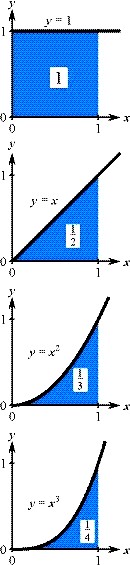
The apex of my proofreading career thus far has been checking the page proofs for Tony’s math course book – which in the spirit of surrealist René Magritte he vehemently denied was a textbook (“Ceci n’est pas un manuel scolaire”?) – A Stroll Through Calculus: A Guide for the Merely Curious (or, A ∫troll Through Calculus, as the cover is slyly typeset). Tony chose a less common approach of opening with integrals rather than derivatives; John’s and my respective freshman Calculus with Analytic Geometry courses started with derivatives, and an unscientific email survey of old friends yielded only two who were taught integrals first.
The elegance of this approach lies in its simplicity, starting with the formula for the area of a triangle, A = ½ b h (half of the product of the triangle’s base and height, a formula I was taught in seventh grade). After using it to start showing how to calculate the area under equations plotted on a graph with x and y axes, the book then lures readers down the primrose path to derivatives, and before they realize what has hit them, to a general survey of Calculus.
Although I had not taken Calculus for a half-century while checking the pages, I was amazed at how quickly the subject matter returned to me thanks to Tony’s lucid prose and graphics, so I could read for comprehension and typographical errors. Lucky thing, too, because I realized one proof late in the book had been placed under the wrong theorem. Tony was relieved to be able to correct the situation, as it prevented a whopper of a typo for the erratum list, always a bane of first-edition math books.
Tony believed ardently in the intersection of writing and mathematics. Although some of his students bridled, he required them to write an essay in each of his math courses, which he firmly believed helped them view mathematics from a wider perspective and to be able to express it.
* * *
Tony wrote not only his own books but also reviews of others – notably Alvin Ray Graves’s California’s Portuguese Politicians: A Century of Legislative Service, which Tony’s own government experience rendered him especially qualified to assess. Two of his last reviews were of Tony Goulart’s comprehensive history Portuguese Bands of California, 1898-2023 (2023), and the translation of Joel Neto’s novella Jénifer – or a French Princess (2024). (Full disclosure: I copy-edited Goulart’s book and was co-translator on Jénifer, although Tony would surely have reviewed both volumes even if I had not been connected with them).
* * *
After pandemic restrictions were implemented, Tony initially taught his college courses via Zoom. And not being one to let the grass grow beneath his feet, he also took the College of the Sequoias’ online Portuguese 001 course from Diniz Borges, noting that it was “my first formal education in my first language. Most of my classmates had some family connections with Portuguese, but little speaking experience. If only COS also offered 002 in an online format!”
Once Tagus Press issued Tony’s Land of Milk and Money in e-book format, the pandemic necessitated its launch to be held on a webinar instead of in person; it was hosted by Fresno State’s Portuguese Beyond Borders Institute [PBBI]. Since I am a tech Luddite lacking Zoom capability or inclination, Emanuel Melo, a colleague in Toronto, graciously consented to read my presentation (Baker, 2021a), based on part of my 2013 “Drama! Scheming! Cows!” talk.
Later, when PBBI hosted a webinar for the seventh international conference of A Voz dos Avós [The Voice of Grandparents], chaired by Dr. Manuela Marujo (Emerita, University of Toronto), Tony narrated my talk “From Soup to Nuts: How a Family Recipe Drove Me Crazy Searching for My Azorean Roots” for me (Baker, 2021b).
* * *
When renowned Brazilian author Jorge Amado died in 2001, my Portuguese professor at the University of Pittsburgh, Dr. Bobby J. Chamberlain, told me that while a graduate student at UCLA, he had conducted doctoral research in Brazil (thanks to a Fulbright Scholarship), untangling Amado’s literary characters, who were apparently complicated mélanges; he even interviewed Amado for clarification. While it is common for fiction writers to mix and match characters’ traits – Álamo Oliveira did so to some extent in I No Longer Like Chocolates – Tony revealed that future scholars of Land of Milk and Money should face no such obstacle because:
“Mom kept a simple list of corresponding names. She didn’t, to my recollection, annotate it with specific traits, although the traits helped to confirm her identifications: [Cousin] Jojo was the family daredevil… Mom could simply have worked down the family tree printed in the book and attached ‘true’ names to each of the characters simply from their supposed birth years and positions in the chart.”
For readers craving more of the Francisco family saga, there may someday be a second novel – not a sequel (or a pipe?), Tony emphasized, but a parallel work cast as the chronological autobiography of his alter ego – from Paul’s earliest toddler memories until he embarks upon his career as a Math professor in his mid-30s following forays into journalism and government.
Tony reported in his 2015 holiday letter that he had signed with an “agent [who] wants me to inject more California ‘color’ into my new novel, and is planning to hawk it to some New York publishers. He also thinks the movie rights to Land of Milk and Money are marketable.” Tony and the agent later parted ways, although I hope for comic relief’s sake that a thinly veiled version of him shows up in notes Tony might have left as grist for the fiction mill. In any event, he revised and expanded the second novel’s manuscript a number of times during the 2010s, but ultimately, any publication decisions about it will presumably fall to his estate’s executor.
In his 2017 holiday letter, Tony offered a possible cover blurb for this second novel:
“A square peg in a family fashioned to fit into traditional round holes, Paul Francisco has to figure out what to do with his life. He grows up in a bubble of Portuguese-speaking Azorean culture in California’s great Central Valley, where the default career involves cows and farming and raising the next generation of agrarians. The one readily accepted alternative is the seminary, a vocation to which no one could possibly object, while fulfilling his grandmother’s fondest dream; but that escape route has its own problems. What is a square peg to do?”
Tony also contemplated another non-textbook textbook, A Stroll through Algebra – although I urged him to consider A Stroll through Statistics instead, given the widespread woeful state of critical thinking skills and general public innumeracy in interpreting data nowadays. He demurred on the grounds he had not taught probability and statistics for decades.
As a fellow opera buff, I am reminded of a likely apocryphal vignette about the première of Puccini’s last opera, Turandot, conducted by Arturo Toscanini. At his death in 1924, Puccini had completed all but the end of the last act, for which he left behind musical sketches. After much controversy, a version finished by another composer debuted in 1926 – during which Toscanini is said to have stopped the performance at the spot in the score where Puccini’s portion of the opera ended, announcing to the audience that here was where the Maestro had laid down his pen.
* * *
When Tony’s sister organized a celebration of their parents’ 70th wedding anniversary in Tipton in January 2020, Tony arranged for an Apostolic Blessing from Pope Francis I. It would be Tony’s last family visit for a long time. When his father died that November, Tony missed the funeral due to the pandemic; vaccines were still under development then, so exposure to the disease at a gathering was too great a risk for him to take. Even after he was vaccinated, he remained concerned about the perils of spreading the virus to others.
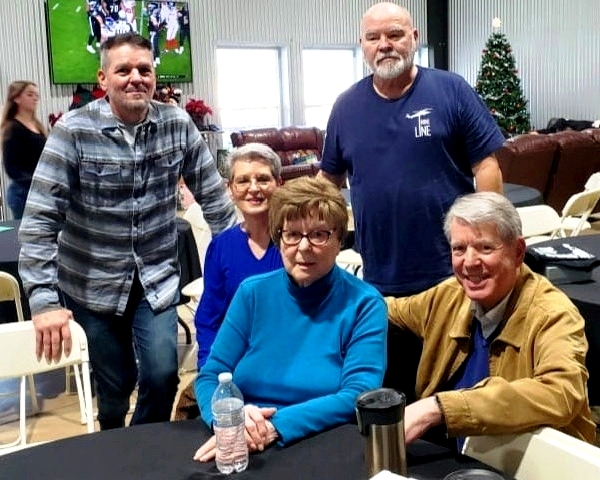
Tony’s last holiday visit to Porterville was in December 2023, when he saw his widowed mother, all three siblings, and other relatives. His final day-trip was on May 26, 2024, for the Tipton festa; he sent me a photo of himself with his mother and sister – just twelve days before he would be stricken. Tony is survived by his mother Mary, sister Mary Chancellor (Gary), brothers Tom (Felomena) and Eric, many nieces and nephews, and innumerable friends.
After retirement from teaching in 2025, Tony was planning to devote more time to writing. He was also excited by the news that Vamberto Freitas was arranging for a Portuguese translation of Land of Milk and Money; Professor António Ladeira of the University of Texas-Austin has been chosen, and his translation will introduce Tony’s depiction of Azorean immigrant farm life in California to a wider readership. Although Tony was not an avid long-distance traveler, the translation might have afforded him the opportunity to visit his family’s ancestral Azores on a Portuguese book tour.
One of the ways Tony arranged for his memory to live on was by endowing scholarships at Porterville College (in memory of calculus professor Clyde Wilcoxon), and at his graduate school alma maters California State University-Fresno and University of California-Davis.
***
Sad losses: The biggest transition in the family is impossible to fathom by those who have never been through it. The only thing that the rest of us can do is express our helpless sympathies to my Uncle Joe and Aunt Ruth on Mom’s side of the family, who lost two of their children in 2011. Amazingly (and unfairly), my cousins both died of cancer within days of each other. The loss of JoAnn and her brother Larry hit my uncle and aunt impossibly hard. I cannot imagine what the experience was like and hope you never share their tragedy or anything like it.
Tony wrote this tribute in his 2011 holiday letter. Coming from a large, close-knit family, he was no stranger to sorrow when loved ones died. In his own case, as Paul Francisco might have observed, his death has left a Tony-shaped hole in his family’s lives – and in all of ours.
REFERENCES
Baker, K.F. & Chamberlain, B.J. (2014, Apr. 26). “Drama! Intrigas! Vacas! Comparação de Famílias Multigeracionais de Leiteiros do Século XX, Imigrantes da Ilha Terceira ao Condade de Tulare na Califórnia, nos Romances Land of Milk and Money de Anthony Barcellos & Já Não Gosto de Chocolates de Álamo Oliveira.” Porto Formoso, São Miguel, Azores: Associaçao Internacional dos Colóquios da Lusofonia, pp. 4-6.
Baker, K.F. (2021a, Mar. 23). “Launching the e-book version of Land of Milk and Money, published by Tagus Press-Symposium-PBBI.” Fresno, CA.: Portuguese Beyond Borders Institute, California State University-Fresno, 23 Mar 2021. Read by moderator Diniz Borges. Guests Anthony Barcellos & Gene Weisskopf.
https://www.youtube.com/watch?v=TUsT5p81tu4 (0:00-17:35)
Baker, K.F. (2021b, Nov. 16). “From soup to nuts: How a family recipe drove me crazy searching for my Azorean roots.” Fresno, CA.: Portuguese Beyond Borders Institute, Fresno State University. 7th International Encontro, A Voz dos Avós, 16 Nov 2021. Read by Anthony Barcellos.
https://sites.google.com/view/voiceofgrandparents-conference/speakers
www.youtube.com/watch?v=Qsx4vB54TNY (0:00-23:00)
Baker, K.F. (2024, Jul. 15). “Anthony Barcellos: April 4, 1951 – June 27, 2024. Math Professor, Author of the Luso-American Novel Land of Milk and Money.” Modesto, CA.: Portuguese Tribune, p. 21.
Barcellos, A. (2012). Land of Milk and Money. Dartmouth, MA: Tagus Press.
Barcellos, A. (2014, Mar. 31). “The Portuguese in Politics” (review of A.R. Graves’ California’s Portuguese Politicians: A Century of Legislative Service). Azores, Portugal: Blogue Comunidades.
https://acores.rtp.pt/comunidades/the-portuguese-in-politics-anthony-barcellos
Barcellos, A. (2015a). A Stroll Through Calculus: A Guide for the Merely Curious. Solana Beach, CA.: Cognella, Inc.
Barcellos, A. (2015b). “The Voyage to Brazil.” In Writers of the Portuguese Diaspora in the United States and Canada: An Anthology, ed. L. Gonçalves & T.C. Matos. Roosevelt, NJ.: Boavista Press.
Barcellos, A. (2018, Aug. 21). “Portuguese-American Literature” (interview). Os Portugueses No Vale, com Diniz Borges. KNXT-TV 49/38.
Barcellos, A. (2023, Nov. 12). Review of Portuguese Bands of California, 1898-2023, by T. Goulart.
https://www.facebook.com/anthony.barcellos
Barcellos, A. (2024, Feb.). “Who is the Fairest of Them All? A Reflection on Jénifer, or a French Princess, a novella by Joel Neto.” In Filamentos: Arts and Letters in the Azorean Diaspora 8. Fresno, CA.: Bruma Press & Letras Lavadas Edições, pp. 33-35.
Borges, D. (2020, Nov. 10). “E-Launch of Smiling in the Darkness.” Authors of the Portuguese/Azorean Diaspora. Fresno, CA.: Portuguese Beyond Borders Institute, California State University-Fresno. With Katherine Vaz, Anthony Barcellos, Emanuel Melo & Mário Pereira.
Chrystello, C. (2024, Jul. 4). “Land Of Milk And Money vai ser traduzido para Português.” Lomba da Maia, São Miguel, Azores: Blogue Lusofnias.
Freitas, A. (2020). Smiling in the Darkness, trans. K.F. Baker, B.J. Chamberlain, R.F. Silva & E. Melo. Dartmouth, MA.: Tagus Press.
Freitas, V. (2015). “California, or God’s Country,” trans. K.F. Baker & B.J. Chamberlain. http://www.landofmilkandmoney.com/VambertoFreitasReviewLMM-2012-english.pdf
Jeopardy! (2017, April 14). “Final Jeopardy! Round.”
https://j-archive.com/showgame.php?game_id=5609
Jeopardy! (2021, Dec. 6-17). “2021 Professors Tournament.”
https://www.jeopardy.com/track/2021/professors-tournament
Legacy (2024, July 21). Anthony Barcellos Obituary. Porterville, CA.: The Porterville Recorder.
https://www.legacy.com/us/obituaries/recorderonline/name/anthony-barcellos-obituary?id=55653597
Merriam-Webster (2019). The Merriam-Webster Dictionary. Springfield, MA.: Merriam-Webster, Inc.
https://www.merriam-webster.com/sentences/abreast
https://www.merriam-webster.com/sentences/warhorse
Oliveira, A. (2006). I No Longer Like Chocolates, trans. D. Borges & K.F. Baker. San Jose, CA.: Portuguese Heritage Publications of California.
René Magritte Org. (n.d.). “The Treachery of Images, 1929 by Rene Magritte” (‘Ceci n’est pas une pipe’).
https://www.renemagritte.org/the-treachery-of-images.jsp
Silva, J. (2014, Nov. 16). Review of Land of Milk and Money. Azores: Blogue Comunidades.
https://acores.rtp.pt/comunidades/review-by-julian-silva-of-land-of-milk-and-money-anthony-barcellos
Silva, R.F. (2015). “Family Conflicts in Anthony Barcellos’ Land of Milk and Money.”
Silva, R.F. (2021, May 5). “Holy Ghost Feasts in the California Diaspora.”

 Filamentos (artes e letras)