
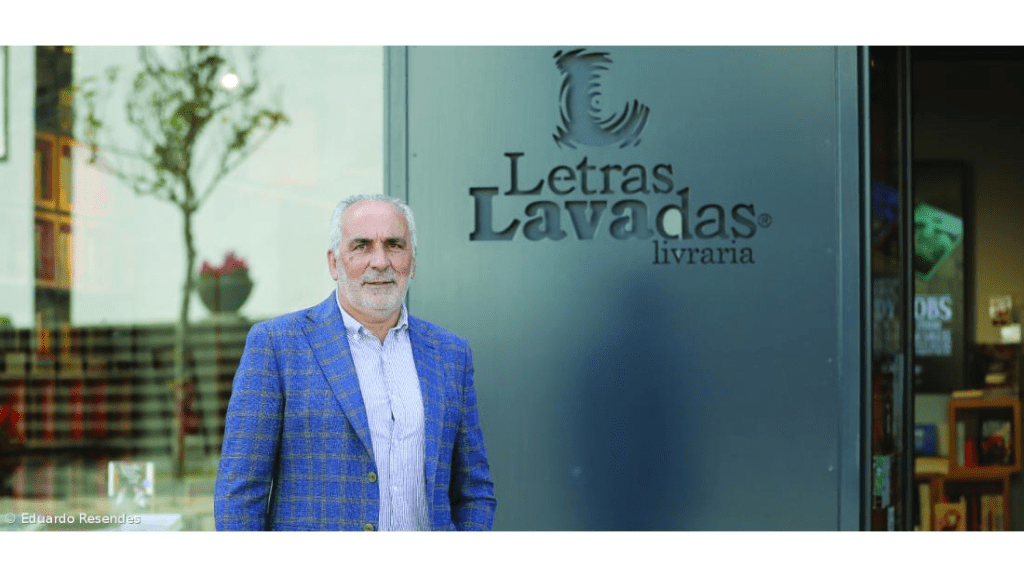
With a life dedicated to the graphic arts, José Ernesto Rezendes, founder of Nova Gráfica and the Letras Lavadas publishing house, describes himself as passionate about this art, whose evolution he has followed throughout his professional career.
“I’m a graphic designer because I have art inside me,” says the businessman, recalling that when he was still very young, he would “pass by a print shop and watch them tinkering with those pieces,” which fascinated him.
This curiosity led him to decide to work in this area because “art was in my veins. I’m from a generation that went through lead typography and offset, which is a completely different evolution, and in 1998, we started working with digital.”
José Ernesto Rezendes was born in the Santa Bárbara parish in Santa Maria in 1955. Still, the scarcity of resources and the desire to guarantee a better life for his children led his family to move to São Miguel when he was six years old.
“My parents came to São Miguel for better conditions for their children. Nine years later, my father went to Canada, and his idea was to get emigration for his children, but we couldn’t go because of military service. That’s why we all spread out: some in Canada, others in the United States, and me in São Miguel,” he says.
When he was just 11, he started working as a bellboy in the Ponta Delgada trade, and at 14, he began studying at night on the General Trade Course. In 1970, at the age of 15, he began working as a printer at Tipografia Insular in Ponta Delgada, where he stayed for seven years, which, as he points out, defined the direction of his life and the basic teachings of his professional career.
At 23, he was invited to become production director at Impraçor, the largest printing company in the region.
“I was going to Canada two months after completing my military service, but I was invited to work at Impraçor, the company owned by Açoriano Oriental, which was converting its printing press to offset. I decided to accept, and shortly afterward, I was in charge of production, and the dream of emigration was over,” he recalls.
In September 1982, he founded the Nova Gráfica printing company with three other graphic colleagues.
“It was a thought-out project, we knew we would achieve our goal. Founding the company was about thinking we could create something new and always working with the aim of one day having something different in the Azores that didn’t exist before. That was our goal, and we achieved it,” he says.
Of his success, the entrepreneur recalls the distinctions he and his company have received due to the commitment, work, and dedication of the entire team, which has always followed the creativity of his mentor.
“I’m a graphic designer because I have art inside me. And if I’m doing things differently today, it’s precisely because I have the conditions to do them: an excellent team of human resources and the means to do them. For me, no matter what happens, I’m always connected to the graphic arts,” he reveals, explaining: “When I look at a book or a newspaper, before the content, I look at the graphic aspect of the pieces, the details, the techniques and the materials that have been used.”
In 2007, he acquired the company Publiçor, Lda., which led to the creation of the publishing house Letras Lavadas. “When we acquired Publiçor in 2007, I could already see that in the future it would be a dying business. And since we had a print shop and knew about graphic arts, what we wanted was to produce pieces on paper. So we started publishing a few books without thinking too much about how big it would become. Of course, after 15 years, we now have more than 700 titles published under the Letras Lavadas label. We always give preference to authors from the Azores or who write about the Azores and now we’re taking a much bigger step into the international market with some books, because we’ve already crossed the borders of Portugal and are known in the markets of America, Canada, Brazil and Europe,” he says.
As a man who likes to overcome challenges, José Ernesto Rezendes also presented different works, such as the case of the Terra Nostra newspaper in the Guinness World Records as the smallest newspaper in the world, the special edition of Manuel Ferreira’s works that he offered to the President of the United States Barack Obama, or the book “Açorianidade no Tempo,” which brings together 150 titles by 263 authors.
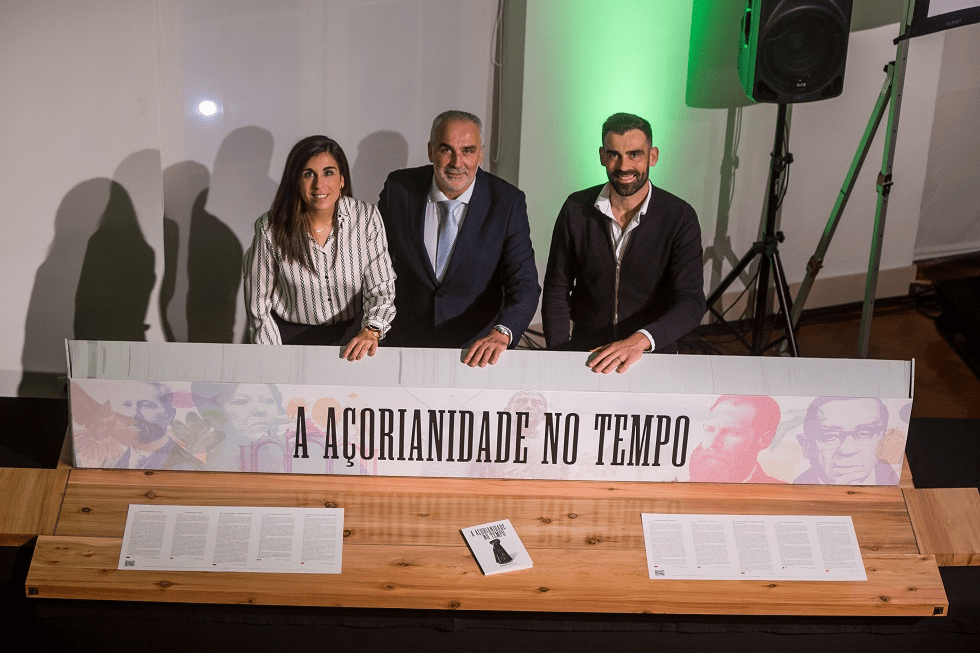
“These are just marketing actions in which we showcase our company. We wanted to show the world we also have the means and human resources to do this. We can’t do these actions daily but do them over time. We want people to look at these pieces in 50 years’ time as a piece of art that will be valued,” he says.
Throughout his career, he has also witnessed the transformation of the printing industry with the growth of digitalization. This situation has led José Ernesto Rezendes to adapt, focusing on jobs with smaller print runs but higher graphic quality. “The print run of the book can be smaller, but it needs to look good graphically to be used for reading and as an object. This has led to a revolution in the industry, which now has to think about the technical and human resources to make pieces that make people look at them. Digital is going to grow more and more,” he says.
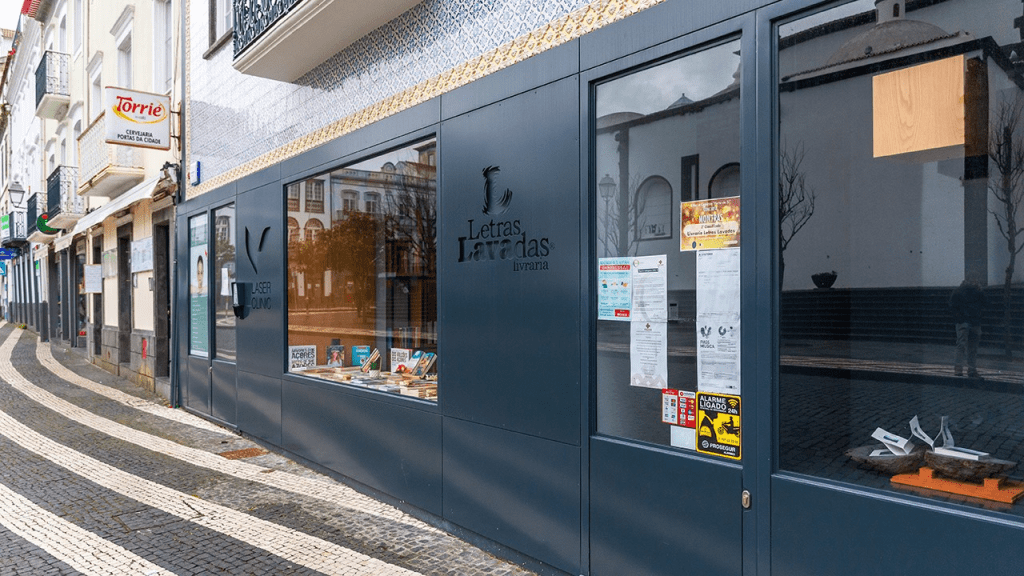
One of his most recent challenges was opening a bookstore in the center of Ponta Delgada, which was “a counter-cyclical risk” that has been overcome.
José Ernesto Rezendes retired in June 2018, and in 2022, he passed the company on to his children, Milton and Bruna Rezendes, in the year Nova Gráfica celebrated its 40th anniversary.

“My company was always a goal in my life, and I never imposed it on my children. I gave them training so they could do what they liked and be good professionals. They understood that they should stay in the company and, as they already have a lot of knowledge, I gave them 80% of the company’s shares. Currently, I’m the company’s mentor, but they run it. I’m transitioning to another generation, which has been a very nice surprise, because I’m proud to see what they’re deciding and accept what they are. Because the way of thinking and deciding is different.”
Today, he says he is a fulfilled man who wants to accompany the growth of his grandchildren and his business, although he always looks for opportunities.
“Everything I’ve done in my life has been through opportunities that have come my way. And opportunities come my way every day and I often take advantage of them. In the Azores we have the equipment and human resources to match those who do well,” he concludes.
Ana Carvalho Melo is a journalist for Açoriano Oriental.
EN-We at Bruma Publications are thankful to José Ernesto Resendes and his team for the magnificent partnership between Letras Lavadas and PBBI Fresno State with our Bruma Publications series. In just under two years, we published a dozen books. This was done in collaboration with José Ernesto Resendes and his family. We are thankful for the opportunity and want to grow our partnership.
 Filamentos (artes e letras)