
ON THE 65TH ANNIVERSARY OF THE AZOREAN REFUGEE ACT

On September 2, 2023, 65 years after the American approval of the Azorean Refugee Act, the Horta City Council, in partnership with the Regional Directorate for Communities of the Government of the Azores, held an evocative ceremony at the Capelinhos site on the island of Faial. The ceremony was attended by the mayor of the city of New Bedford, John Mitchell, and Massachusetts State Representative António Cabral.
We weren’t there celebrating the latest volcanic eruption in the challenging history of Faial and the Azores.
We were there to celebrate the reaction and resilience of the people of Faial, the transatlantic solidarity of the American nation, and the strengthening and development of the Azorean diaspora.
We did so while fondly evoking a symbol of America and a friend of the Azores—the then-senator and later President John Kennedy.
The week before, we witnessed the city of Fall River’s Kennedy Park welcoming thousands of Azorean emigrants to the annual celebration of the Great Feast of the Holy Spirit of New England.
The following week, we witnessed an official gesture of popular gratitude with the pertinent replacement of the John Fitzgerald Kennedy plaque on the access road to the Capelinhos Volcano, which pays well-deserved homage to the late memory of the emblematic promoter of the extraordinary legislation of the American Congress that would welcome and support thousands of Faialense and Azorean refugees in Massachusetts, Rhode Island, and California.
In fact, just over 65 years ago, on September 2, 1958, federal senators John Kennedy, from Massachusetts, and John Pastore, from Rhode Island, approved an exception that confirmed the rule of the following years – the extraordinary legislation of the American Congress that would welcome and support thousands of refugees from Faial and the Azores in the United States.
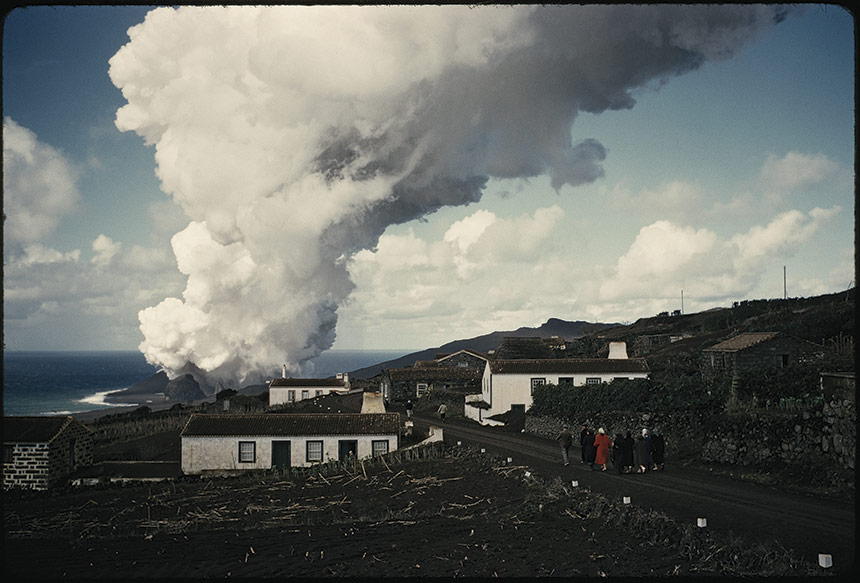
By 1965, with the initial visas of the Azorean Refugee Act, nearly 2,500 families from Faial and Pico had ventured across the Atlantic and snuggled into the lap of America.
In the following decades, with the “cartas de chamada” (documentation under the Family Reunification Act signed by President Johnson), more than 175,000 Azoreans from all the islands, corresponding to 30% of the regional population, began to affirm Nemésio’s “Azoreanness” on the other bank of Onésimo’s “Atlantic River.”
Almost three centuries after the volcano of Praia do Norte reinforced the pioneering exits to the northeast of Brazil, the eruption of Capelinhos made the island of Faial the actual locomotive of the second and great wave of Azorean emigration to the United States.
Today, North America is an extension of the Azores.
We cross the Atlantic and still feel at home – in Fall River, New Bedford, East Providence, or the San Joaquin Valley, but also in Toronto, Montreal, or Bermuda.
Our communities project, expand, and enhance our Azores.
That’s why they deserve our respect, gratitude, and investment.
That’s why we evoke the Azorean Refugee Act—to celebrate our complicity with the United States, express our gratitude to John Kennedy, and symbolize our homage to all the people of Faial and Azoreans in general, of yesterday and today, who have had to leave their land but who have carried it in their hearts forever.
The lava of the Capelinhos volcano created the stage for this evocation.
The magma of the emigration of the Faialenses sedimented the Azores in America.
Regional Director for Communities in the Government of the Autonomous Region of the Azores
Based on a text taken from his book Transatlântico – Açorianidade & Interculturalidade (2024)
 Filamentos (artes e letras)