
A FORERUNNER AND A PIONEERING REVOLUTION BY MANUEL ALEGRE
April 25 taught us that there is another dimension to things and that a country’s soul can be bigger than its size.
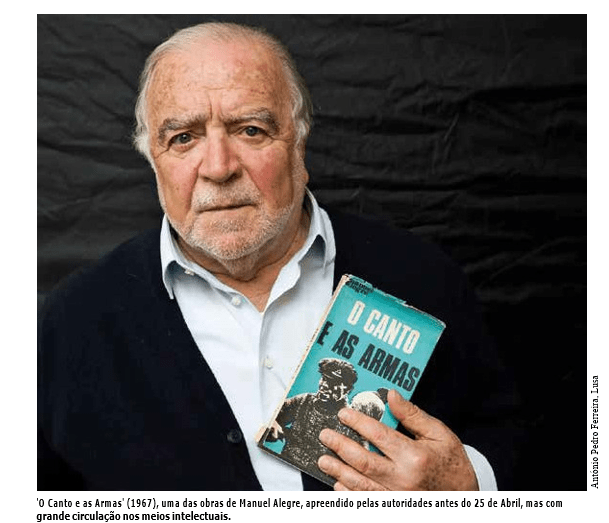
LIBERTY MADE DAY – as Eduardo Lourenço called the day of freedom. Fifty years on, April 25th has become, so to speak, everyday life. It’s freedom every day. Even for those who don’t know what April 25 was. Or for those who don’t like it and slander it. Or for those who, without questioning it outright, do everything they can to ensure that it is gradually forgotten, minimized, or misrepresented.
Therefore, all those who pretend this is a day like any other are, without knowing it, commemorating April 25. All those who say bad things about the Carnation Revolution are unwittingly paying homage to April 25. It was April 25 that gave all Portuguese people, even those who were against it, the right to live without fear, to speak without fear, and, above all, the freedom to disagree without fear.
Even if the Aprilist imagery isn’t fashionable, even if the dominant values aren’t exactly those of the April Revolution, its superiority is evident. Because, as a victorious revolution, it didn’t replace one piece of propaganda with another, one official culture with another official culture, or one mythology with another mythology.
Other regimes have created their own monuments, myths, and symbols. The liberal revolution, the republican revolution, the Estado Novo, which no one will ever see me call a previous regime because it was, as we know, a fascist dictatorship, copied from the Mussolinian model, sympathetic to the Nazi regime, with many of the quirks and tics of these totalitarian regimes, from the political police and the Tarrafal concentration camp to the obligatory fascist salute in the 1940s.
Despite being the founding matrix of the democratic regime, April 25 has not only failed to build its own mythology, but under the sun of its freedom, it has been possible to distort history, whitewash the past, and promote against the culture of memory, the culture of forgetting.
But even then, even when it seems to be losing, April 25 is becoming the winner.
Because there used to be a single mindset in Portugal – and not today. There was dogma – and not today. A system was built to impose a single vision, a single truth, or, if you prefer, an institutionalized lie. Not today. Today, it’s not possible.
That’s why, even if it sometimes seems that the old ghosts are being reborn, even if it’s occasionally possible to falsify history, even if it’s sometimes gone so far as to offend a hero of April 25, it’s always possible to restore the truth and it’s always possible to repair injustice, as the government has done by granting Salgueiro Maia’s widow a pension for life, which had been refused to her and awarded to two Pide agents.
THE FORCE OF APRIL 25
Before April 25, you couldn’t argue. Now you can. Before April 25th, you couldn’t respond to lies. Now you can. That’s the strength of April 25. That’s the difference of April 25th. That’s the moral superiority of April 25. And that is the victory of April 25, even when momentarily it seems that it is being defeated. It’s not. Because April 25 is freedom. Freedom to disagree with it. But also the freedom to celebrate and affirm it without inhibitions or complexes. And also without sectarianism or misappropriation.
Because if 25 April is incompatible with a single way of thinking, so is any attempt at privatization or exclusivist appropriation. It’s pointless rewriting history to suit the tactical convenience of the moment or mere personal games.
We cannot demand that new generations experience April 25 like those who suffered the dictatorship and opposed it. For those born afterwards, April 25 is already part of them in a way, it’s almost like the air they breathe. Perhaps they don’t need to commemorate it like the women and men of my generation, for whom April 25 is and always will be the most beautiful day of our lives. But 50 years on, it’s time for April 25 to stop being a revolution ashamed of its victory. It’s time for the Aprilists to respond without complexity to the revisionists of history and the detractors of April.
Above all, it is time for Portuguese democracy to fulfill one of its main obligations: to clearly assume its founding matrix and teach its own values. That’s why I think it’s necessary to free April 25 from the clandestinity to which it was constrained for some time.
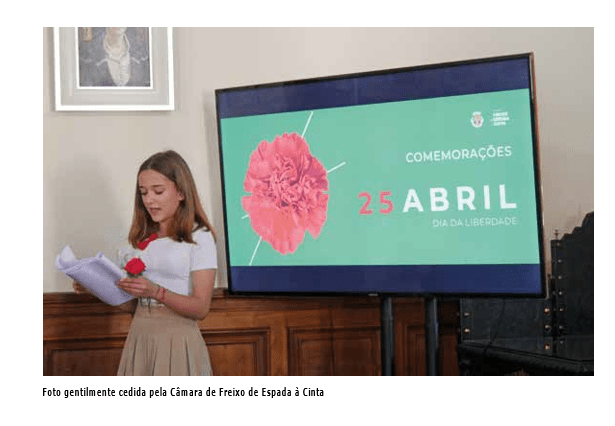
This is also where the rehabilitation of politics and the reconstruction of hope come in.
Of course, times and values are different. The wall has fallen, the models have collapsed, the end of history has been announced, and the theology of revolution has been replaced by the theology of the market. Poetry is no longer on the streets, as it was at a time when, as Sophia de Mello Breyner also used to say, “people didn’t push each other”.
This is a time of pushing in the literal, metaphorical sense. Some people have taken self-giving to extremes and have given way to fierce competition. There’s a lot of talk about solidarity. But in the streets, the workplace, schools, politics, journalism, and life, almost everyone is pushing everyone else around. This is perhaps the most significant defeat of April 25, which was not only a celebration of freedom but also a promise of fraternity.
Therefore, it would be essential to recover and reinvent a little of the spirit of this precursor and pioneer revolution, not from a perspective of the past but with an eye to the future. It was a precursor revolution because, as Samuel Huntington said, April 25 inaugurated a new democratic era.
A pioneering revolution because despite all the deviations and temptations that were tried to be grafted onto it, it showed the world that it was possible to move from dictatorship to democracy without falling into a new dictatorship. This triumphant experience paved the way for democratic transitions in Spain, Greece, Brazil, and other Latin American countries. And it later served as an example and inspiration for African and Eastern European countries.
It was an original revolution because the Captains of April didn’t keep power to themselves. True to their word, they gave it back to the people through free and democratic elections.
April 25 made Portugal much bigger than its small physical space. It freed the Portuguese people, allowed the birth of new Portuguese-speaking countries, and became a center of attention, study, and reflection on the process of transition to democracy. Contrary to what its detractors claim, April 25 did not diminish Portugal; it added to it. It added to Portugal’s freedom and dignity and the emergence of new nations with which new bonds of cooperation and fraternity were established.

THE SPIRIT OF APRIL 25
This universalist dimension cannot be forgotten. And that’s why we can’t accept Portugal returning to being that “quiet country” spoken of by Teixeira de Pascoaes. And that’s why we need to recover a particular spirit of April 25, which was not only a precursor and pioneer of what has happened but also of what hasn’t happened yet. Not in the sense of returning to unrealistic utopias, although I think, like a great revolutionary I once knew, that sometimes “we should be realistic, that is – demand the impossible.” But what hasn’t happened yet is daring the possible. And daring what is possible means not accepting, under the pretext of so-called globalization, a single economic order, a single way of thinking, a single direction.
This is also a form of colonialism and totalitarianism, colonialism imposed by the logic of the strongest. According to Edward Goldsmith, founder of The Ecologist magazine, this new colonialism of multinational companies risks becoming the most impudent and brutal.
However, there is also the risk of totalitarianism, in which the divinization of the market replaces the absolutization of the state bureaucracy. Moreover, according to the same author, world transactions are increasingly taking place between multinationals and their subsidiaries. This is not actual trade but the product of centralized private planning on a global scale. According to British economist Paul Enkins, multinationals have become giant zones of bureaucratic planning within a market economy.
As you can see, there are several routes to Big Brother. And if one system has collapsed, we can only wonder, with Frédéric Clairmont, about the supposedly effective management employed by the other when it is true that it enriches the rich and impoverishes the great mass of humanity. If the Soviet system created a political Goulag, neo-liberalism is creating an economic Goulag.
The current crisis, the result of one system’s bankruptcy and another’s structural crisis, calls for a new logic in the economy, another dimension in politics, and another global perspective that has man as its raison d’être.
To dare what is possible is to dare this new humanism. To dare what is possible is to make our voices heard, as has been the case recently so that a monetarist vision is opposed to the prospect of a more social, democratic, and participatory Europe. As French citizens said on the streets of Paris, what is at stake in Europe is a model of civilization. Like them, we Portuguese are not Anglo-Saxon either. Like them, we don’t want an ultra-financial Europe on top of the social rights that are the conquests of civilization.
To dare what is possible is not to forget the other side of ourselves: Brazil, Africa, Timor, the part of the world that speaks Portuguese, and the communities scattered around the globe.

THESE ARE DIFFERENT TIMES
In recent years, the technological revolution has opened up new horizons. The dominant economic system has changed the traditional unity between the worker and the workplace, man’s relationship with the city, and the very relationship of the family and people with each other. Cultures, customs, traditions, and ties have been destroyed. Others will be destroyed if the dominant logic is not reversed. This has not yet happened. And it’s what will inevitably have to happen, otherwise structural unemployment, exclusion and the accumulation of tensions could lead to explosive situations with an unforeseeable outcome.
The crisis of so-called “democratic melancholy,” reflected in indifference and disbelief towards politics, will not be solved by institutional and electoral reforms alone, however necessary they may be. It will only be solved by giving politics a humanist dimension and a perspective for transforming the world and society.
That was the project of April 25. That’s why I say that it was a precursor to what has happened and what hasn’t happened yet.
That’s why, here and in Europe, the Socialists have the heavy responsibility of relaunching the left and giving a new response, on a continental scale, to the extremely serious social problems that result from ultra-liberalism’s colonization of Europe. Here and in Europe, it is through the left that the hope of turning politics back into an instrument for change and the transformation of society and life must be realized.
However difficult that may be, no matter how narrow the margin of decision, no matter how small our country is in relation to the world’s greats.
April 25 taught us that there is another dimension to things and that a country’s soul can be bigger than its size.
We need to return to that size —the size, as Natália Correia used to say, of our “transporting Portuguese soul.” Which is, after all, the size and spirit of April 25.
* Poet, politician, Pessoa Prize and Camões Prize winner

IN O REFERENCIAL — PUBLICATION OF THE ASSOCIAÇÃO 25 DE ABRIL
lINK TO THE PUBLICATION IN PORTUGUESE
 Filamentos (artes e letras)