

THE AZOREAN PIONEERS IN CANADA
Canada is the third historical destination of the tremendous Azorean emigration, after Brazil and the United States, but it has quickly become an unavoidable reference point for Azoreans without borders.
In truth, the connection between the Azores and the future territory of Canada dates back to the 15th century, with the voyages of the Corte-Real navigators; it continued in the 16th to 18th centuries, with tuna fishing in the seas of Newfoundland, and reached the 19th century, with the “Portuguese Joe” from Pico, who would be the first European to acquire citizenship in British Columbia.
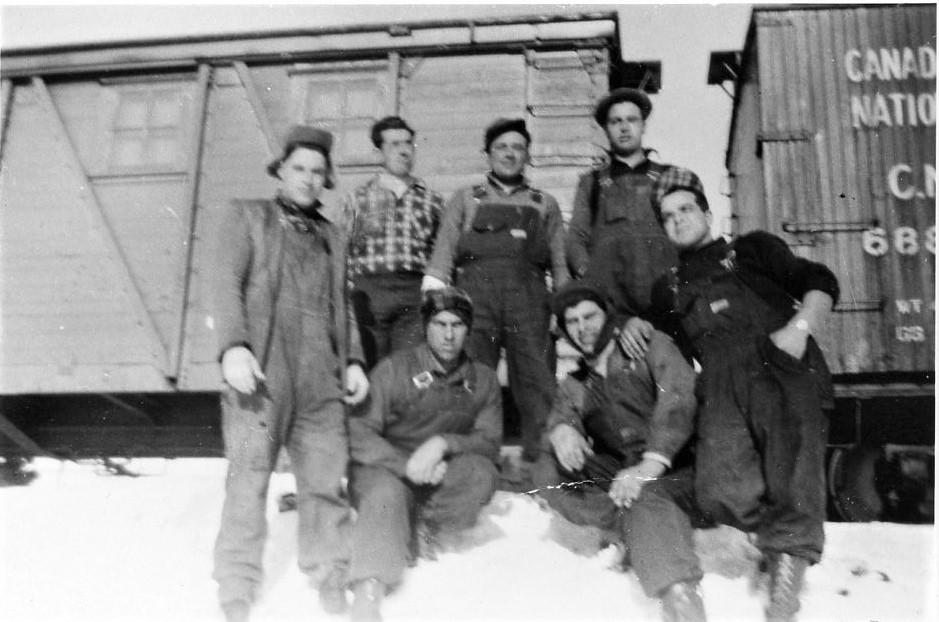
But in the 20th century, on May 13, 1953, the 18 Azorean pioneers from the island of São Miguel disembarked from the ship Satúrnia in the port of Halifax.
Curiously, May 13 is the feast day of Our Lady of Fátima, and its commemoration in 2023 corresponded to the Saturday of Senhor Santo Cristo dos Milagres as if to certify the religious matrix of the Azorean people wherever they are.
Growing numbers of emigrants from different Azorean islands followed in 1954, 56, and 59, initially to meet local needs in the exploitation of agricultural fields and the construction of railways.
By the end of the 20th century, almost half a million Portuguese had emigrated to Canada, with an estimated 65% from the Azores.
According to the 2021 Canadian census, 1.2% of Canada’s population comprises 450,000 Portuguese.

There are 300,000 in the province of Ontario, mainly in the cities of Toronto, Brampton, and Mississauga; 65,000 in Quebec, especially in Montreal and Laval; 40,000 in British Columbia, mainly in Vancouver and Kitimat; 20,000 in Alberta, namely in Calgary and Edmonton; and 13,000 in Manitoba, concentrated in the provincial capital, Winnipeg.
But more than numbers, the Azoreans emigrating to Canada are people. And they are people who make the Azores proud.
That’s why we’re symbolically remembering the pioneers of 18 May 13, 1953, who paved the way for 70 years of progressive affirmation of Azorean cultural identity in the great Canadian nation.
They came from five of the six municipalities on the island of São Miguel, except Vila Franca do Campo.
Six came from Ponta Delgada, four from Lagoa, four from Nordeste, three from Ribeira Grande, and one from Povoação.
They were from such different backgrounds that they left from 15 other parishes: Achadinha, Água de Pau, Bretanha, Candelária, Fajã de Cima, Feteiras, Furnas, Matriz da Ribeira Grande, Pedreira do Nordeste, Rabo de Peixe, Rosário da Lagoa, Salga, Santa Cruz da Lagoa, São Brás and São Pedro de Nordestinho.
Their names were Almeida, Arruda, Bento, Cabral, Carvalho, Castro, Couto or Machado, Martins, Moreira, Pacheco, Pavão, Silva, Tavares, Vasconcelos or Vieira.
The 18 pioneers of Azorean emigration to Canada on May 13, 1953, were Afonso Tavares (Rabo de Peixe, Ribeira Grande), António do Couto (São Pedro de Nordestinho, Nordeste), Armando Vieira (Água de Pau, Lagoa), Constantino Carvalho (Feteiras, Ponta Delgada), Énio Vasconcelos (Salga, Ribeira Grande), Evaristo Almeida (Atalhada, Lagoa), Guilherme Cabral (Matriz, Ribeira Grande), Jaime Pacheco (Pedreira, Nordeste), João Martins (São Brás, Ribeira Grande), José Bento (Achadinha, Nordeste), José da Silva (Santa Cruz, Lagoa), José Martins (Feteiras, Ponta Delgada), Manuel Arruda (Bretanha, Ponta Delgada), Manuel Machado (Furnas, Povoação), Manuel Pavão (Candelária, Ponta Delgada), Manuel Vieira (Água de Pau, Lagoa), Vasco Moreira (Fajã de Cima, Ponta Delgada) and Vitorino Castro (Feteiras, Ponta Delgada), according to Professor José Carlos Teixeira, in his book A presença portuguesa no Canadá: a perspective of five decades.
Seventy years later, these names have multiplied, and the cultural identity of a parish, an island, and an entire archipelago runs in the blood of their children and grandchildren.
Thanks to the first, the second, and the following, the Azores are projected, affirmed, and dignified in different geographies of the Canadian nation.
With this symbolic evocation of the 18 pioneers of official emigration from the Azores to Canada, we pay tribute to all Azoreans and their descendants from Quebec to British Columbia.
The Azores exist where the Azoreans are.
José Andrade is the Regional Director for Communities in the XIII Government of the Autonomous Region of the Azores
Translated by Diniz Borges-PBBI-Fresno State.
The picture on top is of José Andrade next to the books from the Azores gifted by the Government of the Azores.
 Filamentos (artes e letras)