
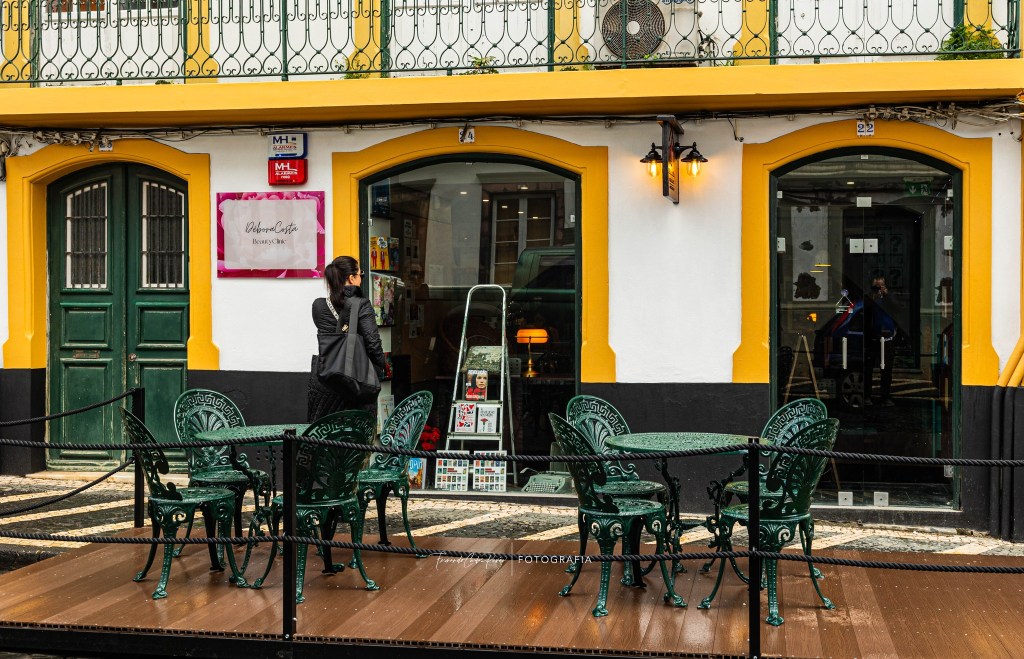
Lar Doce Livro (Home Sweet Book) opens tomorrow in Angra do Heroísmo, a “bookshop, café and restaurant.” How did this project come about?
MARTA: One day, we were talking about what we did and didn’t do, what we would never do, and what we might do, and we discovered that founding a bookshop in Terceira was a long-held dream of both of us. Perhaps it was always a more distant idea for me than for Joel, so he raised his eyebrow and said: “Why don’t we try? We always go for it and there’s nothing we can’t do. What if we took a chance?” A few days later, we had pages and pages of ideas. And we never stopped. It was feverish enthusiasm.
JOEL: Of course, this original arrogance was followed by several different phases. We set ourselves a very ambitious deadline out of necessity. We were founding a company with four full-time employees and three part-timers, all with the income of a writer and a text editor, fresh out of university. We would need to start invoicing relatively quickly, and it’s never easy to do things quickly in the Azores because the construction sector has trouble responding to emergencies, the transportation of goods takes time, sometimes everything comes wrong, and even national suppliers turn up their noses at the Azores more often than we expected. As much as we want to do something different, with a different offer, we are often forced to do the same as others for lack of alternatives.
MARTA: But we were very lucky with the team we chose. It was essential to find an architect who could see what we saw in the space we decided, and José Parreira saw it. It was crucial to find an economist who could help us structure the financing, and Arlindo Teles’ team did so without neglecting the idea of good management, which we really had to learn. We must find a contractor who exceeded the specifications, and Dionísio Meneses solved every problem of all kinds – execution, design, management, and even psychology, in Joel’s case (laughs). We owe the miracle of putting this project together in three months to them, plus the guys at Planiconta, the staff at Equipaçor, and the many suppliers we brought together.
JOEL: When you tell someone this, they think it’s a lie.

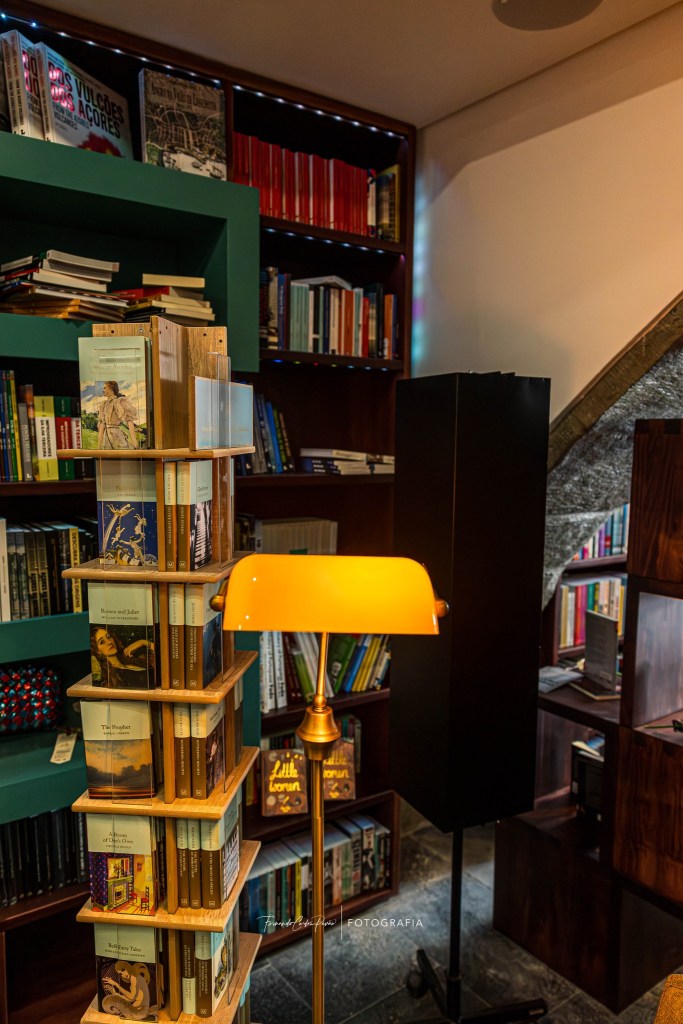
Despite the many books of different genres, it’s not just a bookshop. What is the concept of this new space?
JOEL: For some reason, Terceira doesn’t have a conventional full-time bookshop. It has In Folio, the result of a deep love of books cultivated by a bookseller of enormous quality and discretion like Paula Quadros, but which today only opens its doors for a few hours a day. Several places sell books, but they’re not bookshops; they’re supermarkets, stationery stores, tobacconists, tourist stores, and even post offices and government offices. That would advise us to find a more creative business model.
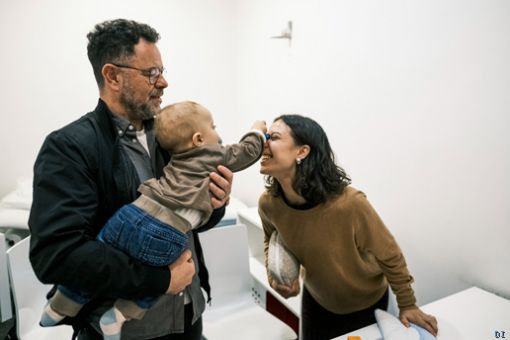
MARTA: But the truth is that not least because of our personal history – we had been parents for a year – we were also looking forward to the possibility of creating an indeed family project. An intimate place where everyone knew everyone’s name, to paraphrase the old slogan. And this dream – which also responded to our need to have a “practical,” “hands-on” job, not just an intellectual one – was echoed in the idea of a bookshop-café, a type of establishment that is very much in vogue in countries with higher reading rates than ours, such as the Scandinavian and Anglo-Saxon ones.
JOEL: Basically, it all worked out. We could search for good readers and try to form a big family, a big group of friends, a tribe with them. At the same time, we’d have more hope of making a business viable.
MARTA: Our first objective is to survive. We’re certainly not going to get rich. But maybe this may help us – I don’t know – put our children through college. It will certainly be one of the places where they grow up.

Lar Doce Livro has not yet opened and has several events on the agenda. Do you also intend to be a cultural promoter for Angra do Heroísmo?
JOEL: Absolutely. Firstly, because I like art and culture. Then, for the circulation of people, which is essential to the health of any business. And finally, but above all, because our understanding of literature doesn’t end with the fictional narrative or even the written word. There is literature in music, in cinema, in painting. And there is literature in real life, in how people love and are loved, in the heroes and anti-heroes of everyday life. All of this will be part of our program.
MARTA: In April alone, we have more than twenty events of all kinds – starting with the opening, which lasts all day and includes stories for children, the launch of a book by João de Melo, the first meeting of our Reading Club, a stand-up comedy session and a jazz concert, as well as the opening ceremony itself. Jorge Serafim and João de Melo are coming, along with many other writer and artist friends from all over the country – and even abroad – in the coming months.
JOEL: In May, we have more than twenty events again. And in June, the same thing. We’ve included six in the official Sanjoaninas program alone. For all audiences, from all the arts, with the most varied pretexts corresponding to the most varied impulses. And this is how we intend to continue.
MARTA: It’s going to be a lot of work. We’re aware of that. We’ll probably fail at various points, but we’ll do our best to stick to the motto and fine-tune all the details. At the same time, we feel people’s enthusiasm. We hear it dozens of times a day: “It’s something different,” “Our town needed a place like this,” “What a great idea,”… In fact, some of these people really rolled up their sleeves. Paulo Matos, Luísa Ribeiro, Filomena Ferreira, Diogo Ourique, Paula Cotter, Hugo Tiago, and even people from Lisbon, like Carlos Laranjeira or Rui Leitão – they are all collaborators with Lar Doce Livro, as are other men and women of culture.
JOEL: We’re very lucky with our friends. This weekend, for example, we’ll have friends here from Porto, Lisbon, Sintra, and Ponta Delgada just to be present at the opening. Not to mention all the people who have come to open boxes or stick labels.

In the age of kindles and kobos, isn’t it risky to open a bookshop in a city the size of Angra do Heroísmo?
MARTA: Angra is a city of culture—it always has been. The book market has increased throughout the country last year, so we’re hopeful. Moreover, the world of e-books is not the world of physical books. There’s room for both.
JOEL: You know, while we, here in Portugal, are obsessed with digital textbooks or moaning about the high price of books – as if we weren’t the same people who spend three times the price of a book to go see an hour-and-a-half concert or eight times to go to a pop-rock festival for two days – in Northern Europe, everyone is rematerializing the book. For example, schools no longer have digital textbooks, only books.
MARTA: Honestly, we’re not convinced we’re in a counter-cycle. Quite the opposite. And I insist that, neither from a publishing nor a retail point of view, the worlds of digital reading and physical reading are mutually exclusive. They both have many challenges.
JOEL: Also, let’s assume we are (as they say) soft-opening until at least the end of 2024. We will be attentive to suggestions from customers and friends and humbly try to correct our mistakes and weaknesses.
MARTA: We won’t create a space without room for course corrections. It would be like learning to ride a bike one day and wanting to do the Tour de France the next without stopping to check the tires.
Do you have any hope for the younger generations? Are they regaining a taste for reading?
JOEL: Of course, even from what the statistics tell us. And before that, it’s an—I would say—ontological question. What’s the point of living if you don’t have hope in the new generations? What sense does it make to be alive without believing in the future? And without wanting to change the world? And without planning to change it until the last day of your life?
MARTA: Joel is the more romantic of us, but that’s not why he’s not right. We also want to pass on this hope for the future to our children—our son, Artur, and any others we may have. In other words, we want to teach them that you must try to leave a positive trail in the things you do and the people you meet. Lar Doce Livro is a project that can have an immense impact.
From an interview published in Diário Insular, José Lourenço-director
All Photographs (except one) are from Fernando Pavão.
Translation by Diniz Borges, PBBI Director and faculty member at the Department of Modern and Classical Languages and Literature (MCLL) at Fresno State.
Bruma Publications welcomes this new cultural center in Angra, and we look forward to a long partnership. this will be a great opportunity for those who visit Terceira island to spend some time and get books for their reading during their stay in Terceira as well as to bring books home as gifts for family and friends.


 Filamentos (artes e letras)