
Every Friday, FILAMENTOS brings you a translated story about the Carnation Revolution. From now until the end of April, we will also publish an amalgam of opinion and literary pieces centered around the commemoration. Today’s is from Poet, Political Leader, Retired Educator, and Friend Aníbal Pires.
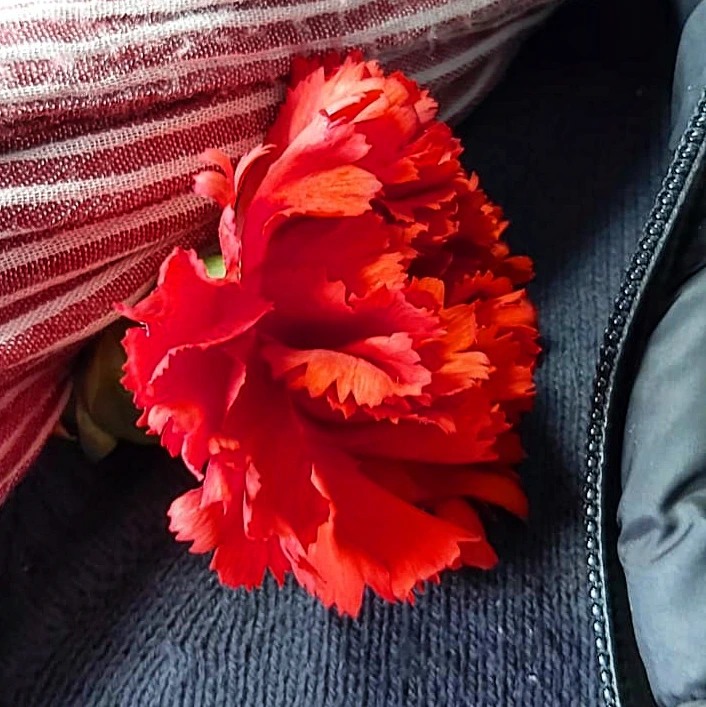
Picture by Madalena Pires
Construction under lockdown – April is the future
postponed future
this is not the future
that the doors of April opened
this is the present
closed in November
In “Esperança Velha e
outros poemas”, Aníbal C. Pires, Letras Lavadas, 2020
“April” is an unfulfilled chimera that inhabits the dreams of the
Portuguese, who keep hope alive for a new country—a fairer, more fraternal,
freer country. “April is the utopia that nourishes the struggle and the journey that began on the day when tears rolled freely down the faces of oppressed people.
Talking about April 25 and the Constitution, which enshrined the shared values of April, doesn’t mean talking about the past or marking the corresponding anniversaries, however important and significant that may be. Talking about the April Revolution, commemorating “April” means talking about the present and planning for the future.
The Freedom, Democracy, Social Justice, Peace, and Sovereignty won in 1974
by the Portuguese People were enshrined in the Constitution of the Republic,
approved on April 2, 1976, one of the most advanced and progressive of the 20th
century, projecting the values of the April Revolution, recognizing and supporting the rights, achievements, and profound transformations and changes that the Portuguese People carried out. Despite the distortions that successive constitutional revisions have been introduced into the initial text, the Constitution continues to be a fundamental and indispensable support in regulating our democratic life and the guarantor of necessary political, economic, social, and cultural rights for workers and the people.
The Constitution assumes a holistic concept of democracy. Democracy must be
political, economic, social, and cultural. The Constitution enshrines workers’
rights intrinsic to democracy, from trade union rights to labor rights and
justice, job security, and a fairer redistribution of wealth with the realization of the right to fairer wages and decent working hours. It expresses the right to work for all and the implementation of full employment economic policies. It recognizes women’s right to equality at work, in the family, and in society and essential rights for children, young people, pensioners, and disabled citizens. It proclaims that economic power must be subordinated to political power and that the state must prioritize economic and development policies that ensure increased social well-being, people’s quality of life,
social justice, and financial and social cohesion throughout the national
territory. It sets out the state’s obligations in areas as important as education and teaching, health, social security, and culture. It contains fundamental principles for the organization of the state, such as the independence of the courts and the autonomy of the Public Prosecutor’s Office, but also the independence of democratic local power and enshrined the historical aspiration of island peoples to autonomy. It stipulates the principles that should guide international relations and by which Portugal should be governed: equality between states, the peaceful resolution of conflicts, non-interference in the internal affairs of other states, disarmament, and the dissolution of military blocs.
Despite “November” and successive revisions, the Constitution of the Portuguese Republic still enshrines the essence of the political project that came out of the April Revolution. Today, defending “April” means protecting the Constitution and demanding it be upheld.
of April 25th
April is
a love that endures
an embargoed construction
a tear of joy
a poem yet to be recited
April is not
past
April is
future
April is
an unfulfilled dream
In “Esperança Velha e Outros
Poemas”, Aníbal C. Pires, Letras Lavadas, 2020
Translations by Diniz Borges
Texto em português— Here is a link to the piece in Portuguese
 Filamentos (artes e letras)