
FLEEING FOR FREEDOM
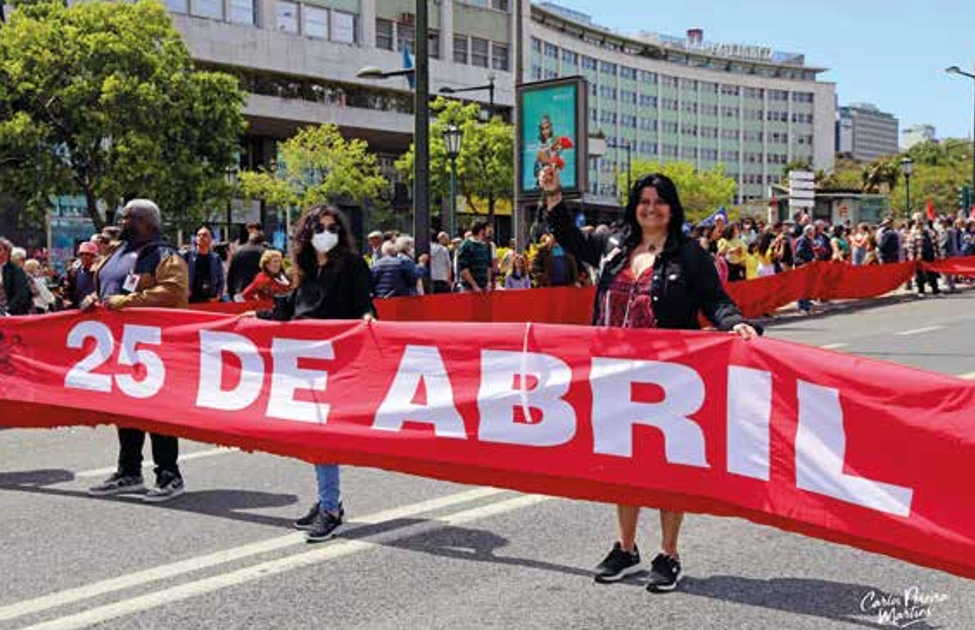
IN A SOCIETY LIKE Portugal’s in the 1960s, in which Salazar’s ideology dominated every aspect of social life by resorting to authoritarianism and unprecedented repression, exile was, for many opponents, the solution to escape the prisons and torture inflicted by the PIDE (International and State Defense Police), and to guarantee their survival in a foreign country.
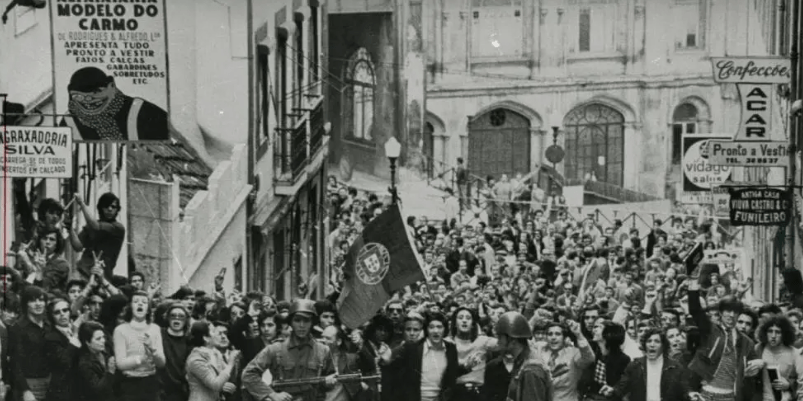
The clandestine exodus was so heartfelt that, on April 25, 1974, the hero of the Revolution, Salgueiro Maia, told journalist Adelino Gomes that one of the reasons he carried out the Carnation Revolution was so that no one else would be forced to leave Portugal because of the things one says and/or writes. At the presentation of the book Censura by historian Júlia Leitão de Barros on April 27, 2022, the journalist recalled this moment: “Salgueiro Maia had gone to high school with me. I went up to him and asked him which side he was on. He gave me the best definition I have of April 25: ‘Didn’t you have to go to Germany for some things you said on Rádio Renascença? I looked at him with surprise and said yes. ‘We’re doing this so that no one has to leave Portugal because of what they say, write or think,’ he said. I hugged him.”
It is estimated that between 1900 and 1988, around 3.5 million people left Portugal, 25% of whom did so illegally. According to researcher Maria Ioannis Baganha, France was one of the biggest hotbeds of opposition to the Estado Novo. Between 1970 and 1973 alone, more than 250,000 Portuguese emigrated, most of them to France.
José Zaluar Basílio, 78, a former professor in the History department at the Faculty of Letters in Lisbon and later a lecturer at the Lusófona University, was forced to flee the country and fight for freedom from a distance until the Revolution of April 25, 1974.

A FAMILY FIGHTER
It seems that the revolution runs through José Zaluar Basílio’s veins. He comes from a family that has always fought. His grandmother used to say: “You’re like the men in the family. You’re all the same.” Men he remembers as his heroes. “I had a family that was always – on what I consider to be the good side – on the side of the struggle, of resistance to repression,” he says.
Starting with his uncle, a teacher, and mathematician, who had been expelled from public education by Salazar’s government through the decree of June 14, 1947, because he refused to sign a declaration stating that he had never been/would never be against the Estado Novo. This relative went into exile in France but ended up living the rest of his life in Brazil, where he traveled in 1953. However, the primary revolutionary reference in José Zaluar Basílio’s life was his older brother, Gualtar Basílio, who was the victim of imprisonment and torture after one of the great armed revolutionary movements against Salazar, the Beja Coup, on New Year’s Eve, 1961 to 1962. “My brother suffered serious sequelae as a result of the torture and was on the verge of death. The doctor who saved him was Ramón La Feria, who intervened in the operation and insisted that the surgeon remove a bronchus and a lung,” he says.
While he was in Portugal, he was arrested only once, but he says it was nothing serious during the academic crisis of 1962. Having people in his family imprisoned and exiled, it didn’t take him long to become effectively aware of and involved in the struggle. He ended up being the target of disciplinary proceedings, and amid the Colonial War, he knew that life would be much more difficult when he went into the army. Aware of the adversity he would face, José Zaluar Basílio left for France in 1965. Before that, he still had the option of going to Algeria, a revolutionary country that had just won the liberation struggle. He quickly realized that it would be a bad idea. With Boumédiène in power, a revolutionary who had no sympathy for the military at the time, he wouldn’t fit in very well: “I’m not going to Algeria with a fucking military man in power… and yet! I went to France because it was closer and there were a lot of Portuguese.”

IN THE CAFÉS OF THE QUARTIER LATIN
Arriving in France, he was marked by life in the cafés of the Latin Quarter. Each had its own ideological position: “There was the Communist Party café, frequented by the most interesting people at the time. Then there was the Maoist café and the Social Democratic café, which was frequented by old republicans of an unthinkable conservatism.”
The quality of life in exile in monetary terms was not the same as in Portugal, but one thing outweighed economic status: freedom. Despite the French police and the control of his papers, he was free to say what he wanted: “In the cafés, we knew perfectly well who the snitches were, who the thugs were. I wore badges that I went to demonstrations, we were arrested, but we knew that there was justice and that it would act with a minimum of balance.” Part of his life in France was marked by his great friend, singer José Mário Branco. He joined the musician shortly after arriving at university in the elections for the Union of Portuguese Students in France. They were both against the Communist Party and had a common desire for direct action and armed struggle, so he supported them.
This is also how some of the significant memories of exile came about. On one of his first Christmases away from home, Zé Mário Branco invited other Portuguese exiles to join him at the table. His companion had prepared codfish, which he missed the most, but when she realized the slices were not enough for everyone there, she decided to make codfish cakes so everyone could have their fill. More than half a lifetime later, José Zaluar Basílio still gets emotional when he remembers those tense years: “The tears you can’t forget. They’re silly, but they’re the most important things about exile, they’re the things that made a mark”.

Back in France, Zaluar Basílio continued the revolution that had begun in Portugal. He quickly moved away from the cafés but eventually returned to a more characteristic, more autonomous one, with people who thought for themselves, very pro-Cuban, pro-revolution. This group was the first to lead the demonstrations against the war in Vietnam in Paris. They were linked to LUAR (Revolutionary Union and Action League), which was responsible for the assault on the Santa Maria liner, the hijacking of the TAP plane on the Casablanca-Lisbon flight, which became known as Operation Vagô, and the assault on the Figueira da Foz bank. “It was a revolutionary organization. We robbed the banks to get money, expropriate the fascist Portuguese state to buy weapons, and fight fascism. We even blew up some boats about to go to the Colonial War,” he says.
Even before the day of freedom, we already knew something would change. Zaluar Basílio was even more specific in March 1974, with the military uprising in Caldas da Rainha, one of the first coup attempts. António Maria Luna da Costa Leão, his long-time friend, warned him: “Get ready and pack your bags, because this coup failed, but the Revolution is coming soon.”

APRIL 25 AND THE REVOLUTIONARY STRUGGLE
What was April 25 like for an exile? For José Zaluar Basílio, the day of the Revolution began early in the morning, with French radio talking about a military uprising. Already ecstatic, he made a flurry of calls to Portugal, trying to figure out what would happen, but without much information, as it was still early. All he heard from his brother was: “So it’s today!”. It wasn’t until the end of the day that he was absolutely sure when a LUAR comrade called and said: “Tomorrow at 8.30am, you have to be at the entrance of the Portuguese consulate.” They occupied the consulate as the only way to get access to all the documents they hadn’t had so far as exiles, such as passports, identity cards, and certificates.
“It was so good!” she says, recalling the moment she arrived in Portugal with tears in her eyes. After the journey and the nervousness of returning home, he remembers that day with the tenderness of seeing his family and friends again: “It’s been nine years without coming back and reliving the memories of those who had died.”

PIDE didn’t know everything. José Zaluar Basílio confirmed in his file archived at the Torre do Tombo that some of the most compromising information was missing: “One of the things that shocked me the most was my letters to my mother. They picked up the letters and there was nothing. I sent a letter with a photograph to my mother, my father hated that I had a beard, so I wrote: it’s to show dad, let him see that I don’t have a beard. This word “beard” was blurred out by the censors’ blue pencil, as if it were a political code (Che Guevara, Fidel Castro), when it had nothing to do with anything. There were others, but this is the one that shocks me the most because my mother never saw this photo.”
In trying to explain what freedom is, José Zaluar emotionally evokes a poem by Jorge de Sena, Cantiga de Abril. He believes that the poet explains what other exiles, patriots, and lovers of our country always had as a principle during these years of dictatorship: “I will not die without knowing what the color of freedom is/What the color of freedom is? /It’s green, green, and red.” After all, what is freedom?
“Freedom is a unique thing and I could only leave France to return to a country where I was free.” Until freedom was achieved, the struggles left dents in the hearts of those who dreamed of April.
This vital day should never be forgotten. José Zaluar Basílio is a member of a group called – Don’t erase the memory: “We need to make sure that our memory is not lost, and if we’re here, it’s our fight today. We have to know who our friends were who were with us, who those who betrayed us were, who was murdered, who was tortured, the harm they did to us, the persecutions, the arrests….”
“Only half a hero,” as he puts it, José Zaluar Basílio wouldn’t change a comma in his life story. “If I regretted it, it was that I didn’t do more, but if it didn’t happen, it was because I didn’t have the strength,” he says after a lifetime of fighting for the freedom of a country.
MAFALDA TOMÁS AND MARIANA FERREIRA
Journalism students at the Escola Superior de Comunicação Social (ESCS),
of the Polytechnic Institute of Lisbon
in O Referêncial-Jnauary March of 2023, pages 36-41
Translated to English as a community outreach program from the Portuguese Beyond Borders Institute (PBBI) and the Modern and Classical Languages and Cultures Department (MCLL) as part of Bruma Publication and ADMA (Azores-Diaspora Media Alliance) at California State University, Fresno–PBBI thanks the sponsorship of the Luso-American Development Foundation from Lisbon, Portugal (FLAD)
https://www.facebook.com/watch/?v=593876051526201
 Filamentos (artes e letras)