

Francisco Inácio da Silveira de Sousa Pereira Forjaz de Lacerda was born on May 11, 1869, in the parish of Ribeira Seca, on the island of S. Jorge, in the Azores.
He descended from a noble family with several generations of amateur musicians. From an early age, he showed an admirable tendency towards this art, having received his first music and piano lessons from his father, João Caetano Pereira de Sousa e Lacerda, when he was just four years old.
In 1886, he left for the island of Terceira where he attended the general course at the Angra do Heroísmo Lyceum and, also at this time, composed one of his first works, the mazurka Uma Garrafa de Cerveja dedicated “to his friend Luiz da Costa”.
Once he had finished high school, he left for Porto, preparing to enter Medical School and, at the same time, continuing to study piano with António Maria Soller and attending Fine Arts.

However, his passion for music was stronger and he abandoned studying medicine, settling in Lisbon, where he enrolled at the Royal Conservatory and was taught by José António Vieira, Freitas Gazul and Frederico Guimarães, among others. He finished the general piano course in 1891 with distinction, becoming a provisional professor at the Conservatoire that same year and, the following year, a full professor, after taking exams and having Francisco Bahia and Eugénio Cândido da Costa as his competitors.
The year 1895 marked the beginning of Francisco de Lacerda’s internationalization. It was in this year that he left for Paris on a Crown scholarship, having been the only candidate for what was the first official music scholarship in Portugal. In the French capital, he first attended the Conservatoire (where he studied harmony with Émile Pessard, music history with Bourgault-Ducoudray, counterpoint with Libert, composition and organ with Widor, etc.) and then the newly formed Schola Cantorum. There, he continued his organ studies with Guilmant, composition and conducting with Vincent d’Indy and early music with Charles Bordes). It should be noted that Vincent d’Indy chose him to replace him in the orchestra class, discovering in his disciple exceptional conducting qualities. During this period, he was influenced by the French school of César Franck, Vincent d’Indy, Gabriel Fauré, Maurice Ravel, Francis Poulenc and Paul Dukas, which would be reflected notoriously in his compositions, as well as in his musical conducting style.

In 1899, he took part in the celebrations for the centennnial of the Portuguese writer Almeida Garret’s with Canção do Berço, set to a popular rhythm from the Azores.
After a stay in the Azores (in the first few months of the year), during which he collected some folklore, he returned to France in 1900. He was appointed a member of the jury for the Universal Exhibition in Paris and joined the Portuguese Commission, cooperating with Ressano Garcia and António Arroio. It was also at this time that, influenced by Vincent d’Indy, he made his first public appearance as orchestra leader, achieving great success and becoming a valuable contributor to the series of historical concerts promoted by the Schola Cantorum, which featured works such as the Ballet Comique de la Royne and Monteverdi’s Orfeo. In the meantime, he undertook a trip to Germany, attending the Bayreuth festivals and receiving lessons from Arthur Nikisch and Hans Richter.
In 1904, the jury of a competition organized by the Revue Musical awarded him first prize for his work Danse du Voile and, in the same year, he took over the direction of the Concerts at the Casino de La Baule (France). The following year, he was awarded the Ordre National de la Légion d’Honneur (National Order of the Legion of Honor) and founded the Association des Concerts Historiques de Nantes, which he directed until 1908, when he went on to direct the concerts at the Kursaal in Montreux. During this period, he was responsible for many performances of works by hitherto little-known authors such as Alexandre Borodine, Petrovich Mussorgsky, Gabriel Fauré, Ernest Chausson and Claude Debussy.
Meanwhile, in 1910, he was appointed Officer of the Order of Santiago by King Manuel II. In the 1912-1913 season, he conducted the Grands Concerts Classiques de la Association Artistique de Marseille.

Health reasons and the death of his father in 1913 led him to return to the Azores, where he stayed for eight years (also due to the outbreak of war), devoting himself to the study of folklore, composition and musical participation in the local liturgy. Still in 1913, again for poor states of health, he turned down an invitation to conduct the orchestra of Diaghilev’s Ballets Russes on a tour of the United States of America. On the island of S. Jorge, in 1920, he was awarded the Red Cross Distinguished Service Medal for services “rendered to the epidemics (…) in the pneumonic outbreak of 1918”.
On his return to Lisbon in 1922, he founded Uma Hora de Arte, dedicated to workers. The following year, in collaboration with Afonso Lopes Vieira, Malheiro Dias, Raul Lino, among others, he created the Pró-Arte association. In the same year, he founded the Lisbon Philharmonic, which gave concerts in both Lisbon and Porto. However, the Philharmonia’s existence was short-lived, and not even the support of the great figures of the time could save it.

Not satisfied with what happened in Portugal, he returned to France, embarking on a career as an orchestra leader that took him to Paris, Marseille, Nantes, Toulouse and Angers.
Between 1925 and 1928, he returned to conduct the Grands Concerts Classiques de Marseille with great success, conducting works such as Bach’s St. John Passion and St. Matthew Passion, Beethoven’s Solemn Mass, Brahms’ German Requiem, Richard Wagner’s Parsifal, Manuel de Falla y Matheu’s La Vida Breve, Debussy’s La Demoiselle Élue, among many others.
Due to continuing health issues, he was unable to conduct and returned to Portugal in 1928, abandoning his international career. At this point, he settled in Lisbon, organized the musical initiatives that were part of the Portuguese representation at the Ibero-American Exhibition in Seville (1929) and dedicated himself to composition, the study of folklore and old Portuguese music, holding various conferences.
In search of a cure for his illness (pulmonary tuberculosis), he spent a season in Madeira, where he chaired the Funchal City Festivities Committee in 1932 and collected a great deal of traditional music. He continued this activity until he died of a long illness in Lisbon in 1934.
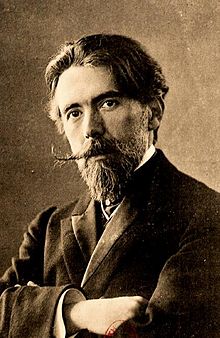
Francisco de Lacerda left a very varied legacy, including the symphonic works Almourol and Alcácer, stage music for Maeterlinck’s The Intruder, ballet music, pieces for organ, piano, guitar, trios and string quartets. Not forgetting the Trint-six Histoires pour amuser les Enfants d’ un Artiste and the admirable Trovas for song and piano, a creation of 36 short original pieces that seek to reflect the popular Portuguese and Azorean language. Mention should also be made of the posthumous publication of Cancioneiro Musical Português, the result of his collections throughout the country.
As a result of his solid academic training and the cultural environment in which he thrived professionally, Lacerda’s work is marked by a personal and original stamp that makes him a precursor of the introduction of impressionism in Portugal and a symbol of European musical nationalism in the late 19th and early 20th centurie
BIBLIOGRAPHICAL REFERENCES
CÂMARA, J. M. Bettencourt da, O Essencial Sobre Francisco de Lacerda. Lisbon: Imprensa Nacional – Casa da Moeda, 1997.
CÂMARA, J. M. Bettencourt da, Piano music by Francisco de Lacerda. Lisbon: Biblioteca Breve, 1987.
CUNHA, Correia da, Francisco de Lacerda – O Homem e o Músico, Separata do Boletim do Núcleo Cultural da Horta, Vol.6, 1970-1974, nº1.
Catálogo da Exposição comemorativa do primeiro centenário do nascimento [de] Francisco de Lacerda, Teatro Nacional de S. Carlos, May 17-31, 1969, Lisbon: Fundação Calouste Gulbenkian.
Catálogo da Semana Francisco de Lacerda: 31 de Maio – 8 de Junho de 1984, Conselho Português da Música e da Juventude Musical Portuguesa.
Getting to know Francisco de Lacerda
Francisco Inácio da Silveira de Sousa Pereira Forjaz de Lacerda was born on May 11, 1869, in the parish of Ribeira Seca, on the island of S. Jorge, in the Azores.
in https://www.culturacores.azores.gov.pt/lacerda/Vida.aspx
Translated to English as a community outreach program from the Portuguese Beyond Borders Institute (PBBI) and the Modern and Classical Languages and Cultures Department (MCLL) as part of Bruma Publication and ADMA (Azores-Diaspora Media Alliance) at California State University, Fresno–PBBI thanks the sponsorship of the Luso-American Development Foundation from Lisbon, Portugal (FLAD)
 Filamentos (artes e letras)