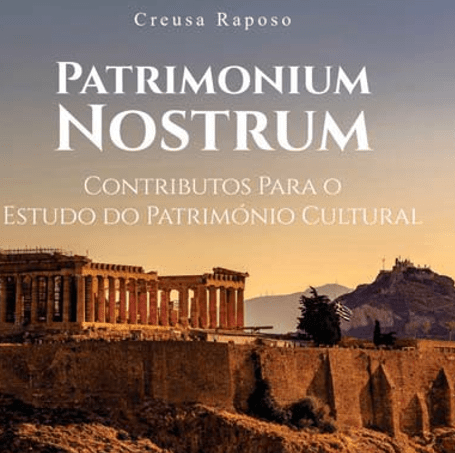
Atlântico Expresso: You’re launching a new book “Patrimonium Nostrum: contributos para o estudo do património cultural” in Ponta Delgada, this time with chronicles published in the Diário dos Açores. What motivated you?
Creusa Raposo (Director of the Musée du Feutre, France): Yes, the book will be launched at the Biblioteca Pública e Arquivo Regional de Ponta Delgada, on January 4th, at 18h00.
This book is a compilation of 48 articles published in Diário dos Açores between 2019 and 2021. I was strongly encouraged to do this by friends and family, such as Professor Eduíno de Jesus, my fellow countryman and a very dear friend, someone I greatly admire. This is also how I became interested in bringing together in a single volume the various chronicles that each week brought the reader a little bit of cultural heritage to the reader.
The book includes a range of research work that focuses on the Azores and other areas of the globe. What fascinated you the most?
Yes, this book is divided into four chapters. The first looks at cultural heritage issues in general, and essentially in Europe. The second is dedicated to international cultural heritage. I would like to highlight the study of an English palace, which I took great pleasure carrying out because of my taste in decorative arts. The third focuses on Portuguese cultural heritage, with a series of texts dedicated to the Portuguese heritage in India. The last one looks at the Azores archipelago and takes a short trip through the calendar by developing themes ranging from Carnaval, Lent, and Christmas. What fascinates any writer in the field of History. Heritage, in my opinion, is to always be learning. The more we learn, the more we realize we’ve just lifted the veil.
The pleasure that research brings is only surpassed when we can pass on that knowledge, and, as a professional in the field, I only feel fulfilled when I can awaken citizens to the issues of heritage identity, its enhancement, preservation, and transmission to future generations.
Is there still room for new work in history and heritage?
Yes, there is, and much remains to be done. When I started my studies, and in the various places I had the opportunity to visit, I jokingly said that I had work until I retired. How innocent! Little did I know that the institutions don’t appreciate it and that a lot has already been lost and is being lost.
By this I mean, yes, there is a lot to be done, from inventorying and classifying, to begin with, protecting cultural identity and disseminating it intensively to transform mentality. Providing a first contact with art from an early age, among others.
When did you know you wanted to pursue a career in history, heritage, and museums? And why did you want to be one?
Ever since childhood, I loved stories from the land and very old stories. Then, I discovered history with my elementary school teacher and the time of the dictatorship in Portugal. My taste for it grew timidly, but soon, questions arose that no teacher knew how to answer. In secondary school, I was fortunate to have as a teacher someone who knew the answers to my questions and who, in a theatrical and sometimes comical way, captivated many students. From then on, I knew that my life would have to involve History and the History of the Azores. Later came a taste for pre-classical and classical civilizations and, at the same time, a taste for Art History and, more recently, Decorative Arts.
I felt a vocation for teaching from an early age, but not in a school with a program chosen by the government. At the Museum, I can pass on knowledge with the pieces, for example, where I can motivate people to react for themselves and to questions that will never be addressed in a classroom. Knowledge is what makes us truly free.

What’s it like doing research in the Azores? Is there support or does the historian/researcher feel alone in this pursuit?
Doing research in the Azores is difficult in itself, and in this area, it’s only possible to do it as a hero. Young researchers don’t stand a chance.
You left the Azores for a new stage in life. What were your reasons for choosing France?
Yes, I’m starting a new stage in my life and a new stage in my career. France is considered the base country that inspires all of Europe regarding cultural heritage issues, and ancient Gaul has more than 3,000 museums on its territory. I chose France strictly for professional reasons.
To be an emigrant, one has to have a spirit of adventure. Do you agree with this?
In my case, it wasn’t a spirit of adventure because I don’t consider myself adventurous. After several years of striving for the best possible CV, I was never good enough to work in the region. So, I’d like to say it was courage and determination to have a career and a good resume.

An Azorean working outside the region is an ambassador for the islands. What image of the archipelago do you like to give your friends/acquaintances?
Yes, that’s true. I especially feel that I have this role, because few French people know the region personally or even where it is in the Atlantic Ocean. I like to highlight the Azores as a place of paradisiacal scenery, and I highly recommend it for family vacations and vacations with children. When I show them some of our landscapes, they always react with fascination at the beauty of our islands.
Apart from your family, what do you miss most about the Azores?
I really miss our climate and cuisine.
Nélia Câmara, journalist for Atlântico Expresso, Natalino Viveiros-director
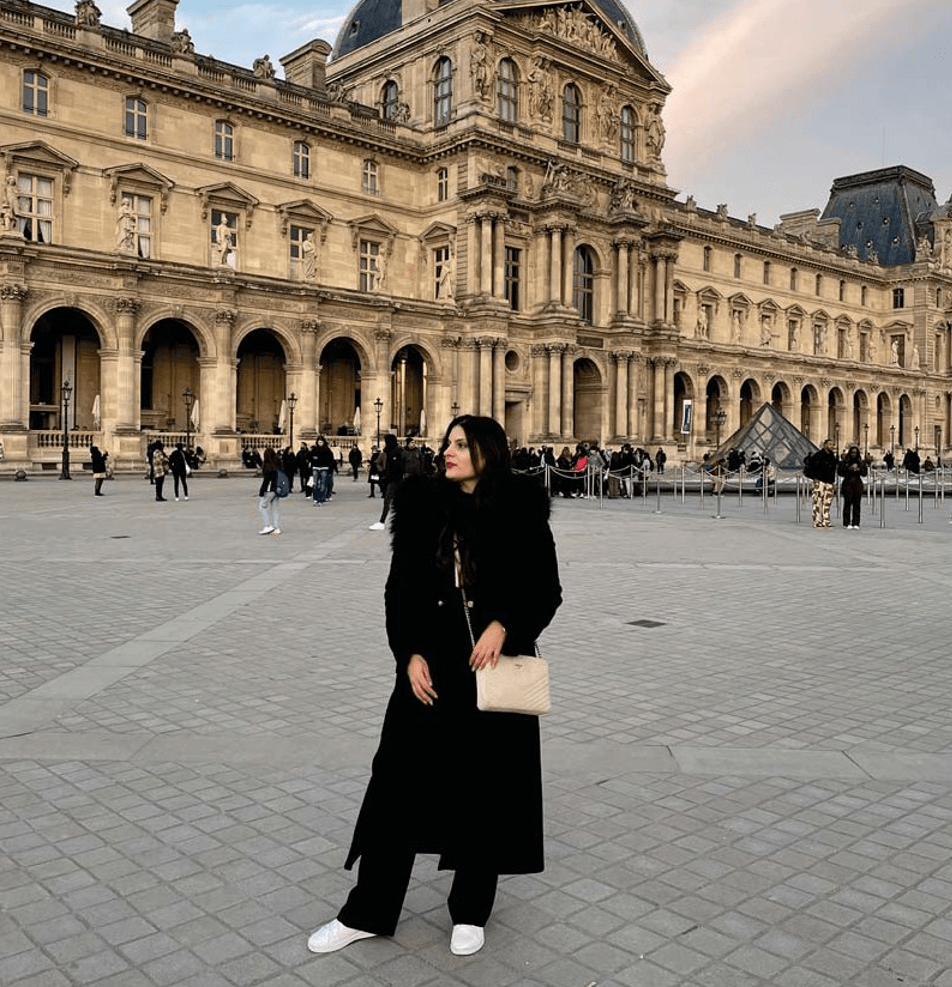
Born in Ponta Delgada, on the island of São Miguel, with a degree in Cultural Heritage and a master’s degree in Heritage, Museology and Development from the University of the Azores with a unanimous grade of 18, at the age of 34 she is Director of the Musée du Feutre and head of the Office de Tourisme de Portes du Luxembourg, in the Ardennes region of France, where she lives. She studied for a PhD in Heritage Studies at the Portuguese Catholic University and, among the various works she has done in the Azores, she was the researcher responsible for the tribute to the Arrifense poet Victorino Raposo in 2009. Ten years later, she launched the book “Arrifes: Holders of Cultural Heritage?”, which compiled around ten years of research into the town. She has taken part in various projects such as temporary exhibitions, internships in museums and archives on different themes, with a special focus on anthropological and ethnographic studies. Since 2019, she has been an effective member of the Ibero-American Society of Applied Anthropology. She has been a journalist for the Diário dos Açores and has published investigative work in that newspaper, which will be the subject of a new book to be launched on January 4 at the Ponta Delgada Public Library.
Translated to English as a community outreach program from the Portuguese Beyond Borders Institute (PBBI) and the Modern and Classical Languages and Cultures Department (MCLL) as part of Bruma Publication and ADMA (Azores-Diaspora Media Alliance) at California State University, Fresno–PBBI thanks the sponsorship of the Luso-American Development Foundation from Lisbon, Portugal (FLAD)
 Filamentos (artes e letras)