
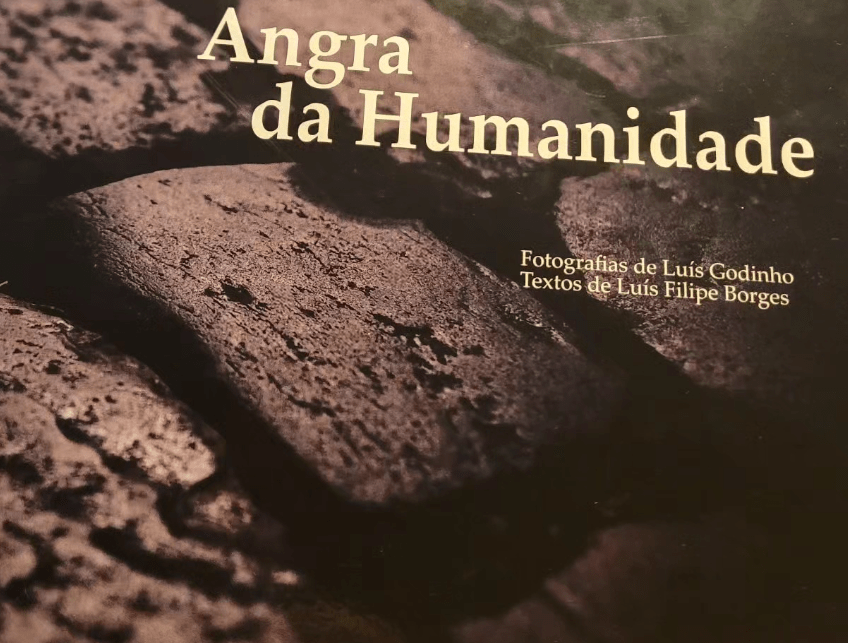
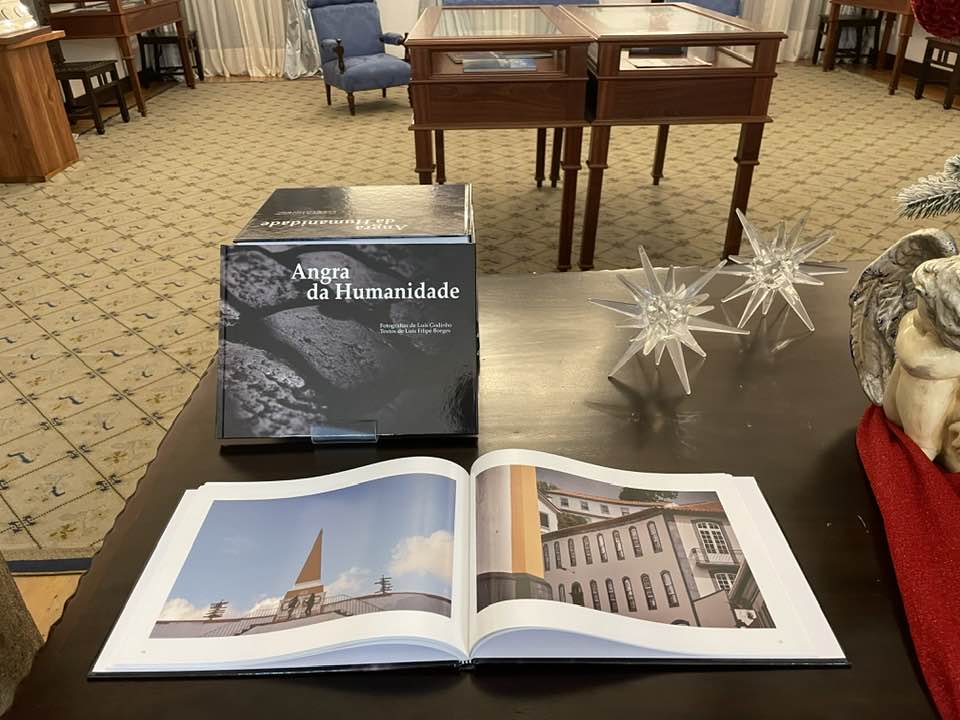
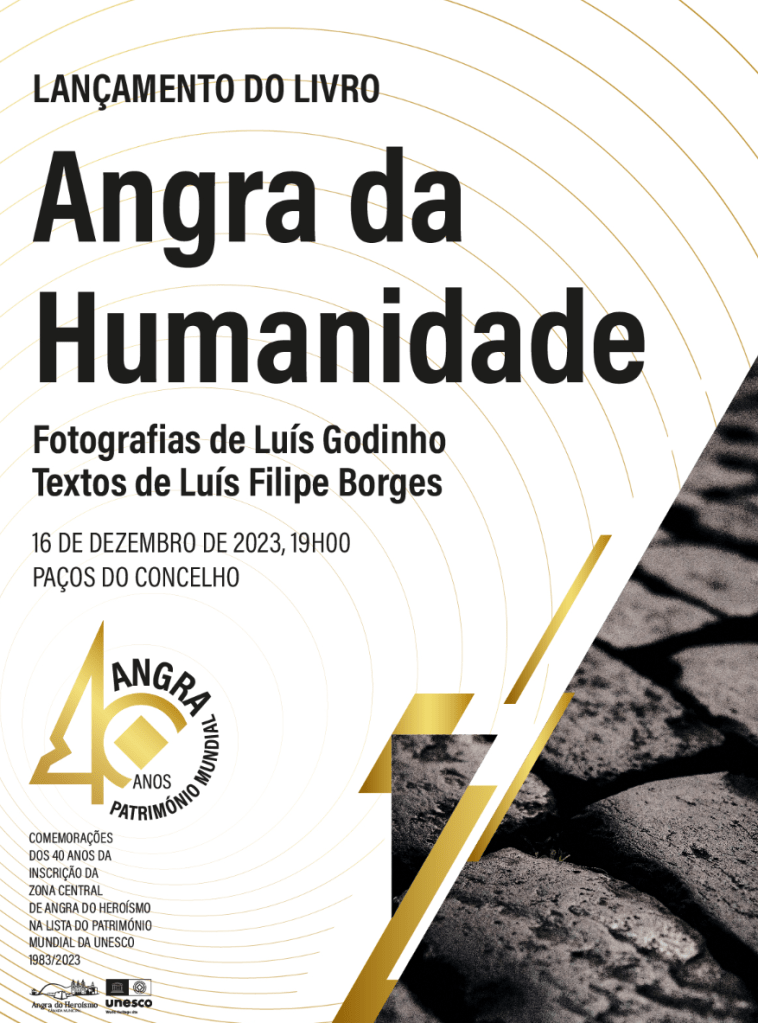
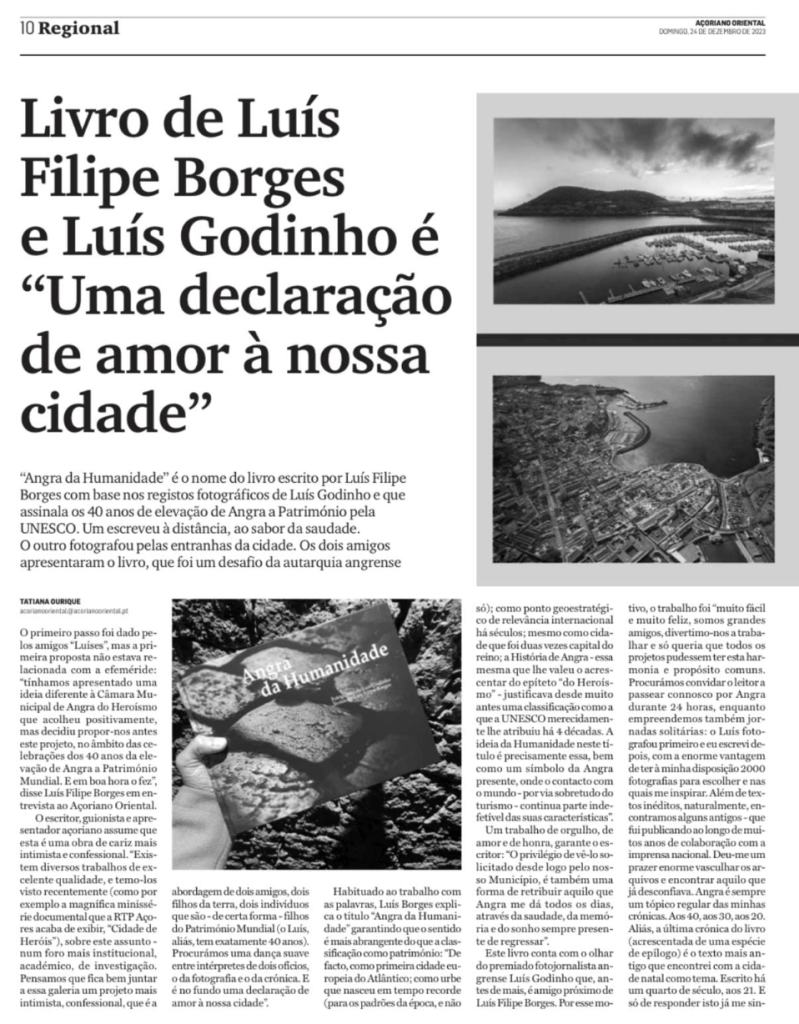
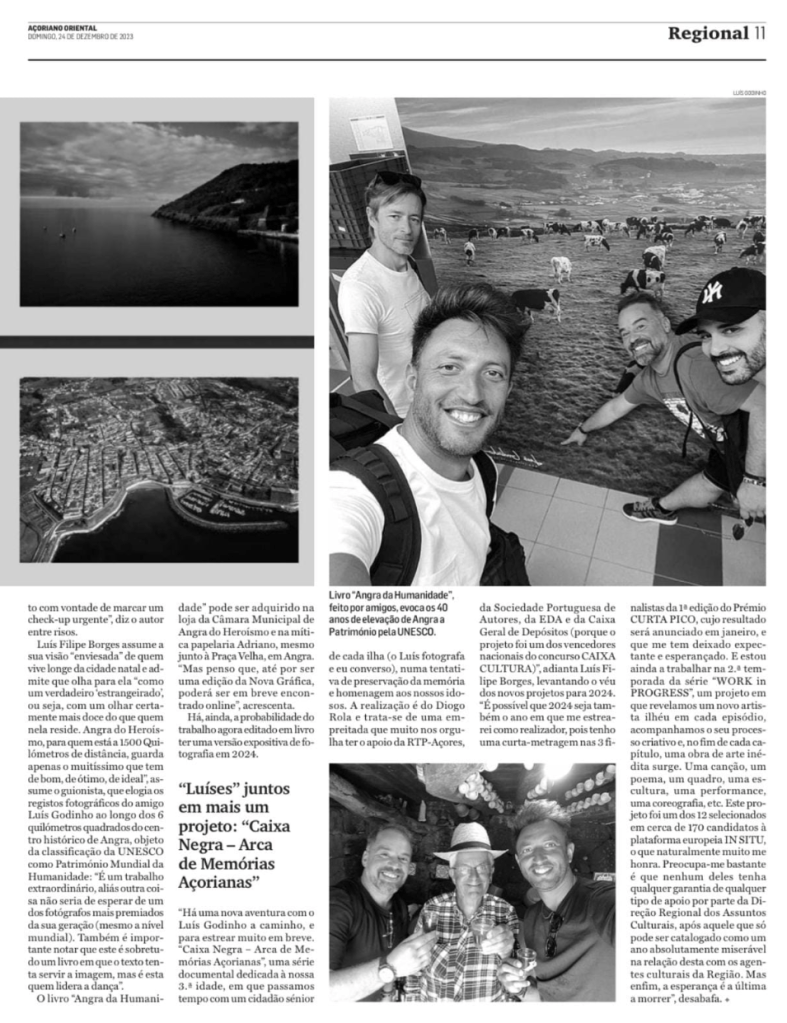
“Angra da Humanidade” is the name of the book written by Luís Filipe Borges based on Luís Godinho’s photographic records and which marks the 40th anniversary of Angra’s elevation to a UNESCO Heritage City. One wrote from a distance, at the whim of nostalgia. The other was photographed from the heart of the city. The two friends presented the book a challenge from the Angra Municipality on December 16.
The first step was taken by the “Luíses” friends (both have the same first name). Still, the first proposal was not related to the anniversary: “We had presented a different idea to the Angra do Heroísmo City Council, which welcomed it, but decided to propose this project to us instead, as part of the celebrations for the 40th anniversary of Angra’s elevation to World Heritage. And it came at a great time,” said Luís Filipe Borges in an interview with Açoriano Oriental.
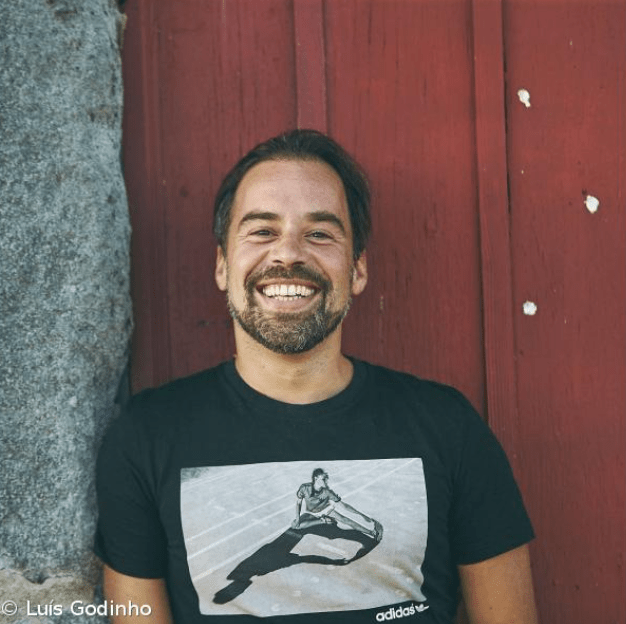
The Azorean writer, scriptwriter, and well-known personality feels this is a much more intimate and confessional work. “There are several works of excellent quality, and we’ve seen them recently (such as the magnificent documentary miniseries that RTP Açores has just aired, “City of Heroes”), on this subject – in a more institutional, academic, research context. We thought it would be good to add to this gallery a more intimate, confessional project, which is the approach of two friends, two sons of this land, two individuals who are – in a way – sons of Angra since it became a World Heritage City (Luís, by the way, is exactly 40 years old). We were looking for a smooth dance between interpreters of two trades, photography and chronicle. And it’s ultimately a declaration of love for our city.”
Accustomed to working with words, Luís Filipe Borges explains the title “Angra of Humanity” by guaranteeing that the meaning is broader than classification as a heritage site: “In fact, as the first European city on the Atlantic; as a city that was born in record time (by the standards of the time, and beyond); as a geostrategic point of international relevance for centuries; even as a city that was twice the capital of the kingdom; Angra’s history – the very history that earned it the added epithet “of Heroism” – justified a classification like the one UNESCO deservedly awarded it four decades ago. The idea of Humanity in this title is precisely that, as well as a symbol of present-day Angra, where the contact with the world – mainly through tourism – remains an undeniable part of its many characteristics.”
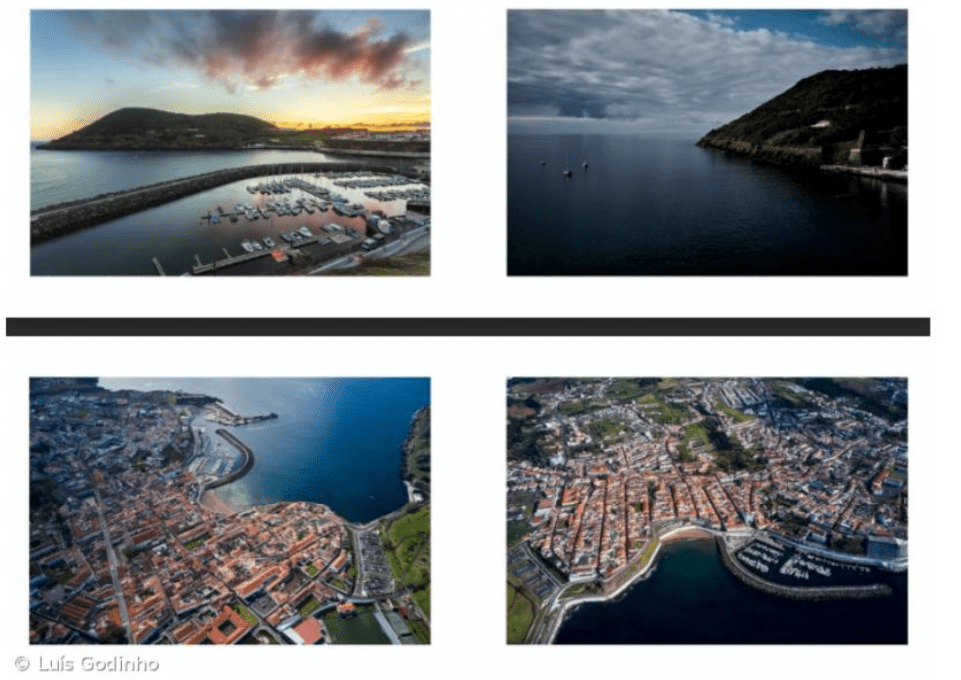
A work of pride, love, and honor, the writer assures us: “The privilege of seeing it requested by our Municipality, and also a way of giving back what Angra gives me every day, through nostalgia, memory and the ever-present dream of returning.”
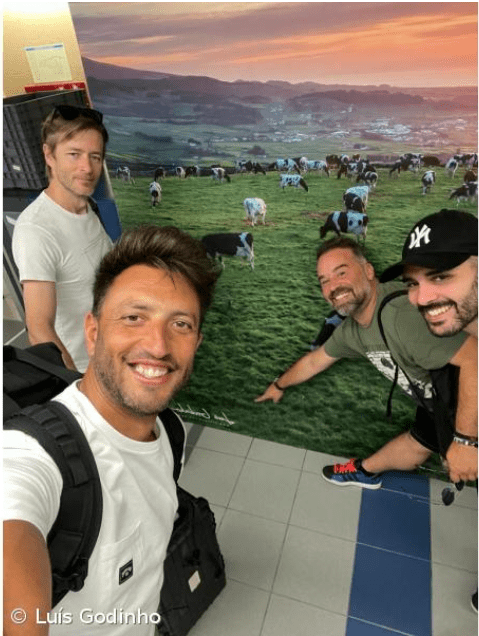
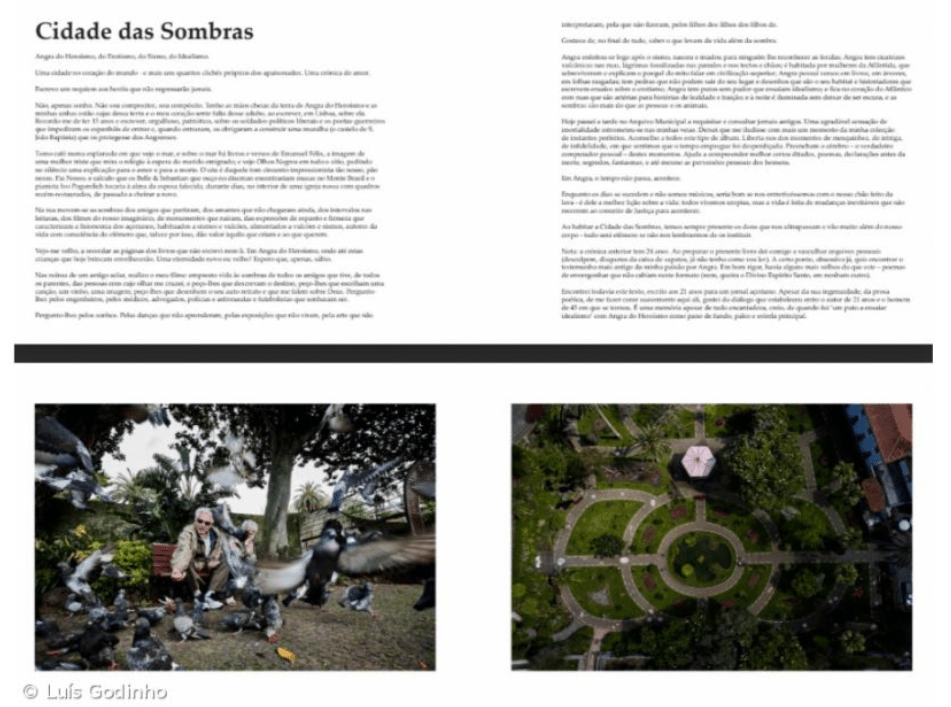
This book features the work of award-winning Angra photojournalist Luís Godinho, a close friend of Luís Filipe Borges. For this reason, the work was “straightforward and very happy; we’re great friends, we have fun working, and I just wanted all the projects to have this common harmony and purpose. We tried to invite the reader to walk around Angra with us for 24 hours, while we undertook solitary journeys: Luís photographed first, and I wrote afterward, with the enormous advantage of having 2000 photographs at my disposal to choose and draw inspiration from. As well as unpublished texts, of course, we found some old ones – which I had published over many years of collaboration with the national press. It gave me great pleasure to rummage through the archives and find what I had already suspected. Angra is always a regular topic in my chronicles. At 40, at 30, at 20. In fact, the last chronicle in the book (plus a sort of epilogue) is the oldest text I’ve found with the hometown as its theme. It was written a quarter of a century ago, at 21. And just answering this makes me want to book an urgent health check-up,” the author laughs.
Luís Filipe Borges assumes his “biased” view of living far from his hometown and admits that he looks at it “like a true ‘foreigner,’ in other words, with a look that is certainly sweeter than the one that resides there. Angra do Heroísmo, for those of us who are 1500 kilometers away, holds only what is very good, great and ideal about it,” says the scriptwriter, who praises his friend Luís Godinho’s photographic recordings of the 6 square kilometers of Angra’s historic center, which has been classified by UNESCO as a World Heritage Site: “It’s an extraordinary piece of work, and you wouldn’t expect anything else from one of the most awarded photographers of his generation (even worldwide). It’s also important to note that this book is where the text tries to serve the image, but the image leads the dance.”
The book “Angra da Humanidade” can be purchased at the Angra do Heroísmo Town Hall store and at the mythical Adriano stationery store, just off the Praça Velha, in Angra. “But I think that, because it’s published by Nova Gráfica, it could soon be found online,” he adds.
There is also the likelihood that the work now published in book form will have a photographic exhibition version in 2024.
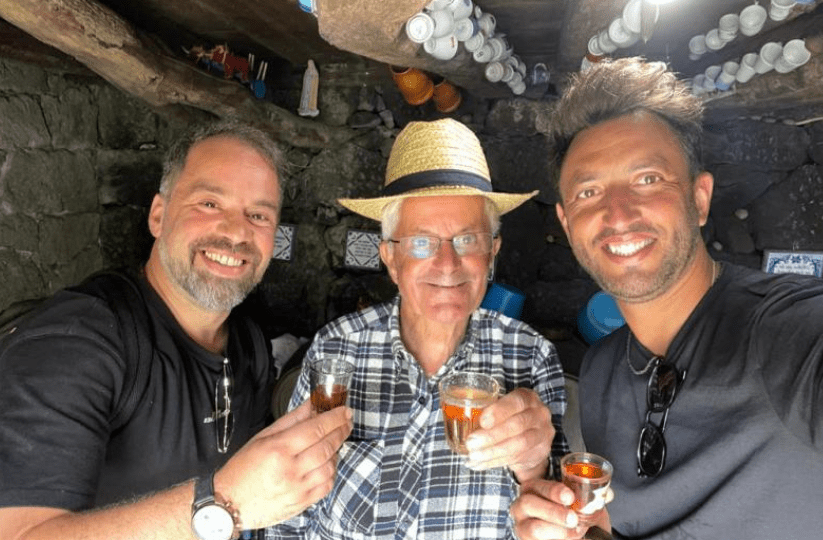
“Luíses” together in another project: “Caixa Negra – Arca de Memórias Açorianas” (Black Box – Ark of Azorean Memories)
“There’s a new adventure with Luís Godinho on the way, and it’s due to premiere very soon. “Caixa Negra – Arca de Memórias Açorianas,” a documentary series dedicated to our senior citizens, in which we spend time with a senior citizen from each island (Luís photographs and I talk) in an attempt to preserve the memory and pay homage to our elderly. It’s directed by Diogo Rola, and we’re very proud to have the support of RTP-Açores, Sociedade Portuguesa de Autores, EDA, and Caixa Geral de Depósitos (because the project was one of the national winners of the CAIXA CULTURA competition),” says Luís Filipe Borges, lifting the veil on the new projects for 2024. “It’s possible that 2024 will also be the year in which I make my debut as a director, as I have a short film in the top 3 finalists of the 1st edition of the CURTA PICO Award, the results of which will be announced in January, and which I’m looking forward to and hopeful about. And I’m still working on the 2nd season of the series “WORK in PROGRESS”, a project in which we reveal a new island artist in each episode, follow their creative process and, at the end of each chapter, a new work of art appears. A song, a poem, a painting, a sculpture, a performance, a choreography, etc. This project was one of 12 selected out of around 170 European IN SITU platform applicants, which I’m naturally very honored about. I’m very concerned that none of them has any guarantee of any kind of support from the Regional Directorate for Cultural Affairs after what can only be described as an absolutely miserable year in its relationship with the region’s cultural agents. But in the end, hope is the last to die,” he says.
A piece by journalist Tatiana Ourique was published in Portuguese by Açoriano Oriental and translated by Diniz Borges, with the approval of the journalist. Photos by Luís Godinho and the Municipality of Angra do Heroísmo.
Translator and editor’s note: This type of book is undoubtedly a must for the Azorean Diaspora and indeed for the city of Angra with its many sister cities across the US to have this work available also in English for the various generations in our Diaspora who can’t read Portuguese and thus cannot appreciate the talent of Luis Filipe Borges’ writings. We hope that the City of Angra will consider a literary translation to English with the super photos of Luis Godinho. PBBI at Fresno State will certainly collaborate.
Translated to English as a community outreach program from the Portuguese Beyond Borders Institute (PBBI) and the Modern and Classical Languages and Cultures Department (MCLL) as part of Bruma Publication and ADMA (Azores-Diaspora Media Alliance) at California State University.
 Filamentos (artes e letras)