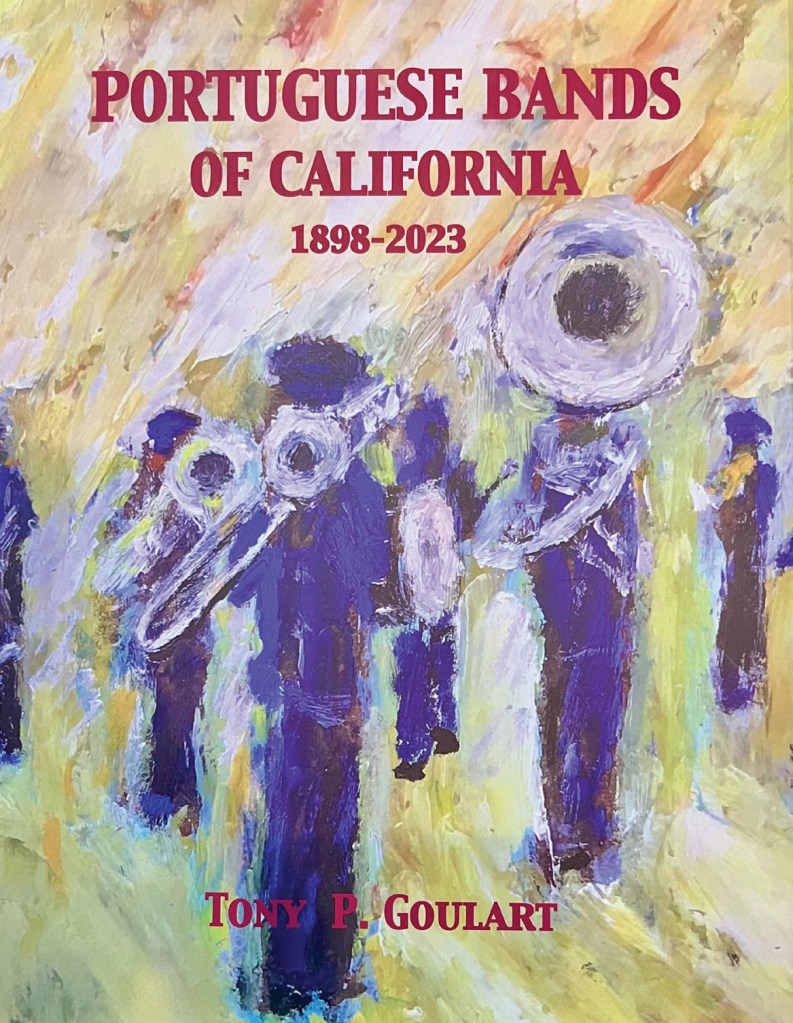
When Tony Goulart asked me to say a few words about his book Portuguese Bands of California (1898-2023), published this year by Portuguese Heritage Publications of California, he recommended that I speak in English, not only because the book is written in that language but also to reach a greater number of people in the audience. Before I do that, however, allow me to say a few words in Portuguese.
Alguns dos presentes devem-se recordar que dediquei mais de duas dezenas de anos da minha vida profissional ao ensino da língua portuguesa e culturas lusófonas a poucos passos deste salão, em San Jose High School. Nessa escola tínhamos e temos um programa de Português enquadrado no Bacharelato Internacional e um Clube Português que teve uma forte presença na escola e na comunidade. Durante esses anos, posso dizer que as três bandas filarmónicas aqui presentes, a Banda Portuguesa de São José, a Sociedade Filarmónica Nova Aliança e a Sociedade Filarmónica União Popular foram parceiras indispensáveis nas nossas atividades, permitindo que usássemos gratuitamente os seus salões para jantares, festas e outros eventos e dando-nos todo o apoio necessário. É um enorme prazer estar aqui a falar na presença de diretores e músicos dessas três distintas instituições que sempre dignificaram e serviram a nossa comunidade. Posso dizer que nunca lhes pedi algo para o nosso programa que não fosse consentido e superado. Do fundo do coração, um muito obrigado, em nome dos jovens que passaram pelo nosso programa de Português.
Besides speaking about the book we are presenting tonight, I would like to highlight the importance of the Portuguese bands in California. These are not just local institutions. These bands, year after year, crisscross the whole state, connecting the various communities performing in processions, parades, and concerts. They brighten up the community events with the beauty of their music and the joy of their presence.

Having taught Portuguese at San Jose High School for over two decades, I had many students who played in one of the three bands in San Jose: PBSJ, Nova Aliança, and União Popular. Through all those years, I witnessed the pride those youngsters displayed for being part of one of those philharmonics where they learned from a young age to play an instrument (sometimes more than one) and to incorporate their music knowledge into a collective that was the pride of their family, friends, and community. Those youngsters not only learned to be musicians. They learned discipline, commitment, and dedication. Our philharmonics are schools that teach life skills that will shape our youngsters for the rest of their lives. They learn to work together with various people in our community, regardless of gender, age, or economic status. I find it so beautiful to see a young kid playing an instrument right next to a much older adult in perfect intergenerational harmony. It’s the old passing their knowledge and love of music and Portuguese culture to the next generation, passing their values to the future.
However, the importance of these bands is not limited to our community. The high schools these youngsters attend enrich their music programs with the knowledge that our kids bring. I can attest that, without the Portuguese band members, the music program at my school would have been much less successful.
Portuguese Bands of California (1898-2023) is a book that depicts 125 years of the magnificent work that Portuguese philharmonics have performed in our communities and surrounding society. In it, the author, Tony Goulart, in a solid, clear, personal style, depicts the history of the many bands in California that have dignified and enriched our presence in the Golden State. Tony has produced a beautiful 250-page hardcover book, in a deluxe edition in color, profusely illustrated, going in-depth into the history of these bands. Some may not exist anymore, particularly among the 28 or 29 bands founded between 1898 and the 1940s. Since the Capelinhos immigration wave, with a robust influx of immigrants from the Azores, where marching bands have a central and rich presence in the cultural, religious, and social scene, 18 more bands were founded. Coming from a country that, until recent decades, did not facilitate formal universal schooling to its children past the age of 10, it is amazing how much musical knowledge these people brought with them. This knowledge and cultural resiliency derive from a sense of determination, pride, and love of their roots, which is relevant among Azoreans and other Portuguese people.
In Portuguese Bands of California, the author, Tony Goulart, was very careful in providing us with a well-organized book structure, offering information that allows the reader to understand the background of the rich social and cultural traditions of the bands and then writing about the information that, carefully and with effort and dedication, he was able to gather to create this solid, rich and beautiful document for us and future generations to enjoy.
The book is divided into five clearly defined parts.
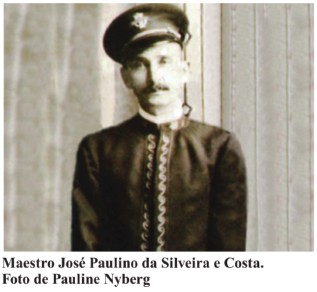
The first one, entitled “Setting the Music Stage,” provides general information about the background of those involved in the bands, band terminology, the role of bands in their land of origin, the immigration process, and some key individuals in the formation of philharmonics in California, such as the composer José Paulino de Oliveira e Costa, “the patriarch of Portuguese bands in California” who founded eight bands, Eleutério Borba, associated with the foundation of the three bands in San Jose, and Egídio Gonçalves Santana, interestingly from the island of Madeira, who founded or was the conductor of five Portuguese bands in this state. The chapter also includes a biographical summary of the famous composer and conductor John Philip Sousa, of Portuguese ancestry, and his single performance as conductor of a Portuguese band in the Bay Area.
The second part, entitled “The Opening Act,” refers to “Predominantly Portuguese bands,” nine bands that, between 1885 and the 1950s, while not being Portuguese, were composed of more than 50% Portuguese musicians.
The third part, “Marching to a Different Drum,” recounts the history of the bands founded during the first wave of Portuguese immigration to California and includes the many Portuguese bands that enriched the state’s musical scene from 1880 to the late 1930s.
In the fourth part of the book, entitled “A Musical Ensemble,” the author carefully documents the “bands established by the second wave of Portuguese Immigrants,” the aforementioned Capelinhos wave, from 1958 to the 1980s”. In it, we find the three San Jose bands present here tonight, each in its own 6-page chapter, beautifully illustrated with color photos, accompanying a well-documented text.
To give you a flavor of the texts in this part of the book, let me give a short quote from each chapter relating to the three San Jose bands.
Referring to PBSJ, the author states:
“PBSJ has earned a prestigious reputation over the years for the caliber of its musical repertoire, the service it renders in the development and promotion of California’s Portuguese youth, its support for other community organizations, maintaining Portuguese culture and traditions, and the service, splendor and entertainment it brings to Portuguese community celebrations.”
In the chapter about Nova Aliança, the author writes:
“In 1989, … Nova Aliança performed in Bragança and several other northern and central cities on mainland Portugal, including as the honor band at the summer festival in … Gouveia. It received a warm reception in Viana do Castelo, where its performances as guest of honor during Portugal’s second largest religious festival, Our Lady of Agony, were enjoyed by the locals and several thousand others. Band members will forever remember this visit and the warm welcomes they received.”

In the chapter about União Popular, we find the text:
“In the past, band members, friends, and supporters also engaged in performances of traditional “Bailes de Carnaval.” In the early 2000s, about one hundred musicians played for S.F.U.P.; now, it has thirty-five, ranging in age from ten to seventy, with forty percent female. Two members are immigrants from Portugal, but the rest, mostly of Portuguese or Mexican descent, were born in the United States.
The band’s rich musical legacy has been preserved on several CDs (2000, 2002, 2006), with another due out in 2023.”
In the final chapter, named “Ending on a High Note,” Tony Goulart, in his wise, well-thought-out manner, considers the lessons to be learned from the past regarding our bands and community and ponders our community’s responsibility in “Transmitting Our Heritage to future Generations.” He sees “Signs of Hope” on the horizon but states, “We must be open and willing to test new ventures and learn from our mistakes as we proceed. Great effort, total dedication, a clear vision, creativity, and courage will be necessary to rise to the occasion and face the challenges that confront our Portuguese community traditions.”

Researching for and writing a book of this kind, which encompasses a period from the 19th to the 21st century and a geographical area that spans the whole state of California, is a gigantic task, especially when done by one individual. To do so, Tony Goulart spent months and years reviewing newspaper records, contacting individuals associated with the bands and their past, and reading available books referencing the subject. He spent time, energy, and ink to produce this precious gift to our community. He did so without any remuneration. Like almost everything our community does, including the Portuguese Heritage Publications of California, Tony put together this excellent book out of the generosity of his heart. Having spent much of my life reading, teaching, and analyzing books, I can honestly say that Portuguese Bands of California (1898-2023) is very well-researched, organized, and written. It is full of interesting facts, photos, information, and considerations that will enlighten the reader – either of today, the future, or from another place – on the amazing accomplishments of our bands. We owe him a debt of gratitude for this book and the many others in which Tony Goulart has been involved. Without his efforts, the memory of our bands and their impact on our community would have faded away, dispersed in the pieces of fragmented paper from old newspapers, gone forever from those who still remember the herculean task of creating and maintaining Portuguese marching bands in California. This was the moment in time to try to preserve those memories and pieces of information that would otherwise be lost.
When Tony asked me to speak tonight, he reminded me that, in moments of discouragement, when he thought that our community didn’t care very much about the work that he and the Portuguese Heritage Publications of California were doing, I would remind him that the books that were published were not just for the present. Like the other books PHPC published, Portuguese Bands of California are to be enjoyed and cherished today. Still, they will also leave an indelible mark on our community for decades and centuries. One hundred years from now, none of us nor our endeavors will be remembered unless we register them carefully like the book we are presenting here tonight. Our community must leave a permanent mark on all we have done. People fade away, buildings crumble and are replaced, but books of this kind will be cherished by our descendants and appropriately kept in libraries. This book will preserve the memory of our bands and many people associated with them.
As you contemplate acquiring a book, do so not only with the idea of owning and reading one but also as an heirloom to be passed on to future generations in your family. Remember also that you are supporting a project that has as objectives validating the rich experiences of our community in the past and present, recording it for the future, and letting people in other places, especially in Portugal, know of our epic struggle in this far away land to preserve, honor, enrich and enjoy our magnificent culture.
José Luís da Silva, Poet and Retired Educator
Salão da Banda Portuguesa de São José (PBSJ)

 Filamentos (artes e letras)