

Carlos Melo Bento was born at home in Rua dos Manaias in 1941 and grew up in Ponta Delgada. In the largest city in the archipelago, he went to elementary school and high school until he went to Lisbon to study law. It was in the capital that he met Natália Correia. Diário da Lagoa (DL) met the lawyer who met Natália to find out who she was and what the most remarkable poet born in the Azores did, in a conversation that began at Tabacaria Açoriana and ended at her office.
DL: How do you know Natália Correia?
I already knew Natália by sight in Lisbon, but I didn’t know who she was. The first time I saw her was at the Boa Hora Courthouse because I was studying at the Faculty of Law, and every week I would attend one trial or another.
DL: When?
In 1961 or 62. And I see that lady with the mouthpiece, a gorgeous woman, shouting: “What won’t I have to do today to forget this dump?”. There was a cloister in the courtroom, and she was shouting; you could hear her in the halls. “Champagne, bring me champagne!” she would say. And I was with Manuel Pracana, who later became our ambassador, and I said to him: “Who’s that girl?”. And he said to me: “That’s Natália Correia. She’s from there. She’s a poet. She’s crazy.” We were boys in our twenties. From then on, a poem by her would appear from time to time.
DL: Was she already being talked about at the time?
Yes, because she was in opposition to Salazar, and occasionally, her books were seized, and, of course, we saw it in the newspapers. The forbidden fruit is always the most sought-after. We went to see what had been seized and what hadn’t. I was already a graduate, working in São Miguel, and I would go to Tabacaria Açoriana, which belonged to the father of the current owner, José Carlos Pacheco. When I went in, he said to me: “Doctor, come here. I have a book that’s going to be seized by Pide. They’re going to pick it up in a little while, and if you want, I’ll get it for you”. And, of course, it’s forbidden, I want it. That anthology, “Poesia erótica e satírica,” had been seized. I read it end to end. It was the first work, not in verse, that I read of hers, something absolutely sublime, of the highest culture, of an absolutely brilliant correctness of language. There isn’t a comma out of place or an inappropriate word to describe her thoughts. There isn’t a swear word; while the verses have all the most vulgar things imaginable, the “Preface” talks about all this but doesn’t say a single obscene word. It’s all poetry, literature, comparison, exposition, etc. I was fascinated by the lady, a brilliant woman. And I thought: “I have to meet this woman when I can.”

DL: And how did you meet?
She lived in Lisbon; I’d heard she had a Botequim in Graça and thought I’d drop in one day. Until José Pracana came along, who was the fado singer and brother of the other Pracanas I’ve been friends with since I was a child. So I went to say hello. But at the time, I didn’t know her political ideology about the Azores. I knew she was from the opposition, so she was a democrat against dictatorships and authoritarian regimes like Salazarism and Marcelism.
DL: Were independence ideas emerging at that time?
I was perhaps the first person who, in December 1974, gave a conference in Lagoa and said that, faced with the independence of Cape Verde and São Tomé and Príncipe, “who are we, less than them, if the people want it and Portugal doesn’t oppose it, to go for independence,” through a referendum. I wrote that down and published it.
At the same time, we later learned that Dr. Mota Amaral had asked Natália to write the lyrics for the Azorean anthem. That’s when Natália came here.
I no longer remember how I was introduced, but she knew I was one of the [political] prisoners defending independence and wanted to meet Dr. José de Almeida and me. He was already the undisputed Azorean Liberation Front (FLA) leader. We often visited the Avenida Hotel, where she stayed with her friends. I wanted to offer her my memoirs from when I was in prison, a diary that I later published, “Horas amargas” (Bitter Hours). I gave her the book, and we became friends because I realized she thought exactly like me. Of course, with a cultural distance of kilometers from me, I felt small around her.
For one thing, she had a colossal memory, she remembered all the incredible things you can imagine. And I had a much older friend, Dr. Sousa de Oliveira, a Vila Franca do Campo archaeologist. My father was from Vila Franca, I often went to Vila Franca and we met there. I love history, and archaeology is a branch of history, so we became terrific friends. I learned that he was also excellent friends with Natália and that friendship became widespread, a circle of friends.
DL: At what point?
Seventy-five. Nobody knew what was going to happen on the continent, and at a certain point, the alarm started ringing that the Communist Party was going to take over and that America had given up hope of restoring Portugal to democracy. So the Communist Party was going to take over. She never said this, but I understood between the lines that, in the event of communism taking over in Lisbon, she would come to the independent Azores. She must have thought: “It’s better to have an open door here in case of any agony.”

“I’ve never seen such an independent woman.”
CARLOS MELO BENTO
DL: Natália knew a lot of people, didn’t she?
She lived in the most cultured gatherings Portugal had. All the cultured people in Portugal knew Natália. They might disagree with her, but they had to give themselves over to that culture and that power of synthesis and her poetry, which is an overwhelming thing of beauty, harmony, and vision. In the 20th century, I don’t see anyone who comes close to her. She, for example, was a close friend of Professor Vitorino Nemésio; she called him Mestre, and she was his disciple. When he fell in love with the Marquise Jácome Correia, who, in meantime, with his help, published “Os amores da cadela pura,” which is a scandalous autobiographical memoir of a charming woman, the Marquise who had a concept of women’s freedom that was unthinkable at the time. I decided to organize a lunch at the Ilhéu da Vila. I invited the Marquesa, Vitorino, Natália, and several friends, some from the FLA and others who weren’t from the FLA, thirty or forty people, and we had lunch, which, incidentally, was offered by Professor Teotónio, who was a great cook. He wanted to offer lunch, the food he cooked well, and then everyone bathed, drank, and ate on the islet. And they, Vitorino and Natália, spent the whole time around a stone table there, she sitting on the floor, discussing cultural issues.

DL: Did you join in the conversation?
I didn’t even come close because it was a discussion between two colossi of our literature. And that’s when I saw for the first time that she called him Mestre. She didn’t respect anything or anyone, but Professor Vitorino called her Master.
Then we started taking part in various things together, such as coronations of the Holy Spirit, because she was at a stage in her thinking where she believed that humanity had evolved from the century of the Father and the Son and that we were now entering the era of the Holy Spirit. It was the cult that would completely dominate the rest of humanity from here on in, and she cultivated this almost as if it were a certainty.
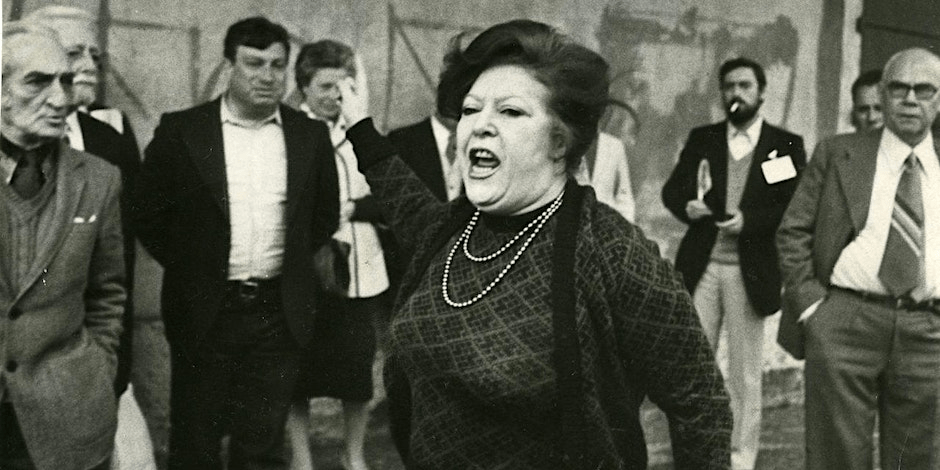
But she had some hilarious things. She believed in witches and witchcraft, things like that. I don’t know if it was sincere, because when she talked about it she always had a smile on her lips, but the truth is that she talked about it and once at my house, they did a session with some cards, a kind of tarot. She apparently took it seriously. I said: “A woman of this intelligence is impossible. She’s making fun of us.” There was something there, and, in the meantime, I said to José de Almeida: “Don’t you think that when we talk to Natália, we have the notion that we’re talking to a genius?” José de Almeida was a special person, no ordinary citizen. He had charisma, and one of the characteristics of a charismatic person is that they put themselves in a position where they feel there is no one above them. She drew people behind her, she had authority in her voice, and when I asked that question, a little to sting him, thinking that he had to bow to a reality that he was feeling, he looked at me fixedly and shook his head from top to bottom. And he suffered greatly from her death. We didn’t expect her to die, it was a shock because she filled our lives, and when she arrived, it was a whirlwind.
DL: Did you feel that at the time?
I felt it deeply. For me, she was a superior being who was there. And she was already a woman in her sixties.
DL: Did she come here often?
She came often. When Dr. Mota Amaral asked her to come, she came. As long as things weren’t straightened out on the mainland, she would also come, and in the summer, she would bring her friends.
DL: It’s said that she was a very independent woman?
Completely. I’ve never seen such an independent woman, she had a wisdom in which people had to bow down to it, and there was no other choice.
One day she published a biography of Camões, “Erros meus, má fortuna, amor ardente“, and when I read it, I thought, “This woman is right,” she took Camões’ verses and translated steps in Camões’ life that can have no other logical interpretation than the one Natália gives. Meanwhile, when I went to Lisbon, I read that there was a stage play based on Natália’s poem. I went to see it disappointed because the play didn’t measure up. And that same night, one of those captains of April, Vasco Lourenço, came into the bar. He was at the theater, went to the bar, and started praising the play. And I said: “I’m really sorry to disagree, but you haven’t even reached the heights of Natália Correia’s work.” And there was someone who wanted to tell me to shut up, and she said, “No, no, let me speak; I want to hear all the opinions.” But at some point, she realized that the other person was angry, and she looked at me and said mockingly: “Melo Bento, have you been smoking marijuana?”
“No, dear, I haven’t smoked anything because I don’t smoke. What I’m saying is exactly what I think. I’m convinced this is the best work on Camões that has been published. In the fashion of the Law, this is an authentic interpretation,” I replied. She loved the compliments, but I wasn’t exaggerating; I wasn’t lying. It was what I thought. She accepted it but didn’t want the other person to stop going to the bar because those April captains brought in many people and essential clients who gave them an exceptional reputation.
DL: How did Botequim work, the bar that Natália opened, and where the extended gatherings she attended took place?
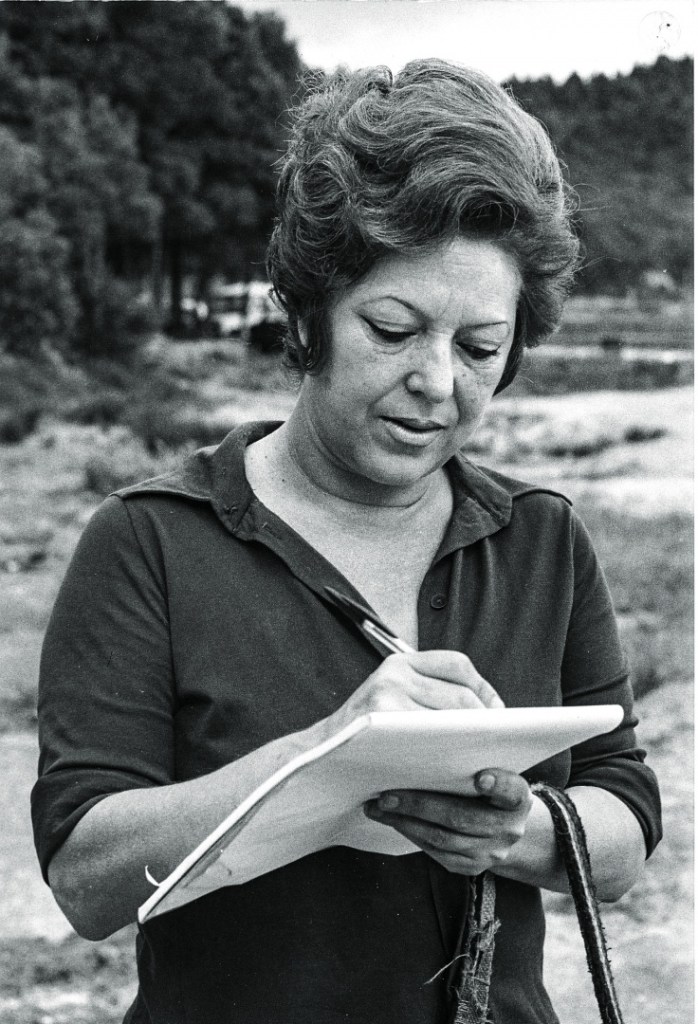
It was a bar like any other where you could only hear Natália. She spoke very loudly, and when we came in, she called us by our names. And she was aware of how big she was. I remember an argument she had with someone who had criticized her, in which she said: “I don’t care because when you die, you’ll have your name on the street, and I’ll have my name on gardens, avenues, and roads.”
Democracy then took hold, and Natália became a significant person at a national level, but she always worked with us similarly.
DL: Natália hasn’t changed?
Nothing, absolutely nothing. And we still went to the bar.
DL: How long did that friendship last?
From 1975 until the end.

Clife Bothelho is the Director of the newspaper Diário da Lagoa. The Cátedra Natália Correia at Fresno State is thankful to Diário da Lagoa for allowing us to translate the interview, publish it here, and archive it as part of our ongoing efforts to bring more awareness to the works of Natália Correia, many of them being translated to English.
 Filamentos (artes e letras)