

Correio dos Açores – Describe the details that identify you to the readers.
Professor Teresa Medeiros – That would be a better question for someone who knows me well. But, in summary, I was born on the island of Faial, a university professor, a psychologist for almost four decades, a wife and a mother. Professionally, I love being a teacher and researcher. I have high self-esteem, I am resilient and very determined, I love to live, and part of my purpose in life is to help whenever possible; I have a sense of duty and a culture of work. Throughout my life, I’ve been through life-threatening health situations, which have made me reflect on mortality and the transience of life.
Tell us about your life path.
I started working very early by today’s standards, at just 18 years old, as an elementary school teacher. Faced with the difficulties of learning at school and the students’ poverty, I decided to study more to help children and teenagers in the future. I thought then that training should be continuous and that we should challenge ourselves and constantly get out of our comfort zone. “Uninstalling” has always been my professional motto.
I left teaching and then went to the University of Coimbra for a degree in Psychology (another five years). I trained in Coimbra with a master’s from a classical school and lived this experience intensely as a student, person, and learner. I interned at the Centro de Estudos e Profilaxia da Droga (CEPD) in the Primary Prevention of Drug Addiction in Schools team in Coimbra. Even today, I can see how innovative the concern and action in primary prevention were (we need to learn how to do it again, and very well).
I returned to the Azores. I exchanged the possibility of being an assistant professor at the Faculty of Psychology in Coimbra for the Nursing School in Ponta Delgada, because I was lucky enough to be challenged by the Director, nurse Eduarda Santos Cordeiro, who told me that it was a great responsibility to be a professor at a school that prepared professionals to deal with life, suffering and death and gave me a free access card to the hospital (HDES) and the Casa de Saúde for a month so that I could assess whether I was prepared. A visionary professional. It was a truly impactful professional experience. About 16 months later, a competition opened at the University of the Azores (UAc), and I joined the teaching career as a trainee assistant. I was immediately assigned to a huge number of students. I remember I had students sitting on the floor because the theater was packed. My previous teaching experience came in handy.
Six months later, the first Master’s Degree in Education (specializing in Educational Psychology) opened at the University of Coimbra. As a newlywed, I “resettled” and went to do my Master’s degree. I had excellent conditions at UAc to continue my training and took advantage of them. In the three years I spent in Coimbra, I did my Master’s degree, a postgraduate course in Clinical Psychology for Children and Young People, and collected data for my PhD. I returned to UAc, did my PhD later, and took the exams and tests required for progression in my university career. The toughest exams were the aggregation exams, which take place over two days, are very demanding, and are assessed by a national jury. I took these exams in 2006, a year after having a stroke. It was a challenging time for me as I struggled to regain my movement and language, and only my persistence, resilience, and the support of my family and my teachers from Coimbra kept me going. When people thought I would retire, I took the most dreaded academic step – the aggregation exams. I became a full professor of Psychology, with a permanent appointment, in 2010.
How do you define yourself professionally?
I am responsible, dedicated, demanding, and with a great sense of duty and rigor, but I’m always ready to help. I’m aware that a teacher must be a role model. And what we do or don’t do always has a significant impact.
What are your responsibilities?
I’ve had a lot of responsibility in university management. Among other positions, I was Pro-Rector during the terms of professors Vasco Garcia, Avelino Meneses, and Jorge Medeiros. I was President of the Scientific Council of our university for more than three years until this body ceased to exist about a year ago. Today, I must demand that I be exemplary in performing my duties as a teacher and researcher because when I look at my students, I see hope.
I demand the challenge of training for diversity, difference, and resilience. I must challenge students to think differently, critically, and reflectively.
Today, freer from tests and positions, I enjoy teaching more and more, involving students in their learning process, giving them responsibility in more creative models, getting them to think, and co-creating with them more positive climates of development and learning.
We have to enter a second paradigm of the Bologna Process, which is more student-centered and individual-centered. Universities must focus more on bureaucratization, traditional teaching models, and vertical leadership. I’m an advocate of change. I’ve been saying for years that institutions that don’t take care of people won’t survive. In January 2022, I wrote about the University of the Azores: “Our greatest treasure is our people. Quality lies in commitment, intrinsic motivation, rigor, and the ability to create networks.” I still think the same. Institutions’ most incredible wealth (the greatest asset) is people – not money or infrastructure.

How important is the family?
The family has been and still is central to my life, both my family and extended family. My nuclear family is a priority in my life – they are primary and significant; we are authentic and united. We have strong bonds, and we help each other intrinsically. Then, looking back at my ancestors, my maternal grandmother, a teacher, had a significant influence on me. My grandparents always lived with us. We were a family with intergenerational wealth. My grandmother died when I was 16, and my grandfather died when I was five. We were a harmonious family with much respect for each other, whose motto was inter-help and help outside of ourselves (central core). Someone in our house had always come to study from another island or parish since we lived in a central area of Horta, and helping out was part of being in the family, as a principle and as a value. My grandmother Emília was the matrix of my childhood, as she taught me a lot. She taught me to read long before I went to school, to read as a fascinating game of discovery – she got me to leaf through the dictionary as an opening to the world of knowledge. When I was only five years old, she taught me to crochet and developed my curiosity to the maximum: she told me stories (and many about life), she talked about history, appealing to the imagination of adventure, and she read a lot to me. With her example, she taught me compassion. She was a fabulous teacher, but she always “imposed” a sense of duty, correctness, effort, seriousness, and the pleasurable achievement of overcoming difficulties. She told me there was no difference between the sexes and that women could achieve whatever they wanted with effort. Looking back, I can see how innovative this was. She married an extraordinary man, of whom I only have mental representations through my mother’s sweet “look.” This grandmother of mine retired when I was born, so she focused a lot on me because by then, my sister was already at school, and my brother had just been born. She was an austere woman, very correct and paradoxically sweet. Her paternal grandparents were also kind and serene but didn’t live in our house.
My parents have always been a vast reference point – a key pillar and a “lighthouse” that showed me the possible paths to follow from a very early age, giving me great freedom but immense responsibility. I had the enormous privilege of coming from a pleasant family. My mother, a teacher by profession, was also always an artist who brought harmony to the colors, materials, objects, and positive affections around her. My father’s very recent death shook me up a lot psychologically, but he’s still inside me every day. He had various types of intelligence, from the abstract to the emotional, social, and spiritual. Endowed with great wisdom, every conversation with him reminded me, in the last years of his life, of what is important and worth investing in. He was almost 95. I could talk for hours about how lucky I am to have always lived surrounded by love.
Returning to the question, today’s family, of various types, is always a family, which means that whatever form it takes, the most important thing is love and, with it, respect, forgiveness, support, and support. I did a postgraduate course on the family (at the famous Navarra School in Spain). I also teach a course entitled “Models of Psychological Intervention in Families and Networks,” so in the first lesson, I tell the students that there are no perfect families and that without bringing two “I’s” together to form a “We” there is no harmony in creating a family, in line with what my teachers have already passed on to me. However, on the other hand, the question could lead to a dichotomy between the family of before and now. I never like to divide the family between the good old days and the bad modern ones. There have always been challenges, and there continue to be challenges in families and societies. I believe in young people (the families of tomorrow), and I appreciate their authenticity and boldness. I learned a lot from them.

How important are friends in your life?
My friends are fundamental. True friends were and are always there. I’m privileged in this, too, because I have terrific friends in the Region and worldwide. In recent years, I’ve had three extraordinary friends pass away, and it’s been tremendous for me. I’m still working through their “physical” grief. One was my lifelong advisor, Professor Carlos Amaral Dias. We had deep conversations. He taught me a lot.
Thinking about friends, the worst mourning is for living friends. It’s a harrowing experience, but it makes you grow. I can’t imagine my life without friends. They’re my “not selves, but a bit of me.” I also have many acquaintances on another level. Then there are those “pseudo-friends” who approach me at a specific time just out of interest, but I’ve learned to spot them quickly, to pretend I don’t understand, but now I don’t waste time… Life is too short to give importance to what doesn’t matter.
Apart from your profession, what activities do you enjoy in your day-to-day life?
I like discontinuity. I think I learned from Thomas S. Khun, and I made my own “intimate revolution.” When I’m exhausted, I like changing the decor, painting, creating glassware, and inventing a different meal. I always need to have new projects and fall in love with them, even if they are simple. Simplicity can be the charm.

What bothers you most about other people?
In others, I’m initially bothered by selfishness, narcissism, arrogance, and envy. Still, I dismantle them (doing a psychological reading), realize the fragility and vulnerability behind them, and see the “shells of rigidity” that are characteristic of pathos indicators. Consequently, I don’t waste any emotional time after this inner process. I like creating more than being stuck with what I don’t like.
What characteristics do you most admire in the opposite sex?
I’ll rephrase the question and say that what I like most in people is their capacity for empathy, frankness, transparency, authenticity, kindness, and correctness, regardless of sex or gender.

Do you like reading? Name your favorite book?
I love reading – you can see why in my life story – and I already have a bookshelf full of books to read when I retire… lots of them. They say your house smells of paper! I read a lot in psychology but always try to read outside it. I like literature, reading about art, epistemology, a good novel, and poetry. I love biographies. I’m eternally curious. I can share what I’m reading at the moment. I usually have two books going simultaneously and competing for my attention. This month, I’m reading “Identities” by Francis Fukuyama, a great current thinker who read about world conflicts even before the latest events, and “The Science of Playing: como transformar um trabalho de curso num negócio de milhões,” by Miguel Pina Martins and Rui Hortelão, which shapes the efforts of a young graduate – Miguel Pina Martins (who I don’t know, but would like to) who is very resilient with a clear goal, which explains the success of the “Science4you” project/company/brand. In this latest work, I’m enjoying seeing reflected what I’ve been saying for a long time in terms of building excellence in organizations. I laughed out loud when I read that there is a big difference between bosses and leaders and that a leader involves, shares, praises, and surrounds himself with the best people for his team… I would say that a leader doesn’t alienate. We lack world leaders; we lack leaders in general. And these, when they exist, are precious in society and all sectors. Leadership, or the lack of it (I’m referring to the classic types of leadership: democratic, authoritarian, and dismissive), always has to do with the exercise of power, which is linked to personality and character. There is a close relationship between psychology (and psychopathology) and management practice.
How do you relate to the wealth of information that floods social networks?
I never have time for social media. They’re not a priority for me. I prefer a good hug. I’m not interested in looking at photos of other people’s dishes, checking in on their daily activities, or getting intimate. I have my human networks face-to-face, and with a hectic life, I need more time for other networks.
How do you deal with fake news and social media?
This is the pernicious part of communication. It’s serious and reflects the worst in human beings. In my life, I’ve chosen tranquillity, and at the moment, I don’t torment myself. My own proximity to death, once upon a time, and the death of people very dear to me (I say in the present tense on purpose) has made me put things in life into perspective and regulate my emotions much better.

How do you deal with new technologies, and which sectors should use them to improve performance?
ICT was a myth and a utopian foreshadowing of the future for a long time. Today, they are a reality that no area can ignore. However, the essential thing is to use them with a sense of productivity and usefulness to improve quality of life while avoiding the addictive practices that have already taken hold and do nothing to enhance the expansion of many business sectors.
Artificial intelligence is at the heart of the debate and could put human beings at risk. How far should this innovation go?
I’m not at all alarmist. Human beings have always been resistant to change. When computers came, I didn’t know how to handle them; when emails came, I didn’t know what to do. I think about writing on the computer, and I have several accounts. This is part of the human being’s fluid intelligence and ability to adapt. Artificial intelligence allows us to increase our quality of life. Take, for example, the link between medicine and the job market, making it possible to optimize organizations. We’ve been dealing with artificial intelligence for a long time, and we mustn’t forget that human intelligence, creativity, and boldness allowed artificial intelligence to be developed and malleable in various sectors, improving its performance and efficiency. The multiple intelligences will enable many more innovations, along with the regular ability to generate balance, with the indispensability of ethics.
Do you like to travel? Which trip did you enjoy the most?
I enjoy it very much. Of the many trips I’ve made, one notably marked me – a trip to Havana, alone, for just three days, for a congress. It kept me for several reasons, one of which was because I’d recently had a stroke, and I knew exactly how risky it was to travel alone for so many hours, but I made the choice not to be trapped in a sick body. During my stay in Cuba, apart from the congress itself (which is almost the same everywhere), it was fascinating to go to the center of Havana by Coco cab to see the city – the 16th-century Spanish colonial architecture, unfortunately with some very dilapidated buildings – and experience, for a few short days, a bit of its past, history, struggle? the music… talk to artists, hear how they lived, go to the markets… I visited an art gallery a few hours before leaving for the airport, where I met the painter herself (a woman in her mid-40s, slim and very quiet), who was very talented. She was light, dignified, and professional. She explained each of her works with a creative eye. The works of art, imbued with movement and musicality, were marked by a soft blue (almost monochrome) and a serene pink with hints of hope. I was impressed by the human figures because they had abnormally large necks as if they were peering out from beyond the world. Faced with my heartfelt praise, he confessed that he no longer had any materials to create. It touched me deeply. I gave away almost everything I took on the trip (medicines, pens, perfume, clothes, whatever I could leave). I’ll never forget the contrast I experienced (external and internal) and how frustrated I was not to have brushes, paints, more pencils and pens, and more hope to give… I’ll never forget it.
What are your gastronomic tastes?
I like various dishes, such as stuffed crab, Terceira-style alcatra, Faial-style baked beans, and a good roasted seabream. I never choose just one thing, one way! But my deep gastronomic experience focuses on sweets: chocolate black pudding (from Terceira), bean pudding (from S. Miguel), espécies (from S. Jorge), fofas (from Faial), and many other convent sweets from the Azorean gastronomic wealth. I like a lot of flavors, but paradoxically, or perhaps not, they say I eat very little.

What news would you like to find in the paper tomorrow?
I’d like to read on the front page that human beings have finally learned to love and (consequently) to be empathetic and aware citizens. If this were the case, there would be no serious problems facing humanity: the scourges of armed conflicts, wars and invasions, extreme poverty, hunger, greed, the destruction of the Amazon, climate unconsciousness, the despair of illegal immigration, the hegemony of the strongest…
If you were in government, would you describe one of the measures you would take?
I wouldn’t take one measure, but several. In 2016, a group of senior students attending the UAc Senior Academy and I produced a letter with the motto “If I were President”. It is very current and has been published in a book I coordinated, “(Re)thinking older people in the 21st century”. We had a response from the President of the Republic, which was good… This letter should be revisited because it is a good indicator for public policies, with a view to a desired fairer and more humane society. However, if I were asked to focus my activity on a single action, I would go into the future and create a Knowledge Center on Aging in the Azores (much more than a Laboratory or Observatory). I would bring researchers together with decision-makers and carers and promote integrated actions based on multidisciplinary knowledge, starting with neurosciences, passing through geriatrics, psychogerontology, nursing, architecture, tourism, sociology, social work, robotics, data science, care services, etc. Active listening… and integrating knowledge and people into a network for the future. As a region, the Azores is a paradise for growing old, but with humanization and humanity.
What maxim inspires you?
My motto (if there is one) is a question I often ask in my inner dialog: “What is your legacy as a human being?”
What historical era would you like to have lived in?
Exactly the time I’m living in. It is a vibrant time, full of challenges, uncertainties, and complexities, but with the treasure of much knowledge, many possibilities, and daily innovation.
Would you like to be an active participant?
I think of politics as Polis, and I participate in it very actively. I actively exercise my citizenship, which couldn’t be any other way. It wouldn’t be me. I’m doing it in this interview.
You’re one of the promoters of the TURIVIVA+ project, which highlights senior tourism, which is already being called the ‘silver economy’. How big is senior tourism in the Azores, and how important is it for the sector’s future in the Region?
We coordinated two projects supported financially by the 2020 Azores Program – the Tu-Sénior 55+ and TURIVIVA+ projects, both with multidisciplinary teams.
We found that senior tourism is a rapidly expanding segment, which, together with the progressive aging of populations, particularly those in the West, has led to emerging concerns about the occupation and well-being of older people.
But the last few decades have also seen extraordinary growth in spatial mobility and an increase in longevity with a satisfactory quality of life. The discovery (or rediscovery) of unconventional destinations with a strong identity and authenticity has boosted the emergence of new national and foreign audiences. The Azores are one such destination. In the diversity of its nine islands, there are undoubtedly pleasant and desirable places to visit and enjoy, without time, compatible with the motivations of seniors and sustainable nature lovers.
Senior citizens are already an essential slice of the tourist market in our archipelago, with economic power, time, contemplative motivation, and sustainable use of resources. In this sense, the Region will have everything to gain from knowing how to anticipate this trend and develop programs, content, and training that are compatible with the needs of these audiences. The results of the TU-Senior 55+ and TURIVIVA+ projects, reflected in three books and many scientific articles, are a good basis for helping the sector (politicians, stakeholders, and society in general).
You set up an American sponsorship grant. With which entities? What was its aim?
Yes, I’ve helped create scholarships for Azorean students studying for a bachelor’s or Master’s degree or national students studying at the University of the Azores. The patron is the engineer Armindo Louro. The scholarships are based at the Caloura Cultural Center, thanks to the generosity of Tomaz and Conceição Borba Vieira. Four of us volunteers are on the jury (we work for free, for many hours), joined by two other volunteers – computer professionals. Very nearly 900 grants have already been awarded. Yesterday, we finished selecting this year’s group of scholarship winners. We’ve awarded 45 scholarships, two of which are merit scholarships, two for students with special educational needs, and the rest are social support scholarships. Yesterday, one of the jury members said to me, “I’m amazed at the hope of these students, some with so many difficulties, orphans, sick parents, unemployed… and yet with so much strength!”. They are our future. We have to believe in them. We’re exhausted but happy.

You’re a researcher in the fields of aging and “emerging adulthood.” What work are you doing in these areas?
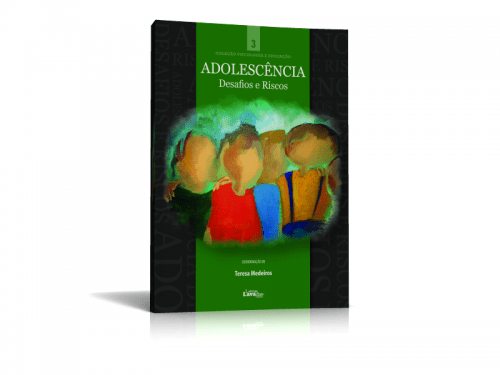
Well, that would be another interview. Since 2003 I created the Lifelong Learning program at the University of the Azores (20 years ago); I’ve been studying aging, particularly positive aging, in various subjects. Entering senior tourism research was just an extension. As for the second line of research, I’ve been conducting studies with other university colleagues for two decades.
Emerging adulthood” is a concept coined by Arnett (2000) to define the period of development of the traditional university student (18-25 years old). Having always been involved in developmental psychology, I focused on this broad topic, which is very wide-ranging in itself and ranges from research into students’ cognitive, emotional, social, and spiritual development through learning models to issues such as adaptation to higher education, self-image, psychoactive substance use, coping strategies, and demindfull practices. I joined this line of research through my colleague and friend, Professor Joaquim Armando Ferreira, from the Faculty of Psychology at the University of Coimbra, with whom I have worked for over three decades. He did his doctorate in the United States and brought this line of research with him.
João Paz-journalist for Correio dos Açores – Américo Natalino Viveiros, director
Translated to English as a community outreach program from the Portuguese Beyond Borders Institute (PBBI) and the Modern and Classical Languages and Cultures Department (MCLL) as part of Bruma Publication and ADMA (Azores-Diaspora Media Alliance) at California State University, Fresno.
 Filamentos (artes e letras)