

Natália Correia (1968). “The poet and the world,” “Poetry as impatience.”
Of the differences that can be established between philosophical thinking and poetic thinking, perhaps the most decisive is the antithesis between philosophical patience and poetic impatience. This divergence stems from man’s situation in the face of wisdom. While the philosopher is relationally linked to wisdom by the bond of friendship, in a masculine attitude of penetration and of penetration and discovery to which hypothetical and disjunctive categorical judgments correspond, the poet is a sophist, not in the later pejorative sense, but in the pre-Platonic purpose of spreading
wisdom and training superior men. In other words, he assumes wisdom in an absolute act, in a feminine surrender made possible by belief. The consequence of this last option is that which in philosophy subordinates existence to thought since poetry, in its
quality, is committed to an ontological deepening that allows reality to be independent of thought.
For the poetic mentality, “I think, therefore I am” becomes the proposal of the freest and fullest act of imagining, based on the principle that the real is not by reason, which limits it through doubt but instead offers itself to the imagination, that which, being imaginable, is real. Poetry is exercised as a belief in the broader field of human availability, the ultra-conscious and beyond thought, a field that philosophy restricts because philosophy restricts since it would overflow from the circle that closes it if it didn’t have the pure, pure availability of reason. Even when philosophy opens itself up to the acquisition of an imagining and feeling that it considers to be innate forms of thought, this concession is guarded by the philosopher’s intellectual conscience, which differs from the poet’s sensitive conscience in the aspiration to penetrate the absolute of thought, an absolutism that the poet rejects because he understands that thought is insufficient to express innate truths since man knows things he doesn’t think about.
In the face of the outstanding common denominator of philosophy and poetry – total synthesis as a goal – they fundamentally diverge. Philosophical thinking and poetic thinking are fundamentally divorced, both of which are primarily rooted in
predestination of man to be increasingly the active subject of the world.
The philosophical path considers separately the elements given for the
composition of the synthesis, going methodologically from the most straightforward propositions to the most without dispensing with analysis, in an inverse and complementary operation.
In this sense, the synthesis depends on the elements that combine it and can only be a whole as a result of the correctness of the propositions. The inverse is the path of poetic access to the total synthesis, in which the poetic perspective never emerges as a consequential whole but as a nucleus that has apparent contradictions in the face of human reason. The poet, therefore, sets out to use synthesis as a dogma to capture contradictory or unexpected relationships, the nexus of this contradiction and unusual coexistence, a correspondence of the antitheses that evade philosophical thought and attract the poet to imaginative operations that surprise the of things that immediately contradict each other. This is the goal of Surrealism, whose defense of subjective freedom is nothing more than the doctrinal intensification of the poetic particularity of increasingly subtracting the “I” from the interdictions of the persona that persona, leaving it no freedom to follow the subconscious paths that lead to synthesis. This is also the reason for the inevitable obscurity because the poet, unlike the philosopher, starts the philosopher from lesser-known truths to better-known truths; what he wants to mean appears abstruse to the analytical mind.
This brings us to the point where it becomes clear why poetry differs
from philosophy by an impatience that explains its startling and contagious nervousness. Because the poet doesn’t want, like the philosopher, to convince (we should say, convince himself) by demonstrating the truth of his conclusions based on premises admitted to be true. The poet aims to win the other person’s acquiescence to a truth that
is not, as in philosophy, a truth which, being necessary, can be found by analysis but is a reality. By analysis, which is a reality whose unveiling is the poet’s raison d’être.
The philosophical climb toward synthesis is a work of patience, composition, and decomposition, a permanent abstract occupation that underpins the whole. The philosophizing man does not leave the conceptual relativity whose abandonment would correspond to a flight into theology: the search for necessary reasons imposed by faith. In radical opposition to this structural process, the poet concentrates on synthesis, seeing it as a potential reality whose realization only depends on total subjective independence from the concepts that polish man’s persona. Thus, the historical present appears as an ambiguity. A present tense demanded by future synthesis, a hopeful present where the signs of a higher truth are tangible in the lower truth of the present.
Truth in the inferior truth of the present, which, in its inferiority, motivates
the poet’s dispute with the present time. This is why the poet’s epochal situation is always contentious. He conflicts with his impatience to update a better future in a permanent homage to the man who is the tribute to the man who is the poet’s absolute discipline.
Translated by Diniz Borges – Cátedra Natália Correia – PBBI, Fresno State
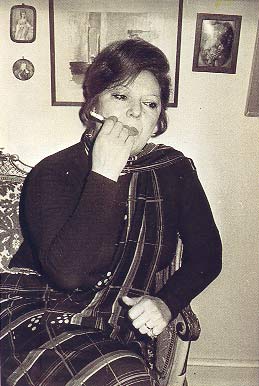
As we commemorate Ntálias Centennial, every week, we will have a writing from Natalia translated to English as part of the Cátecra Natálai Correia, PBBI-Fresno State.
Take a look at this excellent article on one of Natália’s works.
 Filamentos (artes e letras)