
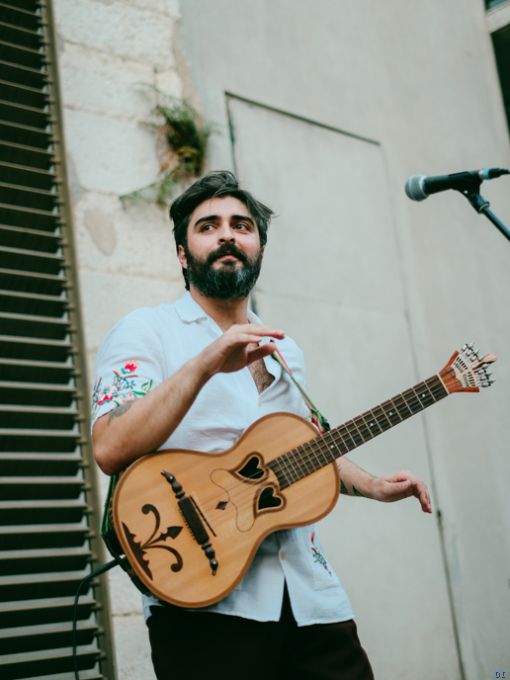
The eighth edition of the Cordas Festival on the island of Pico takes place between October 1 and 8. Azorean singer-songwriter Romeu Bairros has been invited to open the festival.
What brings you to the festival, and what can those who attend expect?
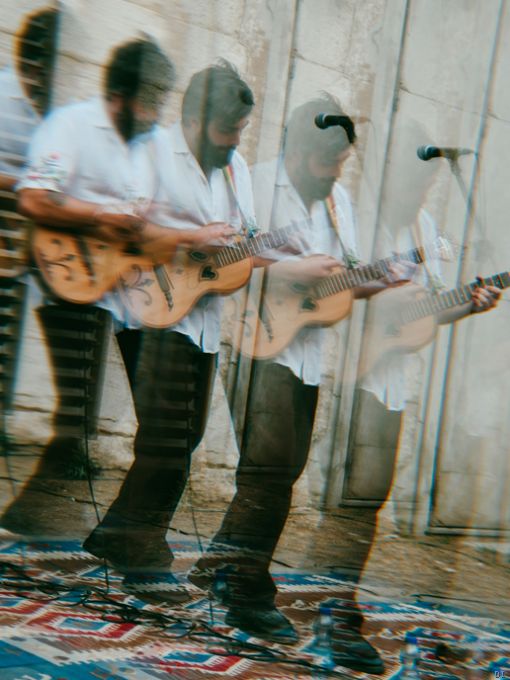
It’s actually a return to the festival. In 2021, I was one of the participants, where I shared the stage of the Madalena Auditorium with the incredible Sara Cruz, and last year I made a surprise appearance with the Azorean Strings at the Pico Wine Museum. This time, I’m back in the format I’ve been performing, accompanied by the viola da terra and presenting songs that people haven’t heard yet.
The ascent, the concert, and the descent will be recorded to make a kind of documentary directed by Ricardo Reis and with the sound of André Reis, which will be published on social media. It was inevitable not to take this opportunity to record a special concert in one of the most unique places in the world. I’ve been very excited, telling my friends here in Lisbon that I will give the “highest concert of the year.” And it’s true!
Having already had a long music career, what does it mean to you to participate in this Azorean cultural project?
It’s undoubtedly a privilege to present my art in my region, especially in a place as unique as the Pico mountain. When Terry Costa asked me if I’d be interested in going up the mountain to give a concert in Piquinho, I immediately went along with it. But, as an Azorean who doesn’t live in the region, I take this participation with great pride and try to be the “saint of the house who works miracles,” even with the current Regional Government leaving culture in third place. Art has to be made, guitars have to be played, and fireworks have to go “up in the air.”
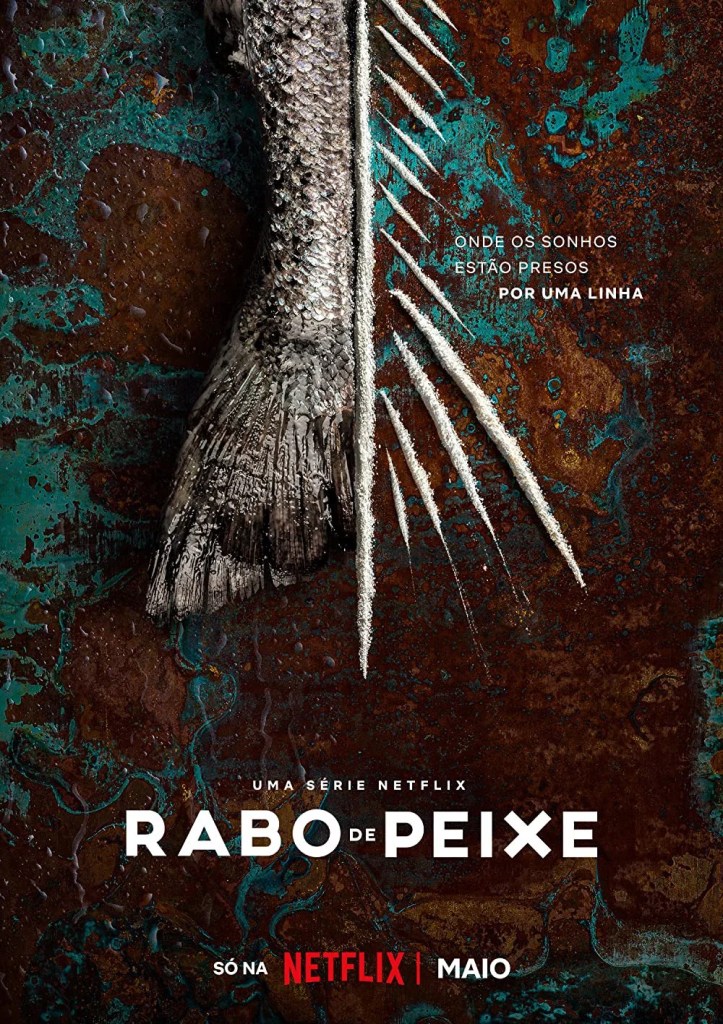
You were part of the Netflix series “Rabo de Peixe”, where you played the character Sandro G. Tell us about the experience and how the opportunity came about?
It was an unexpected experience, like being in the right place at the right time. At the end of 2021, I was invited to a dinner with several Azorean actors, including Zeca Medeiros, Miguel Damião, David Medeiros, Luís Filipe Borges, and director Augusto Fraga. And I thought: What am I doing here? I’m not an actor. If I’m lucky, I’ll do a song for the project. I didn’t make any original music but recorded versions of the songs “Eu não vou chorar” and “Ilhas de bruma.” I’ve been a friend and fan of Sandro G for many years, and it was an honor to be the “Sandro Jeans” in the series.
What projects do you have in store for the future? Could taking part in the series have sparked some different ideas?
At the moment, I’m focusing on my next album, which will be out next year. It’s a folk record produced by the musician B Fachada, with whom I’ve been working for the last year and a half, which will celebrate the traditional music of the Azores and the Micaelense accent.
I also have some offers to play other characters in movies, but I can’t give any more information, as well as “SANDRO JEANS” in the second season of “Rabo de Peixe,” because it’s “TOP SECRET.” Apart from that, just wait around because I don’t know either. The wind is sometimes north and sometimes south. I live in Lisbon, but my life is like weather forecasting in the Azores. It all depends on the anticyclone.
NOTE FROM THE ORGANIZATION:
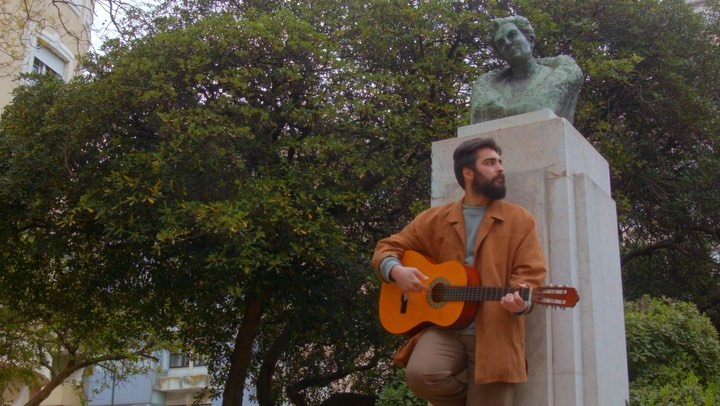
On Sunday, October 1, 2023, at the Cordas Festival, you can accompany Romeu Bairos to the highest point in Portugal. Sign up at info@mirateca.com to receive preparation instructions. Places are limited. The event starts at dawn at Casa da Montanha on the island of Pico. Depending on weather conditions, the concert is scheduled for lunchtime in the Pico crater.
Interview done by Diário Insular-Terceira Island–José Lourenço, director.
Pictures from Diário Insular and online sources
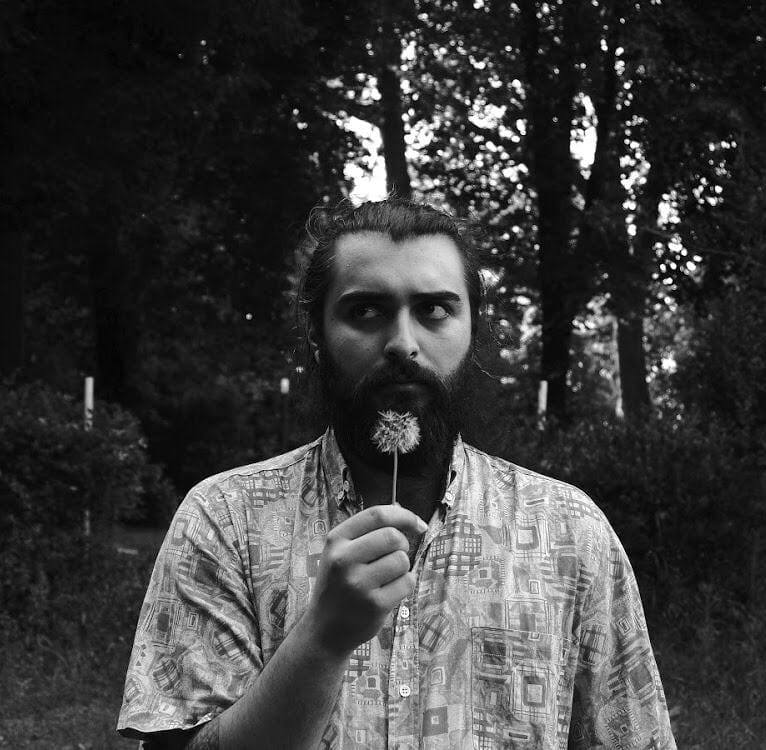
Brief bio
With a distinctly Azorean identity, born in Furnas on September 20, 1993,
Romeu Bairos showed an aptitude for music from a very young age, winning the
Caravela d’Ouro Little Singers Festival in Povoação in 1998.
He was a student at the Ribeira Grande Musical Academy and later at the
Ponta Delgada Regional Conservatory, where he studied piano and clarinet. While
practicing these instruments, he joined several philharmonic bands on the
island of São Miguel as a clarinetist.
He formed his first garage band when he entered Liceu Antero de Quental. At
this time, his interest in Portuguese literature and poetry was awakened, and
he gave some musical-poetic recitals.
It was in 2010 that his desire to pursue a professional music career became
more serious, which led him to compose his first original songs. Over the next
four years, he performed in various bars and festivals on the nine Azorean
islands.
In 2014, at the invitation of a friend, he moved to Lisbon and took part in
the third edition of The Voice Portugal, where he was mentored by Marisa Liz
and reached the “Tira-Teimas” stage.
After the competition, he stayed in Lisbon and decided to improve his vocal
skills. To this end, she studied vocal technique at the JBJazz Clube while participating
in small gigs and jam sessions in various Lisbon nightclubs.
At the end of 2016, she began working on her first album of originals with
Tiago Maia. Together, they began to explore the sounds of Portuguese popular
music and fado and to mix them with urban popular music.
Cavalo Dado was released at the beginning of 2019 and was the bridge between
the singer and the Karetus project. From here came the partnership that would
lead them to compete in the Festival da Canção… The longing comes and goes!
Translated to English as a community outreach program from the Portuguese Beyond Borders Institute (PBBI) and the Modern and Classical Languages and Cultures Department (MCLL) as part of Bruma Publication and ADMA (Azores-Diaspora Medial Alliance) at California State University, Fresno.
 Filamentos (artes e letras)