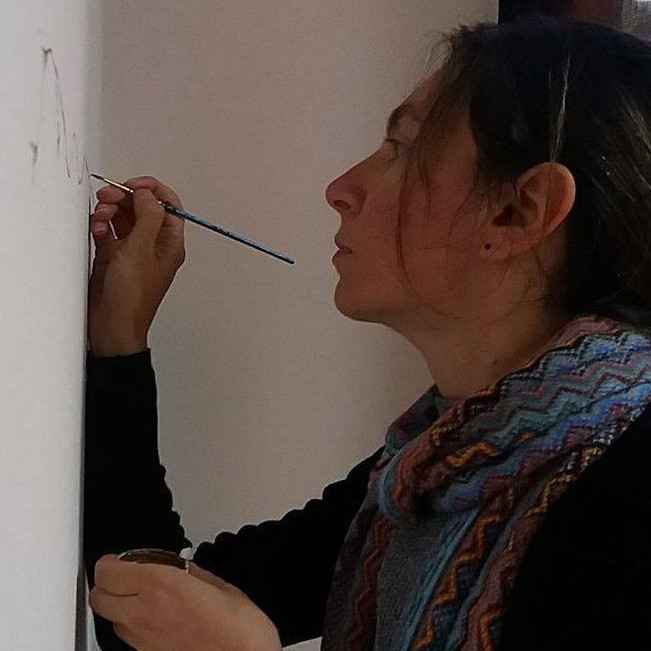
She is a multidisciplinary artist, using various materials to paint, such as canvas, ceramics, and even fabrics. She also does illustrations and portraits…
Painting fabric was something I’d wanted to do for a while, customizing clothes. By chance, I discovered this taste in an accident with a garment I liked. I remembered to use bleach and I never stopped. I love it. It’s one of my favorite things to paint, although I like a bit of everything. It’s a bit of everything, depending on the subject, the mood, the work. I really feel that I have no limits.
I paint with various materials, whether charcoal, dry pastel, oil pastel, watercolors, or mixed media. One of my strangest works to date and the one that aroused the most curiosity was a self-portrait I did in acrylic on a plastic bag, which is what I had on hand. I have to paint, so I use whatever I have. When I have to paint, I have to paint. I didn’t have any other medium then, and that’s where I painted.
I also do portraits with various materials. People ask me a lot for charcoal, but I also do a lot of mixed media and watercolors, and I use colored pencils a lot.
Your art doesn’t follow currents or techniques?
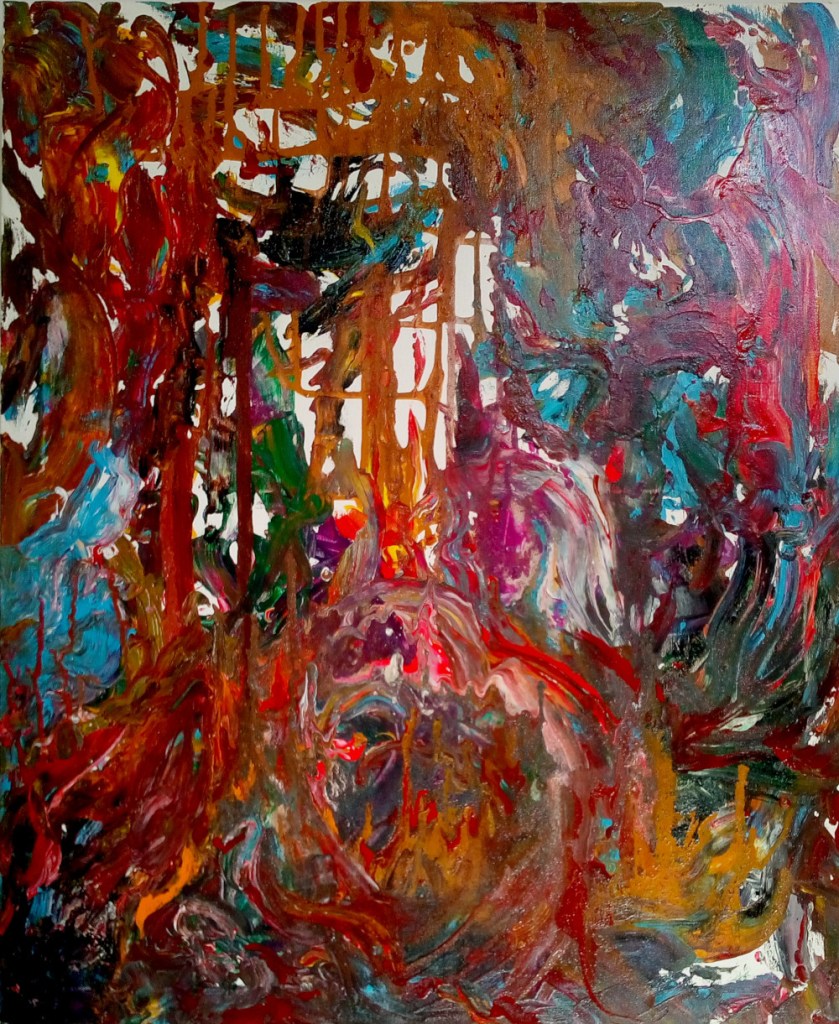
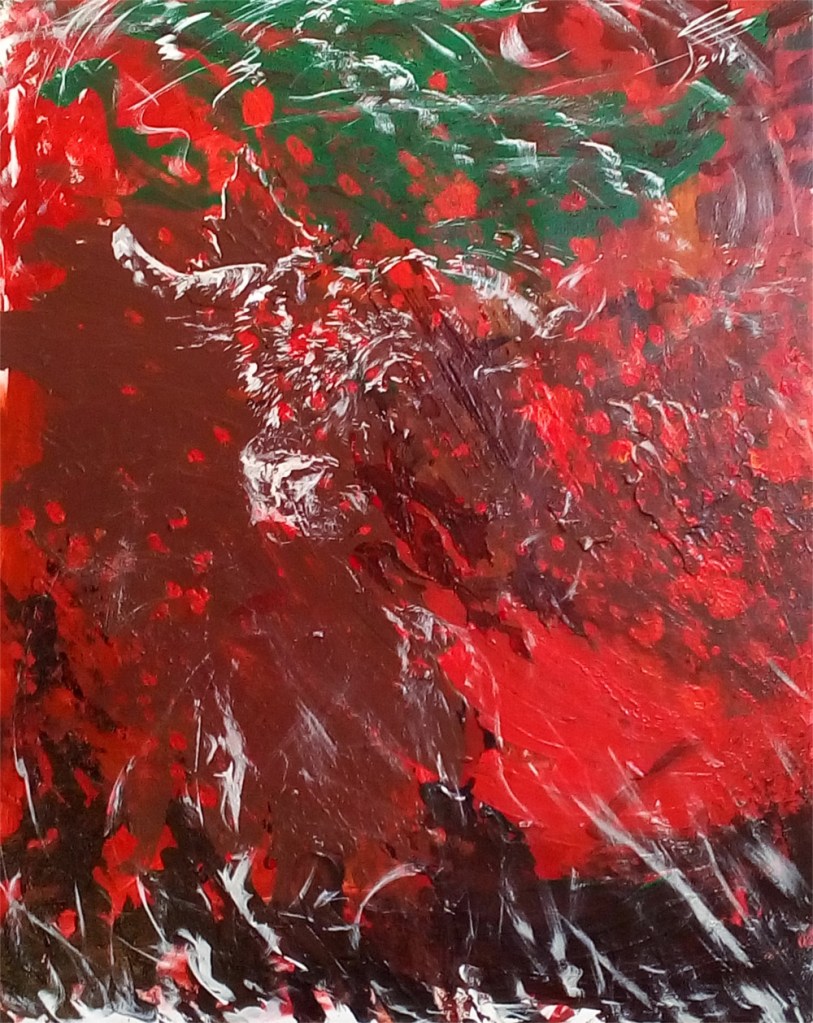
No. Throughout my life, I’ve heard that I had to choose a style and dedicate myself to something, but that never made sense to me, nor does it still. Each image, each moment, and each piece of work calls for different things, and that’s fine with me. Each thing has its own personality and has something different to communicate. Even in portraits, I don’t paint photographs; I mainly paint feelings and emotions. That’s where I find myself.
But do you have a personal touch that makes people look at your work and realize it’s yours?
They say yes. Many people say they recognize my work in other places, even if they don’t know at first that it’s mine. I learn more about myself from what others say because I’m involved in this world, and I lose myself entirely in terms of hours and everything. It’s love, above all. Love, emotions, the connection people have with something, even if it’s not me, but it always passes on a bit of my interpretation, what I see, and what I feel about the person. It also happens with animal portraits. I do them too. I remember a request from a lady whose dog had died, and she was moved by the portrait because it was so expressive. It was painted on porcelain.
On the internet, Sónia describes that “art is an extension of myself”…
For me, art is like breathing; it’s part of me. It’s a way for me to be and extend myself; it’s also a balance. It’s a way of balancing my emotions and feelings. It’s a continuity in that respect. It’s a basic need.
You’re an art teacher on the island of Terceira, where you’re from. Is it satisfying to share this love of art with your students?
It’s terrific to awaken this spark and this taste in them. It’s great when we can make their eyes shine when they discover colors, shapes, or what they can do and create. It’s one of the things I like most about my job. I like this part; this “spark” makes them like it.
Whether with children or adults, what gives me the most pleasure and is very rewarding is bringing dreams to life or teaching them to create paths and believe in the miracle of small things and the difference they make.
How important do you think the presence of art classes in schools is? What are the benefits?
Nowadays, the arts hardly exist in schools. In the curriculum, the weekly workload is shameful, I’d say. They are essential. In my childhood, I remember there were many opportunities, and we had a lot of art every week. As adults, we see the benefits of our abilities. In children, I notice more and more of them being “tied down” and also a lack of confidence in themselves, being able to manipulate things and being able to create. I notice that there is a lot of need, and the arts disciplines help a lot with this, but they need to be given the time and conditions to discover themselves. They need time to discover themselves, and that’s by experimenting. They can’t do that in 45 minutes a week. CA/DI

Interview published in the newspapers Correio dos Açores (Natalino Viveiros, director ) and DIário Insular (José Lourenço, director)
Translated to English as a community outreach program from the Portuguese Beyond Borders Institute (PBBI) and the Modern and Classical Languages and Cultures Department (MCLL) as part of Bruma Publication and ADMA (Azores-Diaspora Medial Alliance) at California State University, Fresno.


 Filamentos (artes e letras)