
Clara Alves, filmmaker
YOU WERE INVITED TO AN ARTISTIC RESIDENCY AT PICO AS PART OF THE SECOND EDITION OF LAVADIAS – OUTDOOR FILM FESTIVAL. HOW DID THIS OPPORTUNITY OCCUR, AND HOW IMPORTANT IS IT FOR YOUR CAREER?
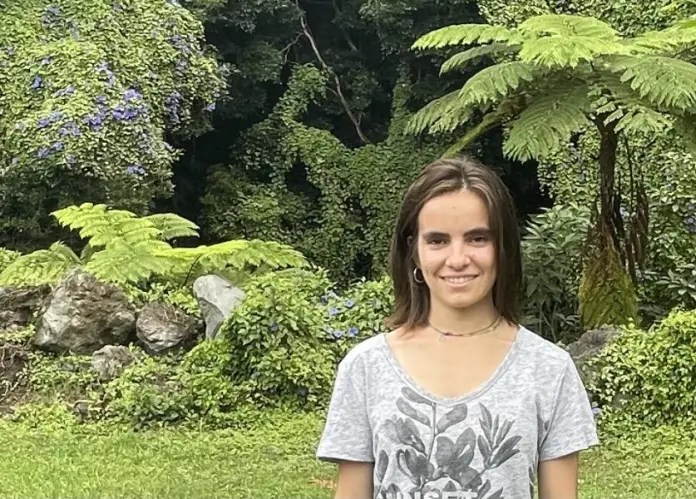
I was stunned! I remember that I was finishing the week on Friday afternoon when I received an email from Terry Costa proposing that I come to Pico Island for an artistic residency following the submission of this short film to the Fringe in 2021. I welcomed the possibility of going to Pico as a significant challenge. The fact that I was still taking the first steps in my artistic career led me to accept this opportunity in the blink of an eye. What moves me to create is allowing me to see other realities, talk to the inhabitants, and experience the island as a whole. In addition, the theme of the sea is something that has always attracted me.
WHAT DID YOU ACCOMPLISH WHILE YOU WERE IN THE AZORES? WHAT IS YOUR ASSESSMENT OF THE ARTISTIC RESIDENCY?
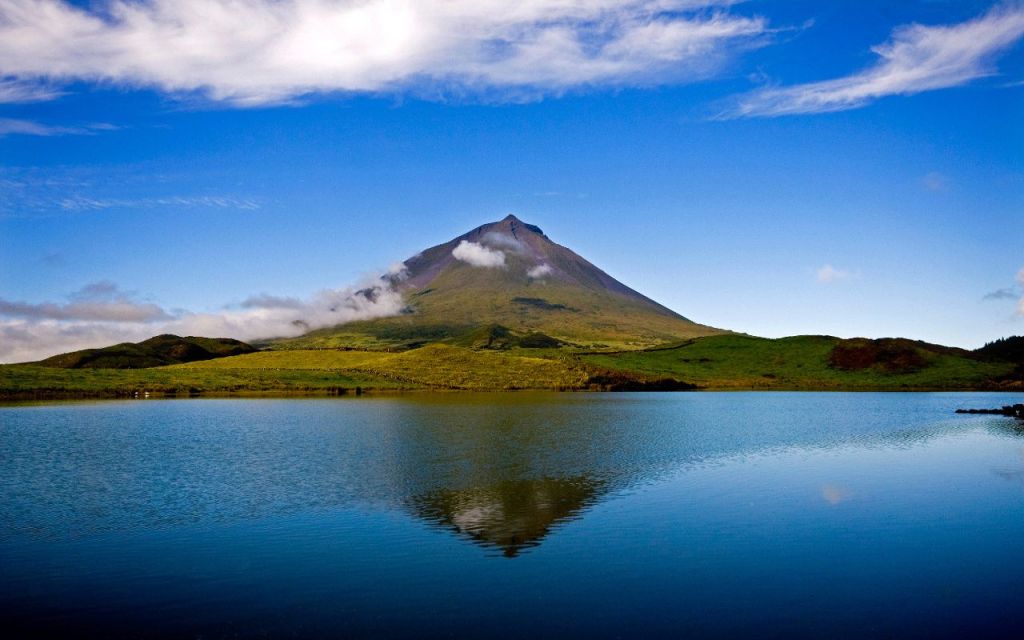
In the six days I was in Pico, I photographed and filmed. I also took advantage of my trip to Pico to take the analog camera that never lets me down. I can capture more with it than with any other digital camera. I chose to photograph in black and white because it leads me to establish a primordial relationship with the space or object I am capturing. As the project I will develop is closely linked to the sea, I tried to be close to it, close to the people who make the sea their life. During my stay on the island of Pico, I brought many memories, people, and places. I felt very welcomed from the first day; I felt that I was also part of Pico. They were very intense days of recordings that allowed me to capture a little of what is the essence of Pico. It was a true journey of the senses. As it was my first time on the island, everything was new; there was always dazzle in everything that passed by me; I felt like a child again, attentive and curious about everything around me.
PRESENTS AT THE FESTIVAL THE SHORT FILM “IN THE BEGINNING WAS THE SEA” – A WORK THAT HAS BEEN SHOWN AT FESTIVALS SINCE 2020. WHAT IS THE WORK, AND WHERE WERE YOU INSPIRED TO MAKE IT?
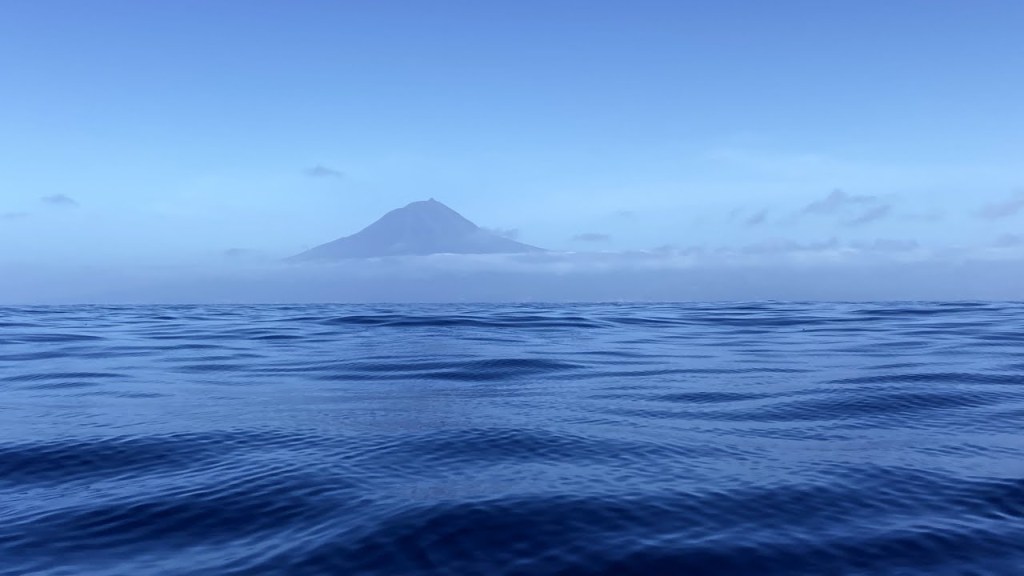
The work emerged in an academic context as a student at NOVA FCSH. The assignment of one of the courses was to develop a short film on a theme of our choice. I immediately remembered my grandfather and the hundreds of life stories he had told me since I can remember. I would have to isolate the theme of the short film in a time period, and that’s when I focused on the ten or so years that my grandfather worked on one of the Portuguese Merchant Navy ships, the Paquete Infante D. Henrique, a passenger ship that made the regular career from Lisbon to Lourenço Marques, now Maputo, passing through Madeira, Canary Islands, São Tomé and Príncipe, Angola and South Africa.
It is one of the most exciting phases my grandfather ever lived. Imagine growing up in a fishing village in the 40s and 50s, fishing, working in the fields, from sun up to sun down, with the many adversities of the time, but always with a great dream of working on a boat, and in the early 60s, grabbing the opportunity of a lifetime and seeing his dream come true.
Many hours of conversation with my grandfather were recorded, where he told the most varied stories about his life on board, travel adventures, passengers who marked him, and multiple cultural and civilizational realities. The hardest part was selecting the episodes to be included in the short film. It was a real challenge!
TURNING TO YOUR CAREER, HOW DID YOUR TASTE FOR CINEMA COME ABOUT?
Ever since I was a little girl, I remember liking to watch movies. It was a big party when the weekend program included a trip to the cinema. It was always a big event. I had two moments that forever intensified my connection with cinema. The first moment was when I saw Cinema Paradiso by Giuseppe Tornatore for the first time; I must have been nine or ten years old. I spent a long time thinking about that movie and how Salvatore, the main character, developed such an intense passion for cinema throughout his life. It was a movie that moved me from an early age. The second moment happened when I saw Stromboli by Roberto Rossellini, in a short course I took in 2017 about audiovisual essays. This movie utterly blew me away; so profound and impactful in its photography. It left me speechless. It was from that movie that I got into a wave of classic cinema, and since then, I have never stopped watching them. There is a splendor in classic cinema that is difficult to achieve today, a primordial language established between the past and the present. It is where the power of the image as a language is most pronounced.
HOW DO YOU DESCRIBE YOUR ART?
From the inside out. I start from my internal dialog to something I try to be a dialog with a collective. My story can also be the story of the other. Although we are all different, there is something that unites us all. When it comes to what I try to communicate, I always try to make the narrative of the artistic object universal, passing through an analysis of the particular individual. My goal is to capture the essence of what I perceive and make it close to the other.
WHAT CHALLENGES WILL A YOUNG PERSON WHO WANTS TO MAKE CINEMA HIS LIFE FACE? DO YOU FEEL THAT IT IS NECESSARY FOR THE WORK TO BE VALUED OUTSIDE OF PORTUGAL TO BE THEN APPRECIATED WITHIN DOORS?
The idea that what is Portuguese is only appreciated when it is recognized abroad is accurate. A young person who starts in the film industry by gaining international recognition sees several doors open. If you don’t get it right away, you have to work hard to get there.
I want movies to be more present in my life. I need to have space, time and means to create for that. I currently work in an area that has nothing to do with cinema. It is complicated to live only from art because of its precariousness and insecurity. For now, I have a corporate job, and in the breaks, I think about new themes, investigate, test, and put into practice some ideas. I photograph and film. I use photography to test the space, to feel if something moves me and deserves to be captured. I only film after photographing and observing.
This interview is from Diário Insular in Angra do Heroísmo, José Lourenço-director.
This interview was translated to English as a community outreach program from the Portuguese Beyond Borders Institute (PBBI) and the Modern and Classical Languages and Cultures Department (MCLL) as part of Bruma Publication and ADMA (Azores-Diaspora Medial Alliance) at California State University, Fresno.
 Filamentos (artes e letras)