
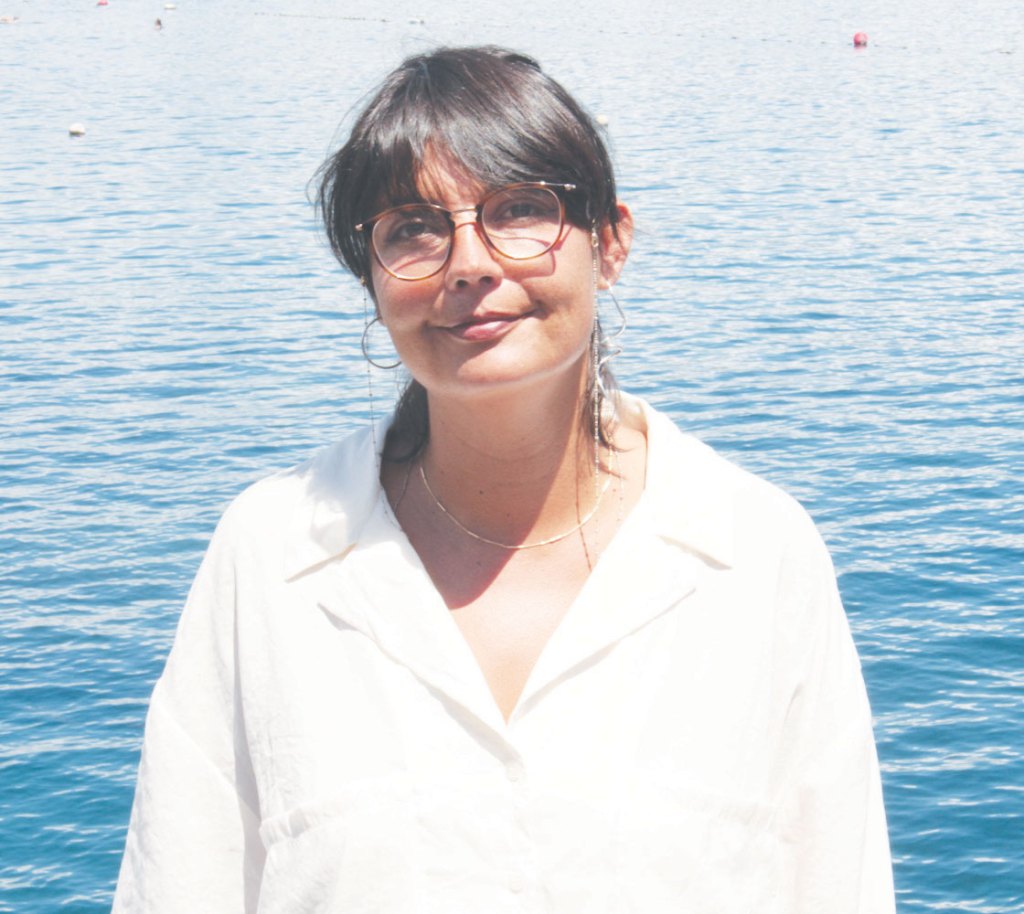
A conversation between journalist Carlota Pimentel from Correio dos Açores and Sara Rocha Silva, an azorean artist.
Correio dos Açores – Tell us a little about your academic and professional career.
Sara Rocha Silva (Painter) – I attended Arts at Antero de Quental High School, and after finishing 12th grade, I went to the College of Fine Arts in Lisbon, where I was in two different courses. First, considering the professional opportunities, I chose the Communication Design course but did not complete it. Although it was excellent, I did not identify with the course, as it was not as intuitive for me as Painting. Then, the opportunity arose to pursue a degree in Painting, where I developed my work in several areas. At the curricular level, we could attend certain optional subjects involving other areas, such as ceramics, mosaics, engraving, and stained glass, which was enriching. When I finished the course, I returned to São Miguel. In the meantime, I worked at the Francisco Lacerda Museum in São Jorge, interned at Arquipélago – Centro de Artes Contemporâneas, and worked in educational services. I work at the Azores in a Box of the Azores Handicraft and Design Center, boosting and promoting handicrafts and culture.
Did your return to São Miguel after finishing your degree meet your expectations?
I came with a preconceived idea of how things would be, which did not materialize. I realized it was not as easy as I thought to make a living in art.
Making a living from art in the Azores is difficult…
I think in Portugal, in general. Although I haven’t had work experience on the mainland, the fact that it’s a more extensive environment brings other difficulties. I remember reading interviews given to the media by some artists who shared their challenges. For example, it becomes difficult to sustain a studio, not only in terms of material but also of space. It’s not enough to have the work in galleries; it also depends on sales. In other words, the commercial side ends up being necessary, although I believe it is polluted if the work is done for that purpose. There is no total surrender if we give too much importance to the commercial side and don’t do things with our souls.
Besides Painting, do you explore other forms of artistic expression?
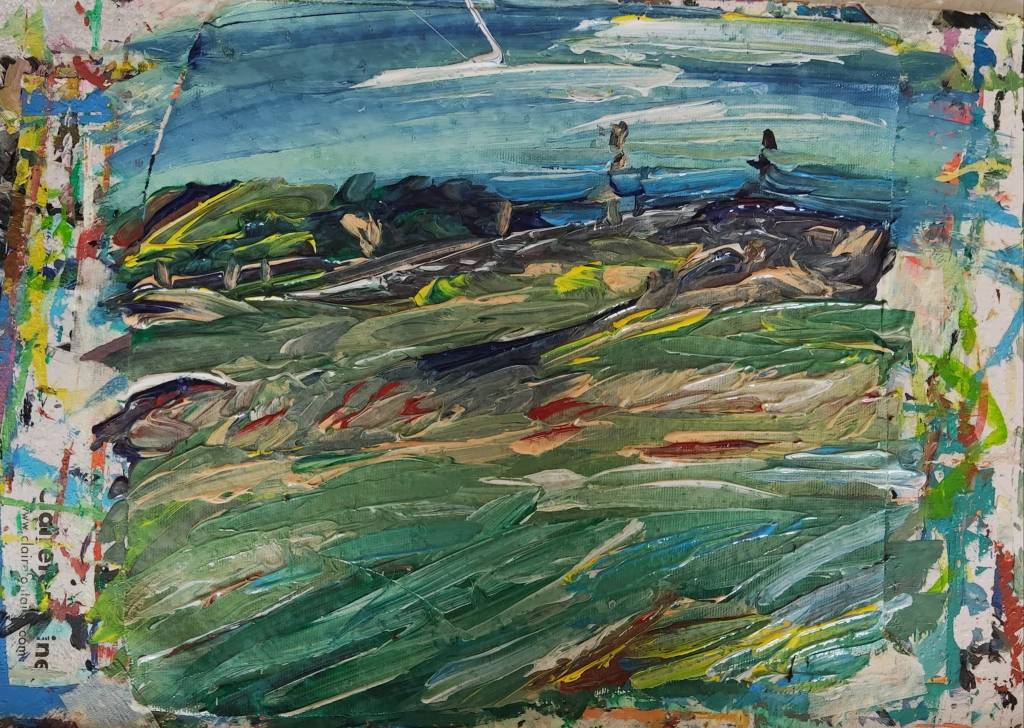
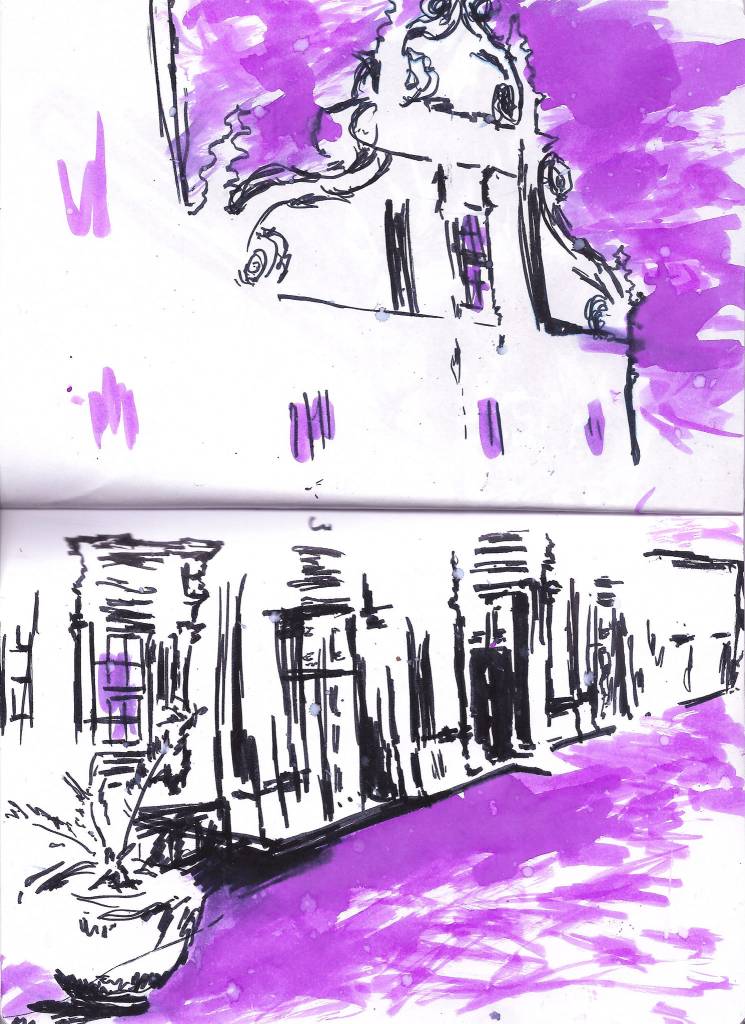
In college, I experimented with several areas but have not developed anything beyond Painting. Drawing is always part of Painting at the level of composition, and the brushstroke itself is gestural, so the gesture is also a drawing and presupposes movement. In 2019, with the Urban Sketchers came the opportunity to further emphasize the character of drawing in my Painting.
In addition, Urban Sketchers helped me to loosen up and explore certain materials, as they are works made through observation on-site. At the time, I felt a bit trapped, graphically or expressively, because I had worked a lot around photography, but also emotionally, given the experiences I was having, which led me to a certain imprisonment. I was finding it difficult to let go. When we draw on location, we mainly absorb information and capture what is in front of our eyes, which is what I did in my Painting. I wasn’t looking for perfection or to achieve the sublime. The Urban Sketchers have influenced my work a lot from that perspective.
What inspires you to create your paintings?
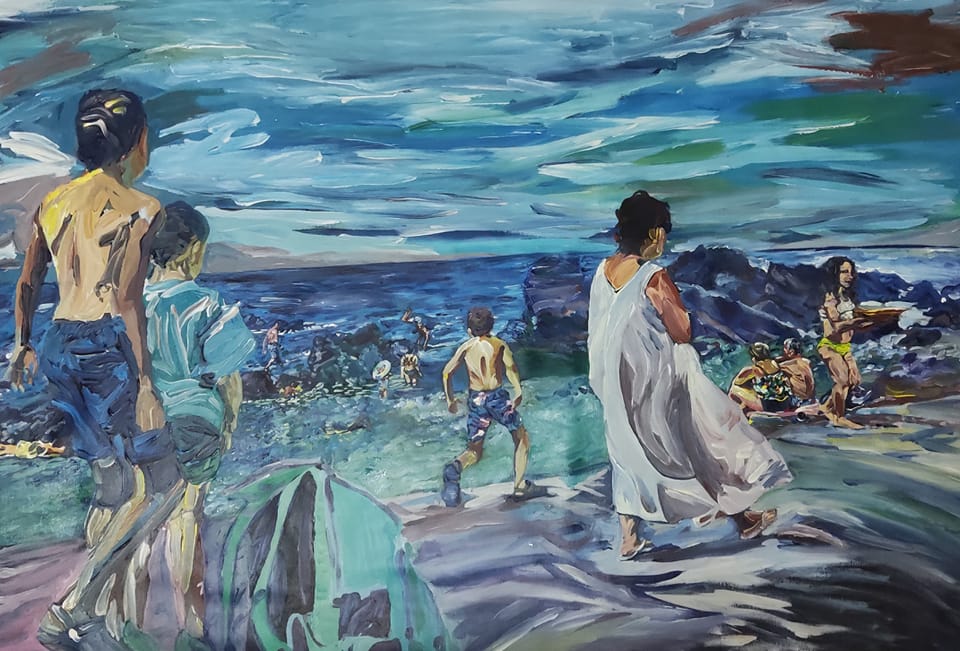
Painting has always been a diary for me. Although I have several inspirations and research on some themes, my work has a very personal side.
I have several influences and references. I believe what we do is always a reflection of many things, such as our moods, education, and what we absorb from everything we live. Everything that surrounds us transforms us, and our personality results from that. Our behaviors and reactions come from a past and a future because we create perspectives and have certain fears. In other words, it is a set of emotions and thoughts oscillating over time. My work is based on this connection between the past, present, and future. (…) Many works reference Greek mythology, and the idea of the window is also very present in my work. I also have references to David Hockney, in that he sometimes uses a lot of photographs, a kind of cubism, to make the representation more real, and I have also used that in my work. I like Peter Doyle and a painter from the Peak District called Gabriel Garcia, among others. I have lots of artists who are an inspiration.
As an artist with a special bond with the Azores, how does the local culture influence your art?
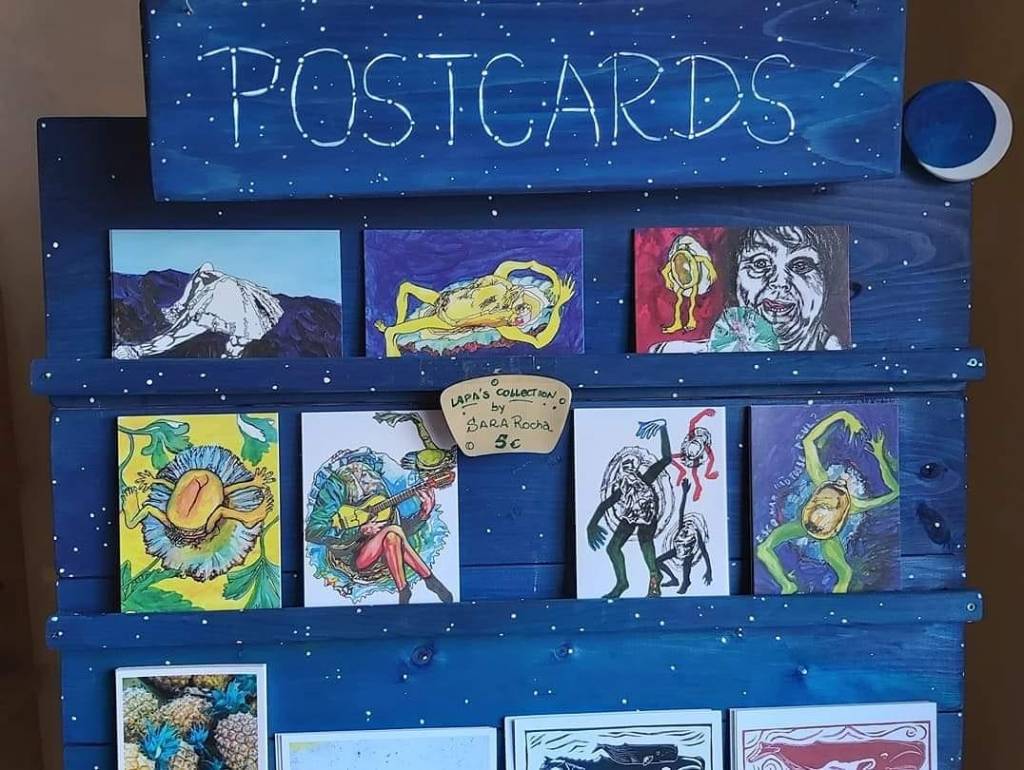
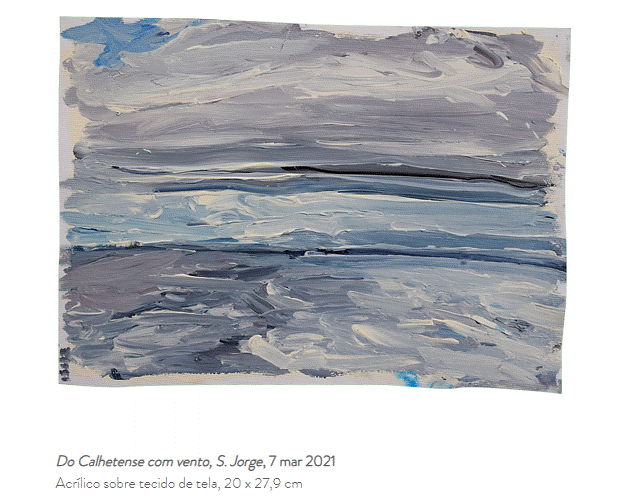
Everything that surrounds us ends up having a space in what we do. It is that reflection resulting from absorption. Some of my works come directly from places in the Azores islands. When I make them, the connection to the island is always present. Despite all the ease of transport that exists today, with globalization, the fact that we live on an island gives the islanders a certain insularity, which influences my work. I also made some postcards, more geared towards illustration, which was the lapinhas, and the connection to the Azores is notorious there.
You have held several exhibitions, including two honorable mentions. How did you view these recognitions?
I participated in the JOV’ARTE Biennial contest three times and received two honorable mentions in 2015 and 2017. I felt valued, and it gave me more motivation to continue. It is a recognition of our work. Although I haven’t done many solo exhibitions yet, in November and December, I will have a solo exhibition at Casa da Cultura Carlos César, in Lagoa.
What is the biggest challenge when painting someone’s portrait?
To be as photorealistic as possible. We often don’t know people, and capturing their essence becomes much more difficult because we don’t have an image. In the process, you get to a point in the Painting where you recognize what you’re painting. For example, I feel extra pressure when I do portraits for families because I know it is important to them. However, the result is usually excellent because of the reactions.
What feedback do you get?
Generally, the feedback is positive, although I have had some not-so-good reactions. But I often say that pleasing everyone is not a good sign either. We must be confident, believe in ourselves, and continue our work.
What would you still like to achieve in your career?
When I was in college, I aspired to be recognized and to reach great heights. I didn’t want fame or to be recognized on the street, but I would like my work to rise and be on par with big artistic names. Nowadays, I have a different perspective. It is imperative that people relate to my work and that it provokes and arouses emotions. I want to continue working as a painter and see my work evolve. I know it isn’t easy to live exclusively from Painting. This is a struggle that I have been fighting, and that took me some time to assimilate. I don’t mind working in other areas if it allows me to continue doing what I love.
Carlota Pimentel-journalist
In Correio dos Açores, Natalino Viveiros-director
Translated to English by the Portuguese Beyond Borders Institute (PBBI) through the Azorean-Diaspora Media Alliance, Bruma Publications, and with the collaboration of the Modern and Classical Languages and Literatures at Fresno State and published in Novidades, from Bruma Publications at Fresno State as a community outreach program.
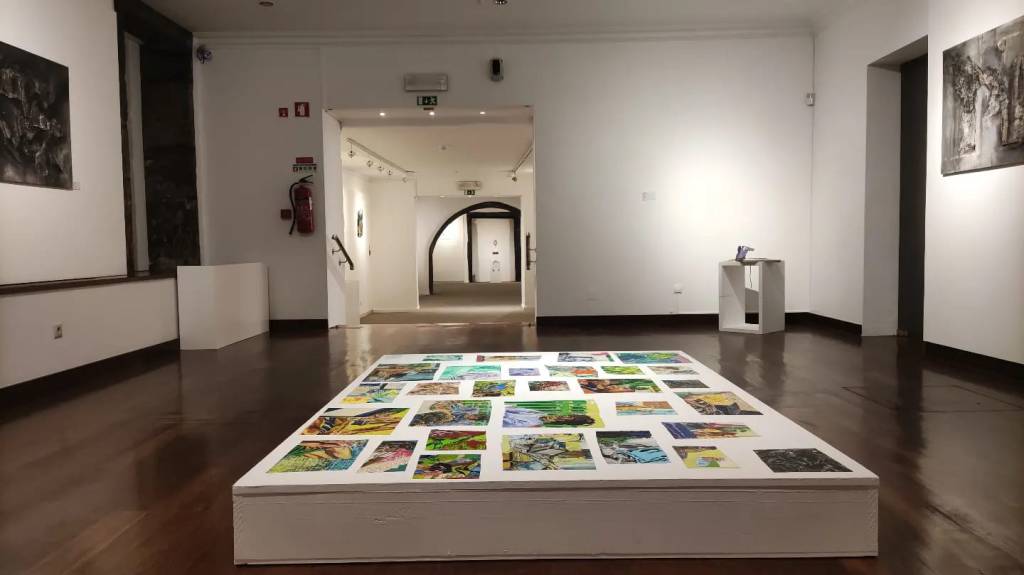
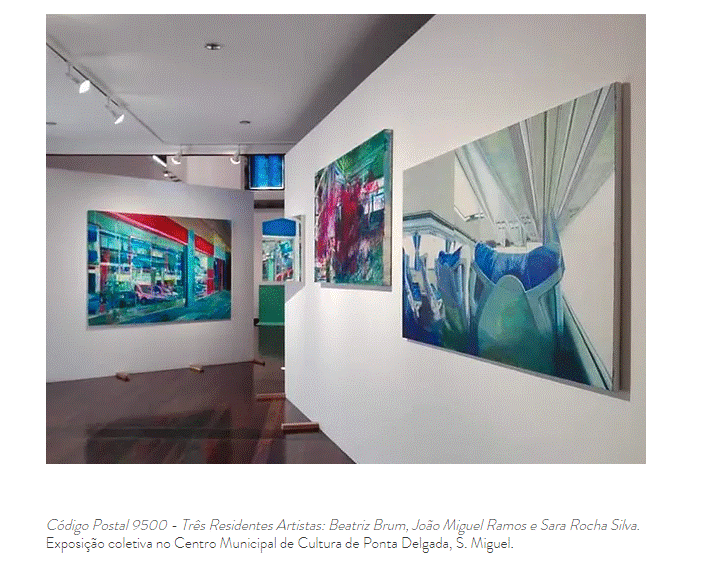
Pictures of art work from the author’s Facebook page and website
 Filamentos (artes e letras)