
Since 2016, the company Cães do Mar has been bringing to the stage the most curious stories of the Azores in shows that combine music and theater. The most recent work goes back 80 years to the arrival of the English Military Forces to Terceira island during WWII.
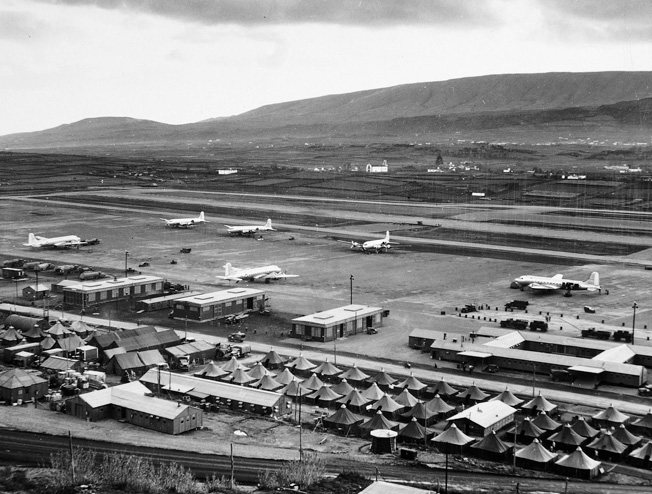
The story is told through the eyes of the people of Terceira, who saw the island’s “granary” transformed into an airstrip.
“It’s a comedy, but it has a serious tone because, ultimately, the play is about the sacrifice of human lives. But people have also sacrificed their homes and land,” said Peter Cann, writer, and director of the play “Sarrado Grande”, which premieres today at 7:30 p.m. at the Biscoitos Cultural Week.
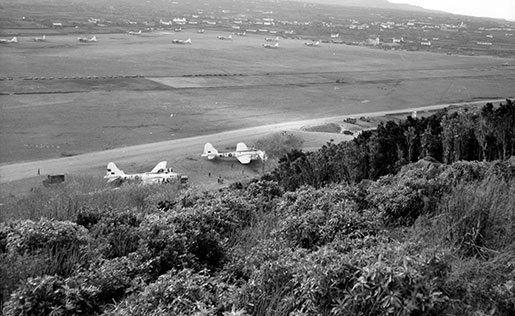
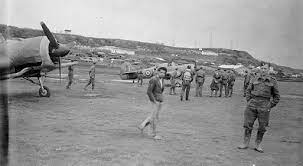
World War II was underway when the Royal Air Force of the United Kingdom landed on Terceira Island in October 1943, building an airstrip where the Lajes Base is today.
It is the starting point for a play inspired by facts based on research work, which took about a year.
LAJES Royal Air Force personnel arrived in Terceira 80 years ago.
“We were fortunate. This topic was the area of expertise of Captain [Pedro] Ventura [of the Portuguese Air Force]. He wrote his Ph.D. on it and had many stories. The author revealed that there was a newspaper produced by the military, which had many stories of things happening on the base at that time,” the author revealed.
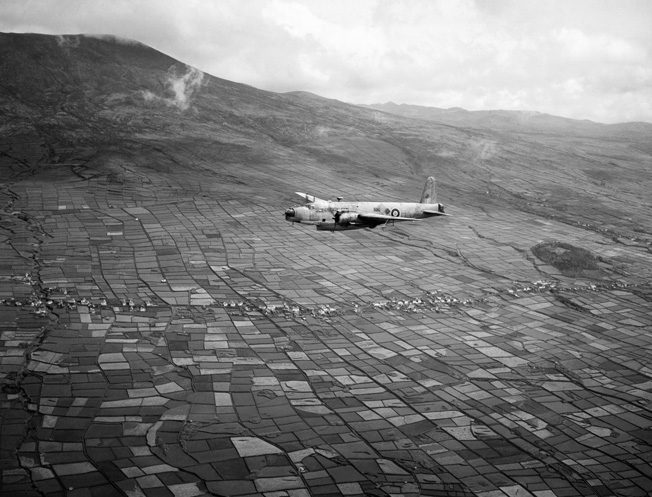
The group also collected testimonies from relatives of those who participated in the process, and many of the stories that make up the play “are based on reality”.
“It tells some of the facts. For example, how the tracks were built in less than 30 days with perforated steel plates was incredible. People from here worked together with Royal Air Force soldiers to build them,” he said.
The island’s poverty contrasted with the affluence of the British, who brought better living conditions to many families but forced them to make sacrifices.
“Although they had new, better houses with running water, they did not have the land, which was the means to make a living. It’s a fascinating period to watch, and in terms of dramatic conflict, it’s vibrant,” explained Peter Cann.
An English officer, a man from Viseu, and a woman from Terceira get a translator job, even though she wasn’t a translator. These are the three main characters whose stories intersect with many others.
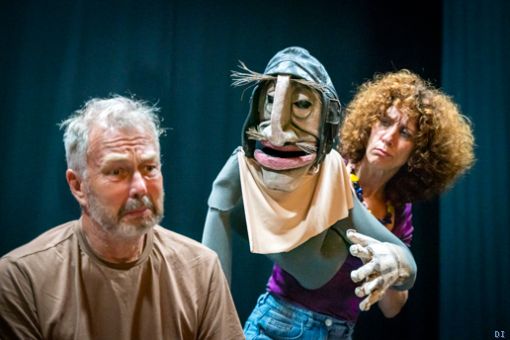
Puppets and swing
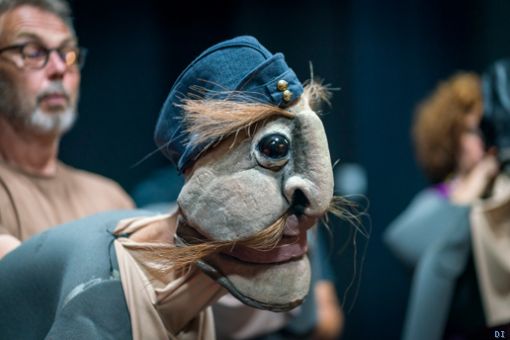
There are giant and more miniature puppets, dancing airplanes, and a live swing band in a “large-scale outdoor show” that even includes well-known figures.
“We have giant puppets of Churchill and Salazar. Salazar’s game was clever and complex. The Allies desperately needed a base here because if the U-boats had kept destroying the escorts, Germany would have won the war,” the writer described.
One of the influences left by the British, and later the Americans, was music, as is clear from the number of jazz groups the island still has today.
“Portugal was very closed culturally and politically. Having people from abroad here brought everything from a technological level to a musical level, to a cultural level…. It was imperative. And it is still noticeable today because in such a small land, we have several groups from various artistic areas doing so many different things is good “, said Antero Ávila, composer and musical director of the piece.
The musician from Terceira plays tuba in the Lava Brass quintet, which includes teachers and students from the Angra do Heroísmo conservatory and transports the audience to the 1940s in this show, with original themes and minor excerpts of music from the time.
“The idea was, working with Peter, to try to make music that fits with the spirit of the time, that expressed musically and theatrically the concrete text that the songs had”, he explained.
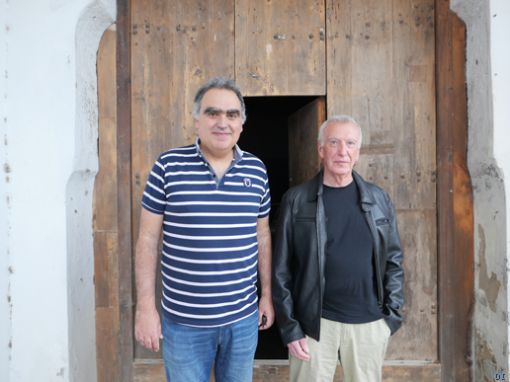
For the composer, integrating original themes in these shows is something “enriching” and shows the public, and those who still attend the conservatory, the importance of the role of musicians.
“It makes everything more valuable, more aggregated, more unified when the music is created for that purpose when everyone comes together from various companies from various lands to do something designed for that,” he stressed.
Antero Ávila regrets that the costs of insularity make it challenging to show the play on other islands of the archipelago and the mainland because he does not doubt that “it is interesting regardless of the local context”.
“We are doing something here that, if it were done in the United States, we could do for ten years, non-stop. Here, next year it is already seen, and we have to do something else”, he pointed out.
The Azores
With the participation of the amateur theater group Matilha, created by Cães do Mar, the show results from a co-production with the company Cem Palcos, from Viseu, which hopes to take it, in 2024, to the continent, albeit with minor adaptations, so that the public fully understands it.
“The text talks about ‘gamas’, and when Ricardo and I read it, we said: it’s a typo; these are gums. Then we realized they are concrete things here”, recalled Graeme Pulleyn.
Despite these particularities, Graeme, one of the two Cem Palcos actors in the cast, believes the play has the potential to tour the country.
“It’s a show that starts from the local and goes to the universal. It touches on the geopolitics of an era, which still very concretely affects how the world works today and reflects the great historical lines”, he stressed.
For the actor from Viseu, it is “a privilege to be part of this project, ” bringing together two companies with much in common.
“Our work philosophy is close to that of Cães do Mar; it is a very strong connection to the territory, in our case, the region of Viseu, Beiras. I think that in terms of developing a work project, it has to do with things that we also have in common, which is to work on an artistic creation that is specific and universal at the same time “, he stressed.
On the stages of the professional company, Cães do Mar, there have already been stories of privateers and whale hunters, among many others, but Peter Cann guarantees that there is still much to tell.
For now, the focus is on “Sarrado Grande”, after Biscoitos goes to the port of São Mateus, on the 22nd, at 19h00.
On the 30th, the play goes to the Angra do Heroísmo Street Theater Festival, in Praça Velha, at 19h30, and on August 6th, it returns to its origins, with two performances at the Lajes Base Open Day, at 11h30 and 14h30.
From a Diário Insular newspaper in Terceira island, José Lourenço-director. Translated by the the Portuguese Beyond Borders Institute (PBBI) and the Modern and Classical Languages and Literarues Department (MCLL) at Fresno State as a community outreach program.
 Filamentos (artes e letras)